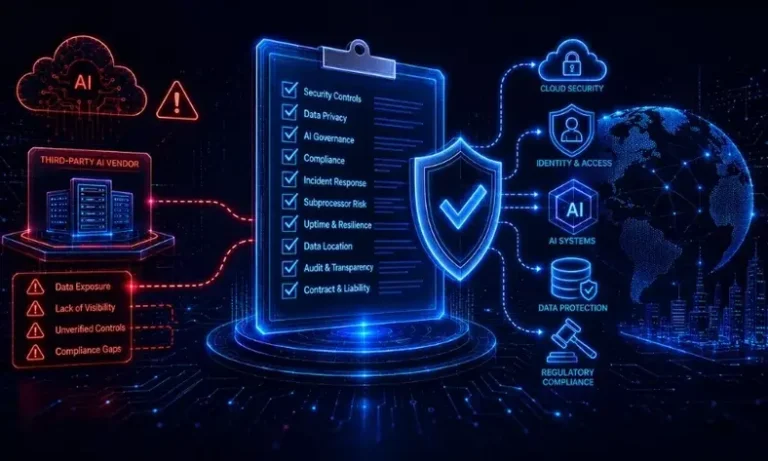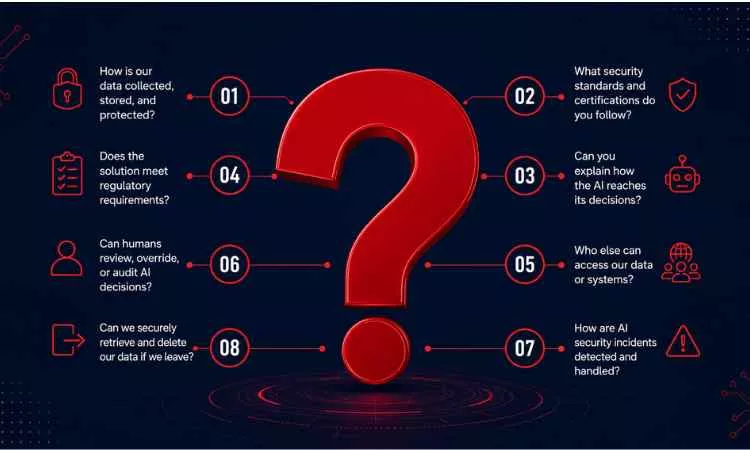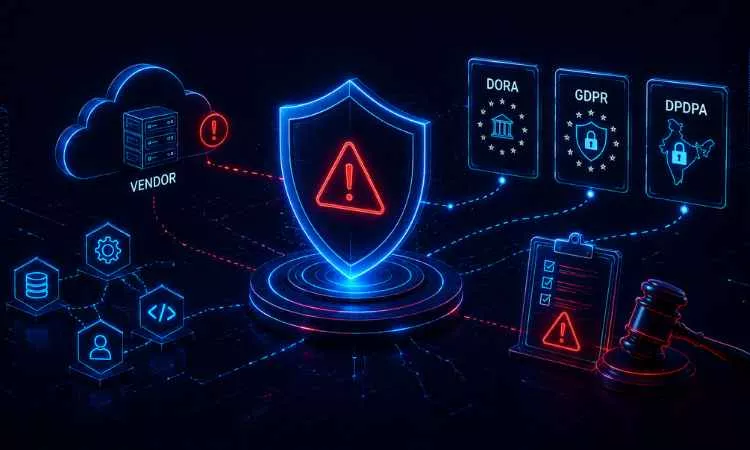





Third-party risk management (TPRM) and supply chain risk management (SCRM) address related but distinct cybersecurity risks. This infographic provides a concise comparison to help organizations understand where each approach fits.
- Third-Party Risk Management (TPRM) focuses on assessing and managing individual third parties, including vendors and service providers. It typically evaluates their security posture, access privileges, controls, compliance requirements, and relationship-specific risks.
- Supply Chain Risk Management (SCRM) takes a broader view of the ecosystem. It considers vendors, suppliers, subcontractors, and other interconnected dependencies, including indirect relationships that may introduce cascading or systemic risks.
The key distinction is scope. TPRM concentrates on direct third-party relationships, while SCRM expands visibility across multiple tiers of the supply chain.
For organizations in India, the United States, the Middle East, and other global markets, understanding this distinction can support stronger vendor governance, cybersecurity risk assessments, regulatory compliance, and supply chain resilience.
Use this comparison to determine whether your organization needs a focused TPRM strategy, a broader SCRM framework, or both as part of an enterprise cybersecurity and third-party risk program.
Enjoyed reading this infographics? Stay updated with our latest exclusive content by following us on Twitter and LinkedIn.