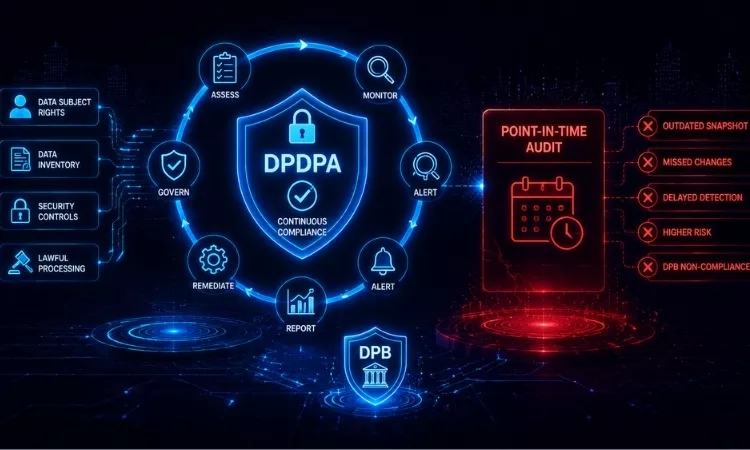





A recruitment firm operating across India began reassessing how it managed large volumes of candidate and employee personal data across its on-premises systems and public cloud environments. While no immediate breach had occurred, the organisation recognized increasing regulatory pressure under the Digital Personal Data Protection Act (DPDPA) under India data protection law compliance and growing concerns around visibility, consent management, and control over sensitive PII.
The primary risk lay not in a single incident, but in the absence of unified data governance. Personal data was distributed across systems without centralized visibility, making it difficult to track how data was stored, accessed, and processed. Gaps in consent capture, retention policies, and data principal rights workflows exposed the organisation to potential compliance violations, regulatory scrutiny, and reputational risk.
To address this, a structured DPDPA readiness assessment was initiated. The engagement focused on discovering and classifying personal data across environments, evaluating existing security controls, and mapping ISO 27001 practices to DPDPA compliance requirements. Attention was given to cloud data security, access governance, and the mechanisms required to operationalize consent, retention, and data subject rights.
The DPDPA readiness assessment identified key gaps. In response, the organisation established a centralized data inventory, strengthened role-based access controls and monitoring, and implemented structured workflows for consent management and data principal rights. Furthermore, DPDPA-aligned policies and governance frameworks were introduced.
With these measures in place, the organisation transitioned from fragmented data handling practices to a structured, compliant, and audit-ready data protection posture across its hybrid infrastructure.
Download the full case study here!