









The corporate cyber liability market has undergone a fundamental shift. Prompted by historic underwriting losses, commercial insurance carriers have abandoned surface-level questionnaires in favor of rigorous, evidence-based technical audits.
According to the latest IBM Cost of a Data Breach Report, the global average cost of a data breach has reached an all-time high of $4.4 million. Consequently, organizations can no longer treat cyber insurance as a simple financial safety net. It must be treated as an extension of corporate governance.
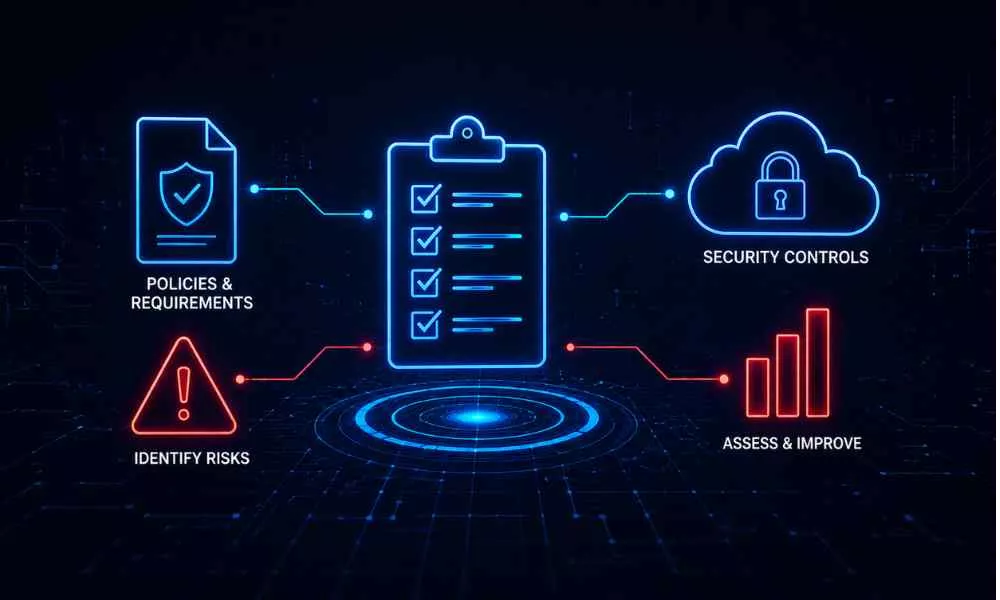
A Cyber Insurance Readiness Assessment is a proactive security evaluation designed to align an organization’s internal technical infrastructure, security policies, and incident response frameworks with the strict underwriting requirements used by primary insurance carriers.
By identifying and remediating control gaps before initiating the formal application or renewal window, enterprises can avoid restrictive policy exclusions, secure maximum coverage limits, and substantially lower annual premium overhead.
What is the Market Driver: The Risk Landscape?
Modern underwriting modeling focuses heavily on specific attack vectors that consistently drive massive indemnity payouts. The primary threat landscapes scrutinized during an evaluation include:
- Ransomware & Extortion: Attackers frequently target misconfigured infrastructure to encrypt production systems and exfiltrate proprietary data. Carriers reference tracking frameworks like the CISA Ransomware Guide to judge whether an applicant can withstand advanced extortion campaigns.
- Exploitation of Known Flaws: Threat actors weaponize software vulnerabilities at a rapid pace. Underwriters rely heavily on public repositories such as the MITRE CVE List and the CISA Known Exploited Vulnerabilities (KEV) Catalog, to judge an organization’s patching cadence. A single outstanding critical CVE can trigger an immediate denial of coverage.
- Identity Exploitation: Credential theft and privilege escalation remain the baseline elements of corporate compromises, emphasizing the need for comprehensive identity tracking.
What are the 5 Core High-Impact Insurance Readiness Security Controls?
While carrier underwriting manuals contain dozens of data points, modern insurance eligibility hinges heavily upon five primary baseline security controls. Proving high maturity in these specific areas yields the highest ROI for reducing premium costs:
| Control Domain | Underwriter Requirement |
| Identity & Access Management | Universal enforcement of Multi-Factor Authentication (MFA) across all remote connections, email environments, cloud administration panels, and privileged internal directory spaces. |
| Endpoint Security | Transition away from signature-based antivirus to 24/7 monitored Endpoint Detection and Response (EDR) or Extended Detection and Response (XDR) platforms. |
| Data Resilience | Implementation of immutable, air-gapped, and isolated backup architectures that are regularly tested for real-world restoration speeds. |
| Vulnerability Management | A formalized, automated patching cadence governed by explicit internal SLAs, specifically targeting critical-severity software flaws. |
| Incident Response | Documented enterprise incident response plans (IRP) that are actively validated through routine, formal tabletop testing exercises. |
What are the 8 Core Insurance Readiness Assessment Domains?
A comprehensive readiness review systematically audits an organization across eight distinct risk domains. A failure or low maturity score in any single domain can lead to a carrier inserting specific coverage exclusions or completely denying the policy.
What is The Operational Readiness Methodology?
To maximize renewal leverage, organizations should adopt a highly structured, 5-stage assessment methodology initiated at least 120 days prior to current policy expiration:
- Application & Requirement Blueprinting: Profile targeting carriers and map their unique underwriting questionnaires to the organization’s existing asset footprint and policy structures.
- Control Inventory & Architecture Verification: Conduct extensive security stakeholder interviews, live technical configuration checks, and active policy documentation reviews to match current defenses against carrier targets.
- Gap Prioritization & Risk Modeling: Score all discovered security gaps against technical remediation complexity and their direct impact on final underwriting eligibility. This establishes a high-ROI remediation roadmap.
- Remediation Execution & Evidence Packaging: Execute targeted patches, deploy necessary tooling, and systematically package operational logs, configuration profiles, and scan readouts into an organized, carrier-ready digital evidence folder.
- Broker Optimization & Underwriter Strategy Briefing: Deliver the finalized evidence package to corporate risk managers and insurance brokers. This proactive approach allows the organization to control the risk narrative and aggressively negotiate premium discounts.
What Are The Strategic Alignment with International Frameworks?
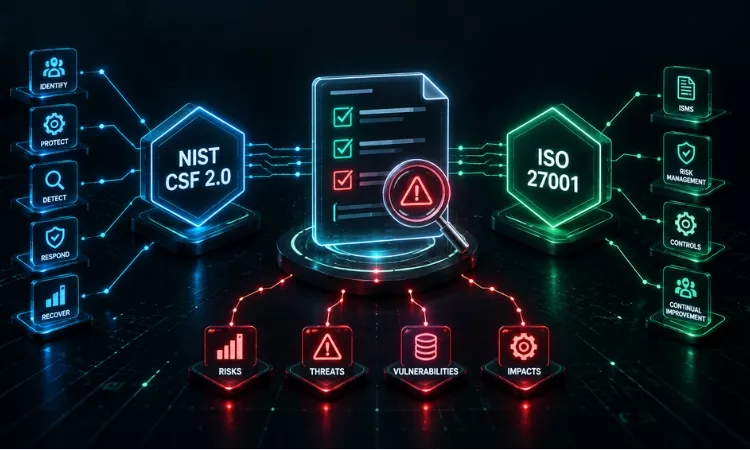
Achieving readiness for a cyber insurance application naturally aligns an enterprise with leading global cybersecurity frameworks. By implementing the technical controls required by underwriting carriers, organizations simultaneously establish foundational compliance with:
- The NIST Cybersecurity Framework (CSF 2.0), specifically the Protect, Detect, and Respond functions.
- The center controls of ISO/IEC 27001:2022 Information Security Management, focusing on operational security controls and business continuity management.
Strategic Conclusion
In the modern corporate ecosystem, cybersecurity is no longer just an IT concern it is a critical component of financial stability and balance sheet protection. A formal Cyber Insurance Readiness Assessment transforms security from a reactive cost center into a strategic corporate asset, allowing organizations to face underwriting scrutiny with total confidence and secure the robust coverage terms necessary to shield their operations.
Is Your Organization Ready for Cyber Insurance Scrutiny?
Don’t wait for underwriters to uncover security gaps. Assess your readiness, strengthen critical controls, and secure better coverage terms before your next renewal cycle.
| Call our experts to Schedule a Cyber Insurance Readiness Assessment Today |
Enjoyed reading this blog? Stay updated with our latest exclusive content by following us on Twitter and LinkedIn.