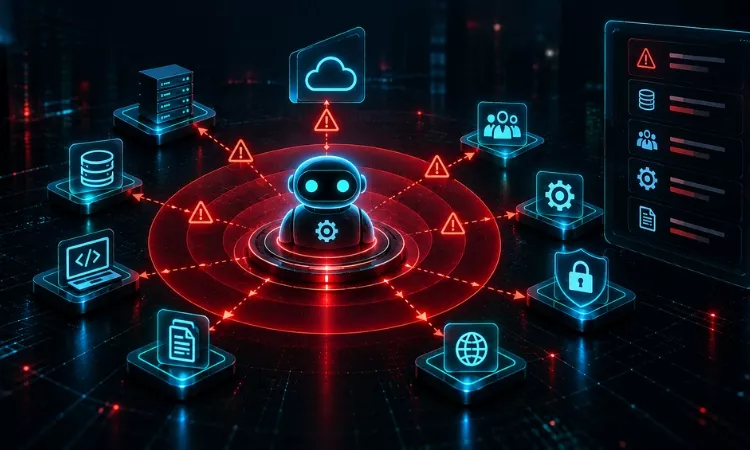










Every enterprise has a workforce that never clocks out, never asks for a password reset, and never shows up in an HR system. Service accounts, API keys, OAuth tokens, SSH keys, RPA bots, and now autonomous AI agents quietly run the machinery behind cloud platforms, SaaS tools, and business applications. Security teams built their identity programs around people. That assumption no longer holds.
According to KPMG’s Cybersecurity Considerations 2026 report, non-human identities now outnumber human users by roughly 80 to 1 in the average enterprise. Other research places the ratio even higher for cloud-native and DevOps environments, where machine credentials can exceed human accounts by more than 140 to 1. Whatever the precise number, the direction is unmistakable. The identity perimeter that CISOs are paid to defend has quietly shifted from people to machines, and most governance programs have not caught up.
What Are Non-Human Identities and Why They Matter Now?
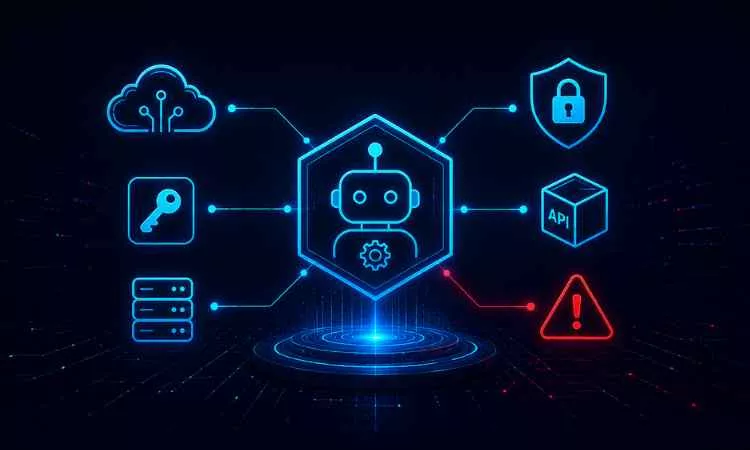
A non-human identity, or NHI, is any credential or token that authenticates a system, application, workload, or piece of automation instead of a human being. This includes API keys, service accounts, certificates, secrets stored in code repositories, and increasingly, AI agents that can reason, chain actions together, and call other systems on their own.
The volume alone would be a governance headache. What makes the problem urgent is behavior. A traditional service account has a fixed scope that a security team can document and audit. An AI agent operating with delegated access can escalate its own permissions at runtime, spawn sub-agents, and touch systems no policy document ever anticipated. The audit trail that used to exist for a static credential simply does not exist in the same way for a dynamic, reasoning system.
Cloud Security Alliance survey data backs this up. Less than a quarter of organizations report having documented, formally adopted policies for creating or retiring AI identities, and only 12 percent of security leaders say they are highly confident in their ability to prevent attacks that originate from an NHI. More than 16 percent admit they do not even track the creation of new AI-related identities, which means a growing share of tokens and service accounts sits completely outside formal inventory.
Why Non-Human Identity Sprawl Outpaces Traditional Governance
Identity sprawl did not happen overnight, but three forces have accelerated it faster than most security programs can respond.
Automation and AI adoption moved faster than policy: Development teams spin up new integrations, workflows, and agents on a weekly basis. Each one typically needs its own credential, and few teams pause to ask who owns that credential once it is created.
Legacy IAM tools were built for people, not machines: Manual onboarding, periodic access reviews, and rubber-stamp attestations work reasonably well when the subject is a human employee with a manager and a fixed job description. They break down completely when applied to thousands of tokens with no owner, no manager, and no natural offboarding trigger.
Secrets do not expire on their own: Long-lived credentials and forgotten API keys, sometimes called zombie secrets, persist in repositories, CI/CD pipelines, and configuration files for years. Every one of those secrets is a standing invitation for lateral movement once an attacker gains an initial foothold.
The result is predictable. Identity-related incidents are climbing, and a large share trace back to poorly governed machine credentials rather than a compromised human password. Security teams that once worried mainly about phishing and stolen employee logins now have to account for an attack surface that grows continuously, silently, and largely without their involvement.
The Governance Gap CISOs Cannot Afford to Ignore
For a CISO, the core problem with non-human identities is not just scale. It is ownership. Ask most security teams who owns a given service account or API key, and the honest answer is often nobody. The developer who created it may have left the company. The application it supports may have been retired. The credential itself, however, is frequently still active, still holding permissions, and still sitting unmonitored.
This governance gap has direct consequences for risk management, compliance, and audit readiness. Regulators increasingly expect organizations to demonstrate control over every entity that touches sensitive data, whether that entity is a person or a piece of software. A governance, risk, and compliance program that only accounts for human users cannot produce a credible answer when an auditor asks who has access to production data and why.
The stakes rise further with agentic AI. When an autonomous agent can acquire new permissions dynamically, a security team’s static list of approved access rights stops reflecting reality within hours of being written. Boards and executive committees are starting to ask pointed questions about how AI agents are provisioned, monitored, and retired, and CISOs need answers rooted in real visibility rather than assumption.
Building a Practical Non-Human Identity Security Program
None of this means the problem is unsolvable. It means the old playbook needs an update. A workable NHI security program tends to rest on a handful of practical steps.
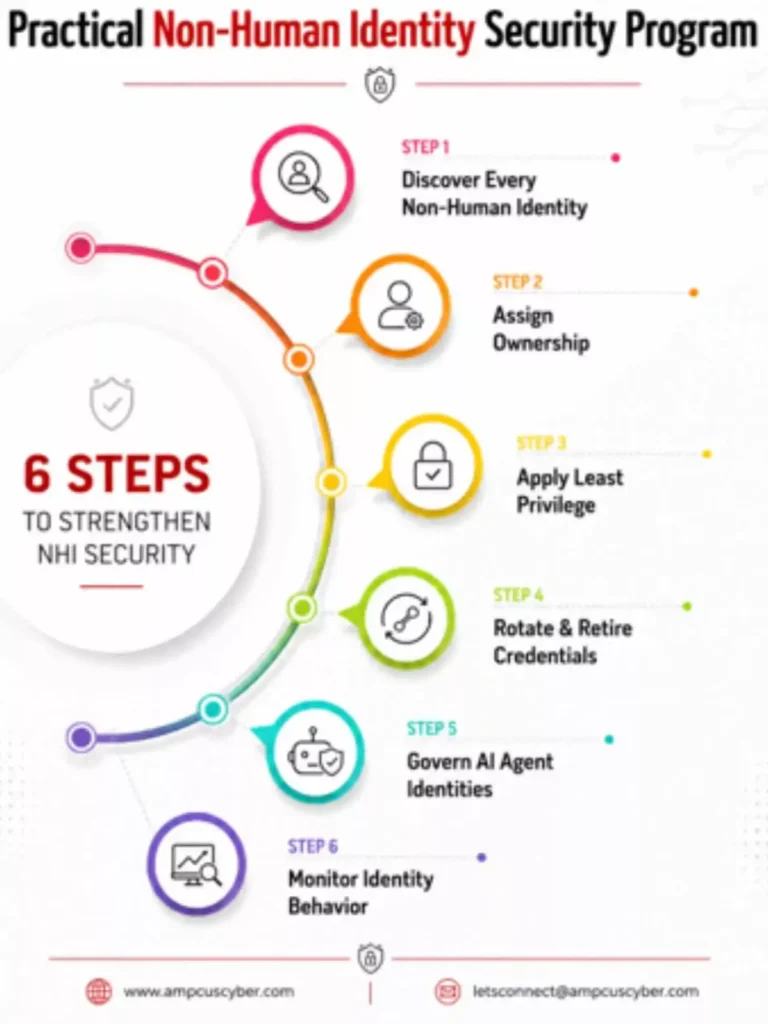
Start with discovery. You cannot govern what you cannot see, so the first step is a complete inventory of every service account, API key, certificate, and agent credential across cloud, SaaS, and on-premises environments. This is rarely a one-time project, since new identities appear continuously.
Assign ownership to every credential. Each NHI should have a named owner, a documented purpose, and a defined lifecycle from creation to retirement. Where ownership cannot be established, the credential should be treated as high risk by default.
Apply least privilege consistently. Machine identities are frequently over-provisioned because it is easier to grant broad access once than to scope permissions precisely. That convenience becomes a liability the moment a credential is compromised.
Rotate and retire credentials on a schedule. Long-lived secrets should be the exception, not the norm. Automated rotation, combined with short-lived tokens where possible, sharply reduces the window of exposure if a credential leaks.
Extend identity governance to cover AI agents specifically. Traditional identity and access management frameworks need to be extended, not replaced, to account for agents that act autonomously, call external APIs, and make access decisions without a human in the loop.
Monitor behavior, not just credentials. Anomaly detection tuned for human login patterns often misses the machine-speed activity that characterizes NHI misuse. Security teams need visibility that flags unusual API call volume, off-hours automation, or privilege escalation the moment it happens, not weeks later during a scheduled review.
Treating Identity as the New Control Point
The enterprises that get ahead of this shift are the ones treating identity, human and non-human alike, as the primary control point for security strategy rather than a background IT function. That means bringing NHI governance into the same conversations as third-party risk management, since both problems share a common thread: access granted without ongoing oversight becomes access nobody controls.
Organizations that already run structured third-party risk management programs are often better positioned to extend that same discipline to machine identities, because the underlying question is identical. Who has access, why do they have it, and who is watching it.
For CISOs and governance leaders, the message from every major 2026 industry report is consistent. Non-human identities are not a future problem to plan for. They are already the largest identity population in the enterprise, and in many organizations, the least governed one. Closing that gap requires the same rigor applied to human identity for decades: visibility, ownership, least privilege, and continuous monitoring, now extended to every service account, API key, and AI agent quietly operating behind the scenes.
Independent research from Cloud Security Alliance and coverage from The Hacker News both point to the same conclusion: organizations that delay building a dedicated NHI governance program are extending their attack surface every day they wait.
Ready to bring your machine identities under control?
| Talk to Ampcus Cyber about building a non-human identity governance program that closes the visibility gap before attackers find it first. |
Enjoyed reading this blog? Stay updated with our latest exclusive content by following us on Twitter and LinkedIn.