









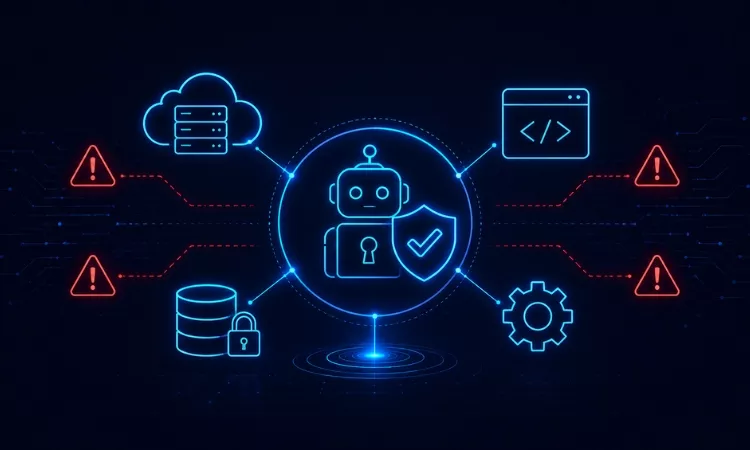
Every server, application, container, and AI agent in your environment needs a way to prove it is what it claims to be. That proof comes from digital credentials such as certificates and cryptographic keys, and keeping those credentials issued, rotated, and revoked correctly is the discipline security teams call machine identity management. Moreover, this topic has moved from a niche PKI concern to a board level priority, largely because machine identities now outnumber human users by a wide margin and attackers have taken notice.
This guide breaks down what machine identity management means, why it matters, who should own it, and how enterprises can build a program that scales with cloud, DevOps, and AI adoption.
What Is Machine Identity Management?
Machine identity management is the process of discovering, issuing, monitoring, rotating, and revoking the digital credentials that non-human entities use to authenticate and communicate securely. These entities include physical servers, virtual machines, containers, APIs, microservices, IoT and OT devices, RPA bots, and increasingly, AI agents and automated workloads.
Where a human employee proves identity with a username, password, and multi-factor authentication, a machine proves identity with a TLS certificate, an SSH key, a code signing certificate, or a secret issued through a public or private key infrastructure. Machine identity management brings structure to this credential lifecycle so that every key and certificate in the environment is accounted for, valid, and tied to a known owner.
Why Does Machine Identity Management Matter for Enterprises?
The scale of the problem has changed the conversation. Machine identities now outnumber human identities by an estimated 82 to 1 across large enterprises, driven by cloud adoption, containerization, and the rapid rise of AI agents. At the same time, identity-based attacks, where credentials are stolen or abused to move through a network, account for roughly a third of confirmed data breaches.
Unmanaged machine identities create three distinct problems for enterprise security programs. First, expired or misconfigured certificates cause outages, since a single lapsed certificate can take down customer facing applications or internal services without warning. Second, orphaned keys and certificates that nobody tracks become an easy target for attackers seeking long term, low noise access. Third, auditors increasingly expect documented control over cryptographic assets as part of frameworks such as PCI DSS, SOC 2, HIPAA, and NIST CSF, which means gaps in machine identity governance can directly affect compliance posture.
Who Owns Machine Identity Management Within an Organization?
Machine identity management rarely sits with a single team, which is part of what makes it hard to govern. The CISO and security leadership typically own the policy and risk posture, defining how long certificates should live, which certificate authorities are trusted, and how violations get escalated. Identity and access management teams operate the day-to-day tooling, handling discovery, issuance, and rotation. DevOps and platform engineering teams provision machine credentials as part of CI/CD pipelines and cloud infrastructure, often at a pace that outstrips manual security review. Governance, risk, and compliance teams need visibility into the program to demonstrate control effectiveness during audits.
Because responsibility is distributed, mature organizations assign a clear program owner, usually within the security architecture or identity function, who is accountable for policy, tooling, and cross team coordination.
How Does Machine Identity Management Work?
A working machine identity management program follows a consistent cycle. It starts with discovery, building a complete inventory of every certificate, key, and secret across on premises systems, cloud environments, and third-party integrations, since you cannot secure what you cannot see. Issuance comes next, where credentials are generated through a trusted internal or public certificate authority and mapped to a specific workload or device owner.
From there, automated rotation and renewal keep credentials fresh well before expiration, removing the manual tracking that leads to outages. Revocation processes retire credentials immediately when a device is decommissioned or a key is suspected of compromise. Continuous monitoring watches for anomalies, such as a certificate being used from an unexpected location, and enforces policy across the credential lifecycle. Many organizations also build in crypto agility, the ability to swap algorithms or certificate authorities quickly, so they stay prepared for events like a compromised CA or the shift to post quantum cryptography.
When Should Enterprises Prioritize Machine Identity Management?
Certain moments make machine identity management an urgent priority rather than a background task. Migrating workloads to the cloud or adopting a hybrid infrastructure multiplies the number of machine credentials almost overnight. Rolling out a zero-trust architecture depends on strong machine authentication, since zero trust assumes no device or workload is inherently trusted. Scaling DevOps and microservices introduces credentials faster than manual processes can track. Deploying AI agents and automation at scale adds a new class of non-human identity that many organizations have not yet inventoried. A certificate related outage, a security incident involving compromised keys, or an upcoming compliance audit are all clear signals that the current approach needs a formal upgrade.
Where Do Machine Identities Exist Across the Enterprise?
Machine identities are distributed across nearly every layer of modern IT. They live on physical and virtual servers, inside containers and Kubernetes clusters, and across API gateways and microservices that communicate constantly with each other. They extend to IoT and operational technology devices on factory floors and in connected products, to RPA bots automating back-office work, and to the growing population of AI agents that access systems and data on behalf of users. Machine identities also travel outside the four walls of the organization, embedded in the integrations and connections that link enterprises to vendors and third parties, which is why non-human identity risk has become closely tied to third-party risk management.
What Are the Business Benefits of a Mature Machine Identity Management Program?
A machine identity management program pays back its investment in several concrete ways. It reduces the attack surface available to credential based threats, shrinks the frequency of certificate related outages, and shortens audit cycles by producing clean, ready evidence of control. It gives security architecture the foundation needed to support zero trust, and it gives the business room to scale automation and AI initiatives without multiplying unmanaged risk. For CISOs building a business case, these outcomes translate directly into fewer incidents, lower downtime costs, and a stronger position with regulators and customers.
Ampcus Cyber helps enterprises discover, govern, and automate machine identities before certificate risk becomes a business incident.
| Talk to our specialist to assess your machine identity posture. |
Enjoyed reading this blog? Stay updated with our latest exclusive content by following us on Twitter and LinkedIn.