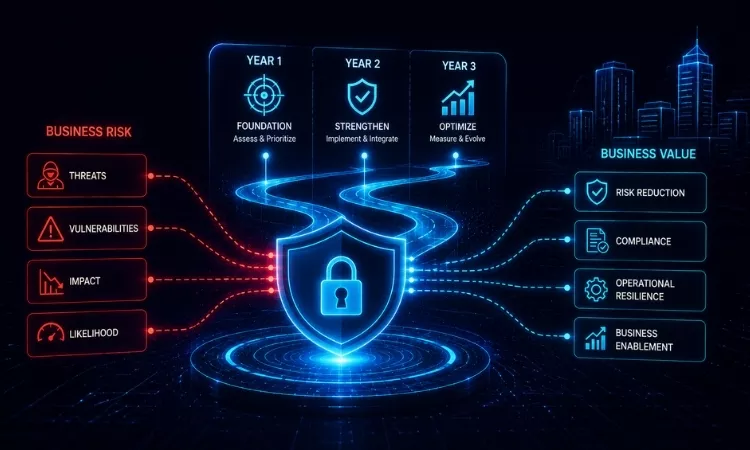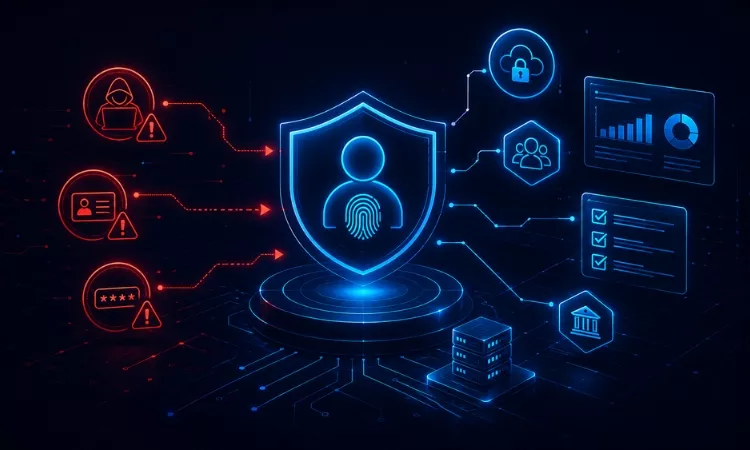











Organizations become more dependent on cloud platforms, APIs, AI systems, and digital transactions, trust has become a technical requirement. Organizations need to demonstrate that identities are verified, data remains protected and accurate, transactions are legitimate, and systems operate as expected.
The challenge is that these assurances are often spread across security controls, compliance programs, identity systems, privacy practices, and audit processes. Digital Trust Engineering brings these areas together by treating trust as a measurable property of the technology environment, one that can be designed, tested, monitored, and supported with evidence.
In this blog, we’ll walk you through what Digital Trust Engineering is, the problems it addresses, how it differs from traditional digital trust, the key areas it covers, and how organizations can build a more measurable and evidence-based approach to digital trust.
What is Digital Trust Engineering?
Digital Trust Engineering is the practice of building security, privacy, integrity, and resilience into digital systems as measurable, verifiable properties, rather than leaving trust as a claim a company makes in its marketing. It takes the outcomes organizations want stakeholders to believe, that data is protected, a transaction is genuine, a system behaves as documented, and turns each one into a technical control that can be tested, audited, and proven rather than simply asserted.
Trust has traditionally been treated as a brand exercise: a privacy policy on a website, a security badge in a footer, a promise in a press release. Digital Trust Engineering starts from a different premise. If trust cannot be demonstrated with evidence, a cryptographic proof, a passed audit, a verifiable log, it has not been engineered. It has only been hoped for.
What Problem Does Digital Trust Engineering Solve?
Most organizations already say they care about trust. Far fewer can prove it. ISACA, the global association that maintains the most widely cited definition of digital trust, defines it as confidence in the integrity of the relationships, interactions, and transactions within a connected digital ecosystem. Its own research has found that only a small share of IT and business professionals feel completely confident in their organization’s digital trustworthiness, even though the large majority say digital trust matters to their business.
That gap between stated importance and actual confidence is the problem Digital Trust Engineering addresses. It treats trust the way security engineers treat availability or performance: not a feeling, but a property of a system that can be specified, built, measured, and reported on with evidence rather than reassurance language.
What Does Digital Trust Engineering Cover?
Digital Trust Engineering pulls together disciplines that are usually managed separately and gives them a shared objective: provable trustworthiness.
Identity and cryptographic proof establish that a person, device, or piece of software is who it claims to be, using certificates, digital signatures, and public key infrastructure rather than assumed trust. Access control applies Zero Trust principles, so every request is verified on its own merits instead of inheriting trust from network location. Data integrity ensures information has not been altered without authorization, supported by data governance practices that track where data lives and who has touched it. Continuous assurance replaces the annual audit with ongoing evidence collection, so a trust claim reflects the system’s current state rather than a snapshot from months ago.
None of these disciplines is new on its own. What Digital Trust Engineering adds is the discipline of treating them as one connected system instead of separate compliance checkboxes.
How Is Digital Trust Engineering Different From Digital Trust as a Brand Concept?
Marketing teams have talked about digital trust for years, usually as a promise: a badge, policy page, or statement about taking security seriously. That version of trust is unfalsifiable. A customer has no practical way to check whether the promise is true.
Engineered trust looks different because it is testable. SOC 2 compliance is a useful example: instead of a company simply claiming it protects customer data, an independent auditor verifies specific, named controls against the Trust Services Criteria of security, availability, processing integrity, confidentiality, and privacy, then issues a report that can be checked. That is Digital Trust Engineering in practice: converting a promise into a control and converting a control into evidence a third party can verify.
Why Does Digital Trust Engineering Matter Now?
Three shifts are making engineered trust harder to postpone. AI-generated content has made it possible to fabricate a convincing voice, video, or document at almost no cost, so the traditional signals people used to judge authenticity, how something looks or sounds, no longer hold up on their own. Autonomous AI agents and machine identities now transact on behalf of organizations without a human reviewing each action, which means trust must be verified programmatically rather than assumed from a familiar signature or a known face.
The cryptographic infrastructure behind most digital trust today, the certificates and signatures that prove a website, document, or piece of software is genuine, also faces a long-term threat from quantum computing.
How Does Digital Trust Engineering Fit Into Governance and Compliance?
Digital Trust Engineering gives governance, and compliance programs something they have historically lacked: a technical foundation for the claims they make to regulators and boards. NIST set this pattern years ago with privacy engineering, translating high-level privacy principles into objectives and risk models that system engineers could implement directly, rather than leaving interpretation to policy documents alone. Digital Trust Engineering extends the same logic across security, identity, and data integrity.
In practice, this means audit readiness stops being a scramble that starts weeks before an assessment and becomes a continuous state, supported by the same identity and access management controls, logging, and evidence trails that engineering teams already maintain for operational reasons. Governance teams get real-time evidence instead of a point-in-time attestation, and engineering teams get compliance requirements translated into specifications they can build against.
What Are the Limitations of Digital Trust Engineering?
Digital Trust Engineering has real limits. It can prove that a control exists and functions as designed, but it cannot make an organization trustworthy if its underlying business practices are not. A company can pass every audit and still make decisions that damage the confidence it worked to build, since technical controls do not substitute for sound judgment or honest communication with stakeholders.
The discipline also requires sustained investment. Cryptographic infrastructure, continuous monitoring, and cross-functional coordination between security, privacy, legal, and engineering teams do not maintain themselves. Organizations that treat Digital Trust Engineering as a one-time project rather than an operating model tend to see their evidence go stale the same way an annual audit does, which defeats the purpose of building it in the first place.
How to Get Started with Digital Trust Engineering?
Building a Digital Trust Engineering practice does not require starting from zero. Most organizations already have pieces of it scattered across security, compliance, and engineering teams.
- Inventory existing evidence: Identify what audits, certifications, and technical controls already produce verifiable proof, and where trust still depends on unverified claims.
- Assign shared ownership: Give a single leader or working group visibility across identity, data governance, and compliance rather than leaving trust fragmented across departments.
- Automate evidence collection: Replace manual audit prep with continuous control monitoring, so trust claims reflect the system’s current state.
- Extend trust to machine actors: Apply the same verification standards to AI agents, APIs, and service accounts that already apply to human users and customer-facing systems.
- Plan for cryptographic change: Build crypto agility into the roadmap now, so a future algorithm transition does not become an emergency.
None of these steps requires new headcount to start; most require connecting programs that already exist.
Key Takeaway
Trust used to be something an organization declared. It is becoming something an organization must prove, continuously, to customers, regulators, and the AI systems now making decisions on their own. Digital Trust Engineering is the discipline of closing that gap: turning trust from a claim into a property of the system that can be tested, measured, and shown to anyone who asks.
| Build continuous, evidence-backed digital trust with Ampcus Cyber’s Assurance-as-a-Service team, moving beyond point-in-time attestations across security, identity, and compliance. |
Enjoyed reading this blog? Stay updated with our latest exclusive content by following us on Twitter and LinkedIn.