








Simple Chatbots is a long-gone story. Today, AI agents are actively participating in the human world, they are patching software, changing firewall rules, rotating passwords, and responding to threats on their own, without waiting for a human to press a button.
This is called autonomous security operations, and while it makes security teams faster and more efficient, it raises a serious question that many organizations haven’t fully answered yet: If AI is making security decisions, who’s making sure the AI stays in check?
That’s exactly what Agentic GRC is about.
AI Has Gone From Assistant to Decision-Maker
Not long ago, security tools would detect a problem and flag it for a human to fix. The human reviewed it, approved a course of action, and executed the fix. There was a clear paper trail.
Now, AI agents are skipping that middle step. They detect the problem and fix it, automatically.
That’s a meaningful shift. When a human makes a change to a production system, there’s documented approval and someone accountable. When an AI does it, the same level of accountability still needs to exist, it just must be built into how the AI system is governed.
Agentic GRC treats AI agents not as background tools, but as active participants in security operations that need proper oversight.
More Access Means More Risk
To do their job, AI agents often need broad system access, they need permission to patch servers, modify cloud settings, and update configurations across many environments at once.
Here’s the problem: if something goes wrong, whether it’s a bug, a bad decision, or a security compromise, an AI with wide-ranging access can cause damage at scale, across hundreds of systems, almost instantly. A human making the same mistake would likely only affect one system at a time.
The broader the access, the bigger the potential blast radius.
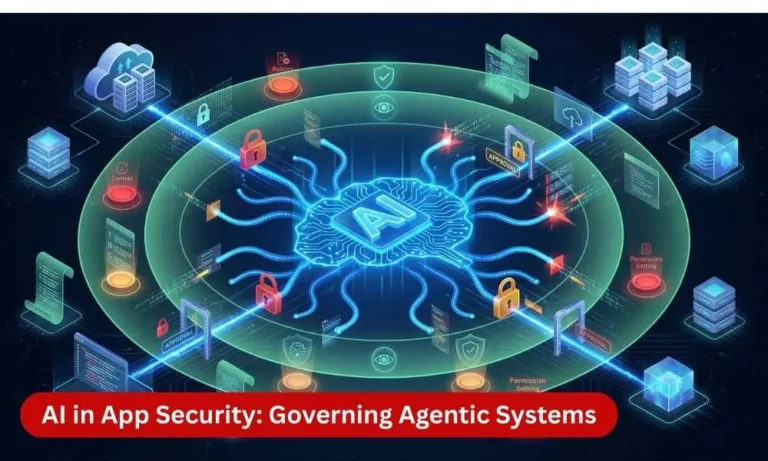
Good AI governance means giving agents only the permissions they need and continuously checking that those permissions are still appropriate.
Can You Explain What the AI Did, and Why?
AI systems often make decisions based on patterns and risk scoring that aren’t always easy to explain in plain language. That’s fine when things go well, but during an audit or after an incident, “the AI decided it was the best option” isn’t a good enough answer.
Compliance frameworks require organizations to show why a control was applied and how a decision was made. If the AI can’t provide that trail, it creates a significant gap in your compliance posture.
Agentic GRC requires that every AI-driven action generates a clear, auditable record — not just what the agent did, but the reasoning behind it.
Annual Audits Aren’t Enough Anymore
Traditional GRC worked on slow cycles, quarterly reviews, annual audits, periodic check-ins. That made sense when humans were executing controls at a human pace.
AI agents operate 24/7 and can make hundreds of changes in minutes. Governance that only checks in occasionally will always be behind.
Organizations need continuous, real-time monitoring of what their AI agents are doing. Ideally, that monitoring should feed directly into existing SOC workflows, not sit in a separate system that nobody checks regularly.
The goal is accountable automation, not just fast automation.
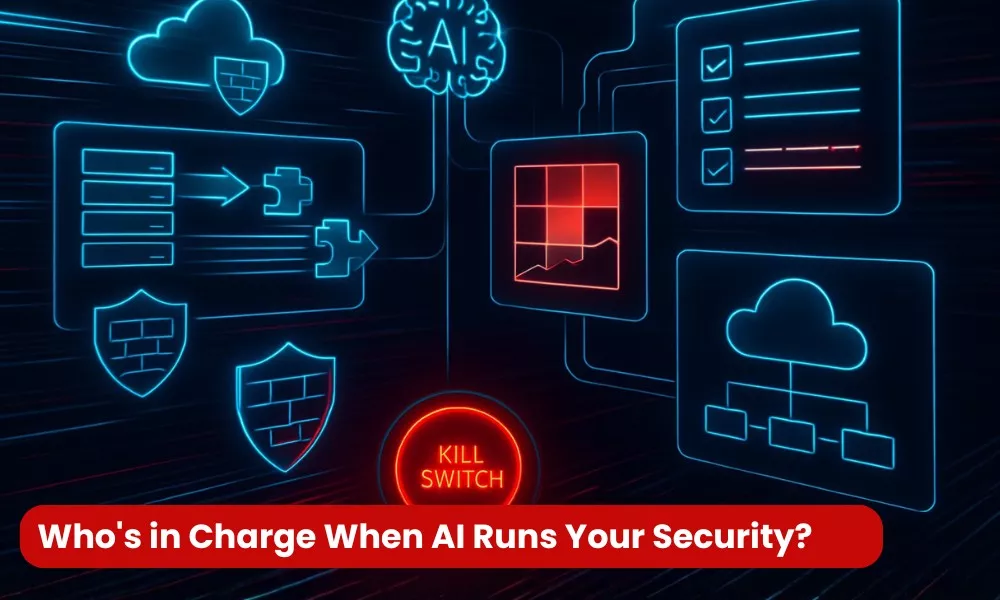
You Need a Kill Switch
No matter how well-designed an AI agent is, organizations must be able to shut it down or override it immediately if something goes wrong.
This isn’t optional. Effective AI governance should include:
- Clear limits on what the agent is allowed to do
- Real-time alerts when behavior looks unusual
- The ability to pause or stop the agent instantly
- A defined path for escalating to a human decision-maker
Automation should always remain under human authority. Speed and efficiency are valuable, but not at the cost of control.
The Bottom Line
Agentic GRC isn’t about slowing down automation. It’s about making sure automation operates within boundaries that are enforced, visible, and auditable.
As AI takes on more active security responsibilities, organizations should ensure their agents are:
- Listed in the asset inventory like any other system
- Operating with least-privilege access
- Monitored continuously for unusual behavior
- Logging every action for compliance and review
- Governed under the same risk frameworks as everything else
AI can absolutely be delegated authority. What can’t be delegated is accountability.
That responsibility still sits with the humans who deploy and oversee these systems and always will.
Enjoyed reading this blog? Stay updated with our latest exclusive content by following us on Twitter and LinkedIn.