








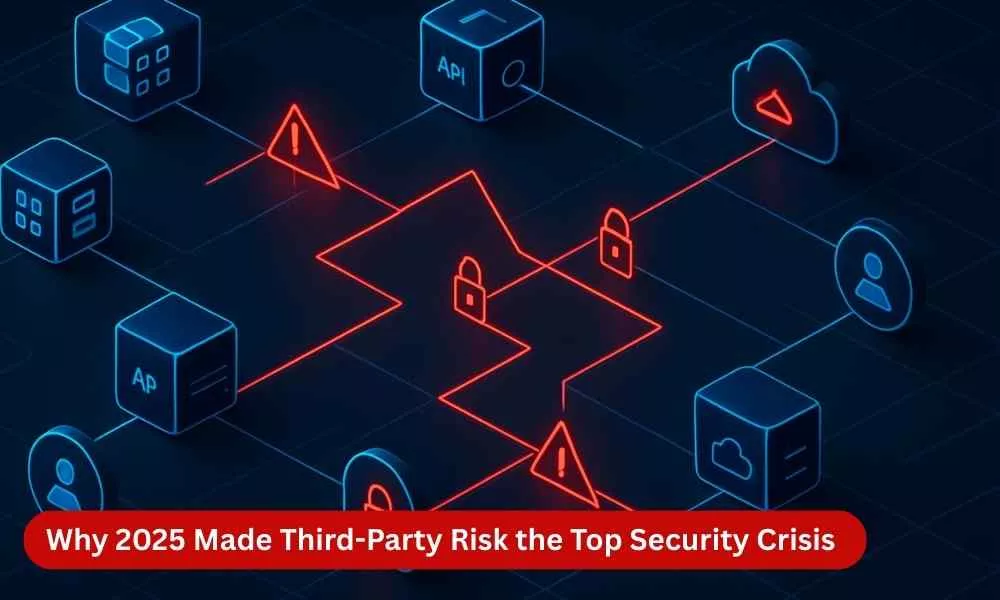
In 2025, cybersecurity stopped being a perimeter conversation. It became an ecosystem conversation.
The most consequential incidents of the year did not begin with unpatched servers or outdated firewalls.
They emerged from trusted digital relationships, SaaS platforms, integration tools, cloud dashboards, and extended supply chains. When Salesforce environments were exploited through manipulated SaaS utilities, compromised credentials, and excessive API permissions, the issue was not merely technical. It was structural.
The real breach was not in code. It was in governance.
Many organizations discovered something unsettling: they had visibility into their own infrastructure, yet lacked continuous insight into the behaviors, identity exposures, and cascading dependencies across their third-party ecosystems. In a SaaS-driven economy, that blind spot is no longer tolerable.
The Collapse of the “Trusted Vendor” Assumption
Modern enterprises are not collections of isolated systems; they are deeply interconnected digital ecosystems. CRM platforms integrate with marketing engines. Analytics tools pull from operational databases. Vendors connect to other vendors across shared APIs and data pipelines. Information flows continuously to enable agility, automation, and scale.
This architecture drives innovation, but it also multiplies exposure.
In several 2025 SaaS ecosystem breaches, the initial compromise was not a sophisticated exploit but identity misuse: compromised administrative accounts, over-provisioned OAuth tokens, excessive API privileges, or social engineering that granted legitimate access to malicious actors. Once access controls were weakened, trusted tools became data extraction engines.
The Salesforce wave demonstrated how easily legitimate utilities and integration connectors could be manipulated when identity governance and access monitoring failed. It revealed how invisible fourth-party relationships amplify exposure far beyond the originally assessed vendor.
No single organization “failed.” What we witnessed was the systemic risk of digital interdependence, and for leadership teams, that realization fundamentally changes the security mandate.
Third-Party Risk Is Now a Financial Variable
For years, third-party risk management was largely procedural. It lived within compliance teams, driven by annual questionnaires and periodic reviews. That model assumed risk changed slowly.
2025 ended that assumption.
When breaches originate in vendor ecosystems, the impact is immediate and measurable: regulatory penalties, contractual liability, operational disruption, brand erosion, and shareholder scrutiny. What was once treated as a control function is now a balance-sheet issue.
The Requirement for Cyber Risk Quantification (CRQ)
Boards do not make decisions based on labels like “high” or “medium.” They make decisions based on probable loss exposure, financial impact ranges, and business continuity implications. Without translating third-party vulnerabilities into quantified financial terms, scenario-based exposure modeling, probability-weighted loss estimates, concentration risk analysis, security remains reactive and under-resourced.
The leadership mandate is clear: vendor oversight must evolve into measurable, decision-grade risk intelligence.
Why Traditional TPRM Couldn’t Keep Up?
The speed and complexity of SaaS ecosystems have outpaced static governance models.
Annual vendor assessments cannot detect real-time privilege escalation or API misuse. Spreadsheet inventories cannot map cascading fourth-party exposure. Point-in-time audits cannot anticipate how a compromised analytics provider or integration tool could disrupt revenue streams overnight.
The issue was not effort. It was architecture. Security teams were tracking vendors. They were not continuously modeling ecosystem risk.
As attack surfaces expand through APIs, identity federations, and interconnected cloud services, organizations require the ability to detect risk as it forms, not after it manifests as an incident.
The Leadership Shift: From Oversight to Quantified Intelligence
The defining security transformation of this decade will not be stronger controls alone. It will be stronger risk intelligence.
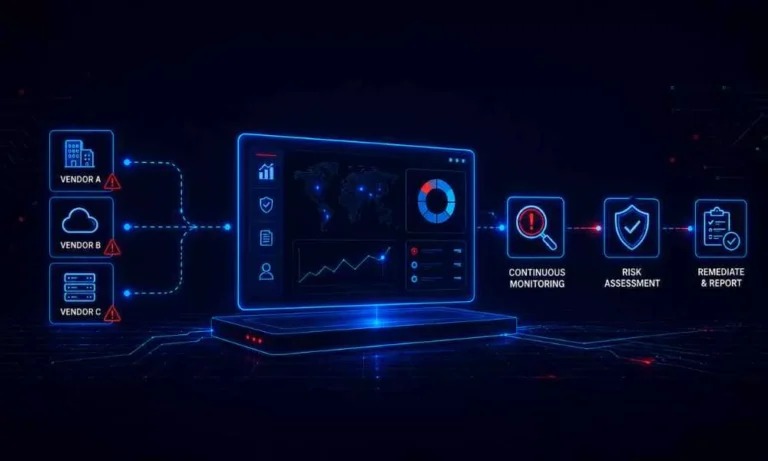
Forward-looking enterprises are shifting toward continuous third-party monitoring, ecosystem-wide visibility, and embedded risk quantification that translates technical exposure into executive language. They are no longer asking, “Is this vendor compliant?” They are asking, “What is our measurable exposure if this vendor fails?”
This is where platforms like Wizard represent a structural shift.
Wizard moves beyond checklist-driven TPRM by combining continuous ecosystem visibility with advanced risk quantification models that surface concentration risk, cascading exposure, and financially measurable impact. Rather than treating every vendor equally, Wizard enables leadership teams to understand which relationships create disproportionate enterprise risk, and how that risk translates into business terms.
By correlating identity exposure signals, third-party behavioral indicators, and dependency mapping across ecosystems, Wizard helps organizations prioritize remediation where it materially reduces risk, not just where it satisfies compliance.
In a world where SaaS integrations can become breach pathways overnight, governance must be dynamic. Risk must be quantified. Decisions must be prioritized based on measurable impact.
Anything less is oversight without foresight.
The Question 2025 Leaves Us With
Organizations are no longer breached because a firewall fails; they are breached because interconnected trust is not continuously verified and quantified.
From SaaS platforms to supply chains, the lesson of 2025 is unmistakable: third-party risk is not a supporting function of cybersecurity. It is its center of gravity.
The leaders who recognize this shift, and operationalize risk quantification across their ecosystems, will not simply prevent the next breach. They will define the next standard of digital resilience.
The question is no longer whether you manage vendors. The question is whether you truly understand, measure, and act on the risk they introduce.
| When vendors become vulnerabilities, visibility matters. Let us help strengthen your third-party risk strategy with Wizard. Contact our experts today. |
Enjoyed reading this blog? Stay updated with our latest exclusive content by following us on Twitter and LinkedIn.