








Most enterprise security budgets are built around stopping malware, ransomware, and network intrusions. Business email compromise sidesteps all of it. There is no malicious attachment to sandbox and often no link to flag. Instead, an attacker studies how a company communicates, impersonates someone the victim trusts, and asks for a wire transfer, a payroll change, or a batch of sensitive files. The email looks ordinary and the request feels routine. That is why BEC remains one of the most financially damaging categories of cybercrime facing enterprises today.
BEC is a reminder that the biggest exposure is not always a technical vulnerability. It is a gap between trust, process, and verification.
What Is Business Email Compromise?
Business email compromise is a form of targeted fraud in which an attacker impersonates a trusted individual, typically an executive, vendor, or colleague, to convince an employee to transfer funds, change payment details, or share sensitive information. Attackers either spoof a legitimate email address, register a lookalike domain, or gain direct access to a real mailbox through phishing or credential theft.
Unlike broad phishing campaigns that rely on volume, BEC is deliberate and personalized. Attackers research an organization’s leadership structure, vendor relationships, and communication style before sending a single, carefully timed message. That precision is what makes it difficult to catch with filters built to detect malware or bulk spam.
How Does Business Email Compromise Work?
Most BEC attacks follow a similar pattern, though the details vary by target.
- Reconnaissance : Attackers research the organization through LinkedIn, press releases, vendor portals, and sometimes previously breached data to identify executives, finance staff, and vendor relationships.
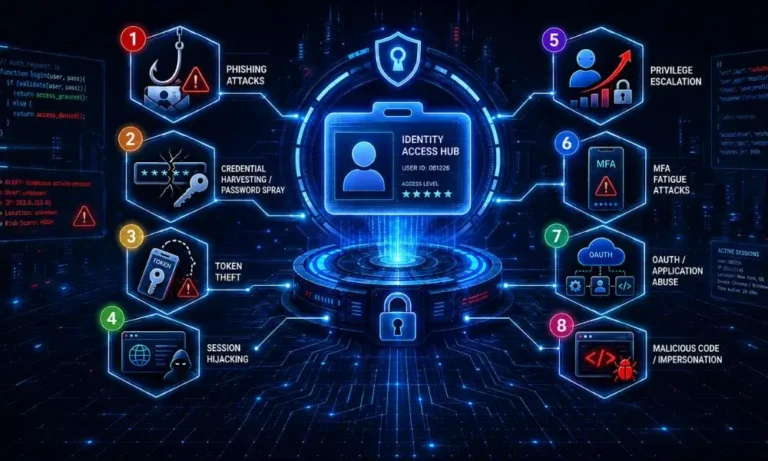
- Impersonation setup : The attacker spoofs a display name, registers a lookalike domain, or compromises an actual email account through phishing or credential stuffing.
- The pretext : A message arrives that appears to come from a CEO, CFO, or known vendor, requesting an urgent wire transfer, a change to banking details, or a batch of employee records.
- Pressure and urgency : The message typically emphasizes time pressure and discretion, discouraging verification through a separate channel.
- Fund or data movement : Once the employee complies, funds move to an attacker-controlled account, or sensitive data reaches the attacker, often before anyone realizes the request was fraudulent.
Common variants include CEO fraud, where an attacker impersonates a senior executive requesting an urgent payment; vendor or invoice fraud, where attackers alter banking details in an ongoing vendor relationship; payroll diversion, where an attacker posing as an employee requests a direct deposit change; and data theft schemes targeting employee W-2 forms, PII, or other regulated records.
Why Is Business Email Compromise So Effective?
BEC bypasses most of the controls organizations already have in place. It rarely involves malware, so endpoint detection tools have nothing to catch. It rarely involves a malicious link, so secure web gateways see nothing unusual. Because the request comes through a channel employee already trust, and often mimics normal business language exactly, it exploits process gaps rather than technical ones.
The financial scale bears this out. According to the FBI’s 2025 Internet Crime Report, business email compromise generated more than 3 billion dollars in reported losses in the United States in 2025, the second-largest loss category behind investment fraud, out of over a million total complaints filed with the Internet Crime Complaint Center. Survey data from the Association for Financial Professionals confirms the pattern from the enterprise side: BEC has consistently ranked as the most common fraud vector reported by corporate treasury and finance teams. These are not fringe incidents. They represent one of the most consistent revenue streams available to cybercriminals today.
Who Do Attackers Target in BEC Scams?
BEC attacks concentrate on roles with authority to move money or data, rather than targeting technical vulnerabilities.
- Finance and accounts payable teams are the most common target, holding authority to initiate wire transfers and update vendor payment details.
- Executives and their assistants are frequently impersonated because their instructions carry weight and are rarely questioned.
- HR and payroll staff are targeted for payroll diversion schemes and requests for employee tax and identity records.
- Procurement teams are targeted through invoice fraud, particularly in organizations with long-standing, high-trust vendor relationships.
Where Does Business Email Compromise Fit Into Enterprise Risk?
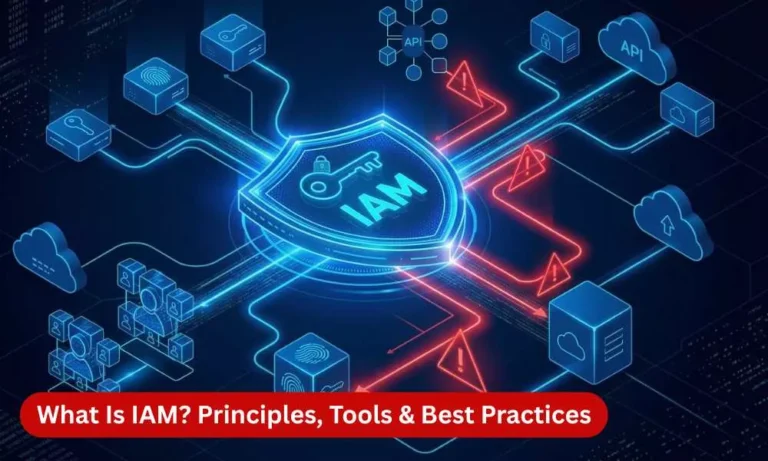
BEC sits at the intersection of identity security, fraud prevention, and governance. It is fundamentally an identity problem: an attacker either impersonates or compromises a trusted identity to abuse legitimate business processes. Strengthening identity and access management controls, including multi-factor authentication on email accounts and strict access reviews, closes one of the most common entry points attackers use to gain a genuine mailbox rather than simply spoofing one.
It is also a process problem. Organizations that lack a formal, out-of-band verification step for payment changes remain structurally exposed, regardless of how strong their technical controls are. And it is a visibility problem. Email fraud attempts often leave detectable signals, such as lookalike domains or mailbox rule changes, that a properly tuned SIEM can surface before funds move.
How Can Organizations Defend Against BEC?
Effective BEC defense combines technical controls, process discipline, and awareness training.
- Enforce email authentication : SPF, DKIM, and DMARC configured to full enforcement prevent attackers from spoofing your organization’s own domain, though they do little against lookalike domains or compromised third-party mailboxes.
- Require out-of-band verification : Any request to change banking details, redirect a payment, or process an urgent wire transfer should require verification through a separate, previously known communication channel, never by replying to the email itself.
- Apply least-privilege and MFA to email accounts : Reducing standing access and requiring multi-factor authentication limits how easily an attacker can take over a real mailbox.
- Monitor for anomalous mailbox activity : Automated forwarding rule changes, logins from unusual locations, and irregular sending patterns are common indicators of a compromised account and should feed directly into incident response workflows.
- Extend scrutiny to vendors : Since a growing share of BEC losses originate through compromised or impersonated vendor accounts, third-party risk management programs should assess vendor email security practices, not just data handling policies.
- Train employees on pressure tactics, not just red flags. Awareness training works best when it teaches staff to recognize urgency and secrecy as warning signs, rather than relying on spotting spelling errors or suspicious links, which sophisticated BEC emails rarely contain.
When Should Organizations Escalate a Suspected BEC Incident?
Speed determines whether funds can be recovered. Once a fraudulent transfer is suspected, finance and security teams should immediately contact the sending and receiving financial institutions to request a recall, since banks can freeze funds if notified quickly enough. The incident should be reported to law enforcement without delay, and internal incident response procedures should determine whether the compromise extended beyond a single mailbox. Waiting even a few hours can be the difference between recovering funds and losing them permanently.
To Conclude:
Business email compromise succeeds because it targets trust and process, not infrastructure. No firewall or antivirus product can fully stop an employee from following what looks like a legitimate instruction from a known executive or vendor. Reducing exposure requires treating BEC as a governance and identity issue as much as a security one, with verified payment processes, strong email account controls, and monitoring that connects email activity to broader incident response capability.
Organizations that pair technical email controls with disciplined verification processes consistently outperform those relying on awareness training alone, because BEC exploits the moment an employee is asked to skip a step, not the moment they fail to spot a fake link.
BEC losses often trace back to gaps between identity controls, monitoring, and payment verification processes.
| Talk to Ampcus Cyber to assess where those gaps exist in your organization before an attacker finds them first. |
Enjoyed reading this blog? Stay updated with our latest exclusive content by following us on Twitter and LinkedIn.