









Breach response has become a board-level concern. When ransomware or data exfiltration begins, the first hours determine how much operational disruption, regulatory exposure and legal cost an organization absorbs. Many enterprises still start searching for forensic help after the incident has already begun. By then, the best specialists are committed elsewhere, and procurement cycles slow every decision. An incident response retainer closes that gap by turning emergency sourcing into a contracted capability that is ready before the alert fires.
What Is an Incident Response Retainer?
An incident response retainer is a pre-signed agreement with a forensic provider that reserves response capacity before a breach occurs. It sets guaranteed response times, pre-approved access terms and a pool of prepaid hours. The client pays for readiness up front and draws on the hours only when an incident is declared.
The structural value sits in preparation. Forensic teams need network architecture, log source inventories and privileged access paths before they can act quickly. A retainer moves that discovery into calm periods rather than leaving it for an outage. The provider also completes conflict checks, data handling terms and onboarding in advance, and those gates often consume the first day of an unplanned engagement.
Why Do Enterprises Need an Incident Response Retainer?
Enterprises need a retainer to shorten time to containment and to protect legal privilege, regulatory deadlines and insurer conditions during a live event. Without one, the opening hours go to vendor selection, contract negotiation and access approvals instead of evidence preservation.
Three operational drivers stand out.
- First, retained providers begin containment earlier, which limits lateral movement and data loss.
- Second, outside counsel can structure the engagement under privilege from day one, which protects forensic findings in later litigation.
- Third, cyber insurers increasingly expect named response partners in policy conditions, so a retainer can satisfy underwriting requirements without a scramble at renewal.
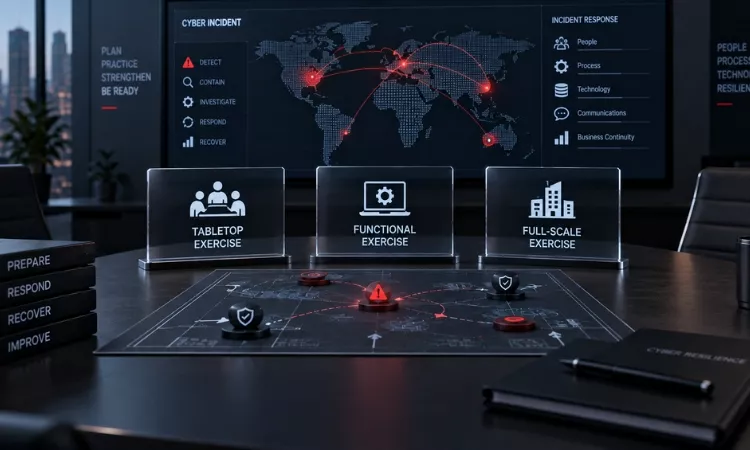
In tabletop exercises with CISO teams, the organizations that recover fastest tend to share one habit. They already know who signs the declaration, who calls the forensic lead and which logs survive their retention window.
What Should an Incident Response Retainer Include?
A well-drafted retainer contract covers the following elements:
- Guaranteed response time: A remote engagement window measured in hours, with onsite deployment options for critical regions.
- Service scope: Forensics, malware analysis, containment, eradication, recovery support and post-incident reporting.
- Hour allocation and rate card: Prepaid hours, overage rates and rules for whether unused hours roll forward.
- Activation procedure: Authorized declarers, contact channels and an escalation path that works at 2 a.m.
- Pre-engagement discovery: Asset inventories, network diagrams, log source mapping and a baseline of normal activity.
- Privilege structure: An engagement letter routed through outside counsel, so findings are protected.
- Data handling terms: Evidence storage locations, retention periods and cross-border transfer safeguards for GDPR and other regimes.
- Tooling authority: Permission to deploy endpoint detection agents and collection tools without delay.
- Reporting obligations: Executive briefings, technical reports and regulator-ready incident timelines.
- Conflict and sanctions clearance: Confirmation that the provider has no conflicts and passes sanctions screening.
Each clause removes a decision that would otherwise be made under pressure. Data handling and privilege terms deserve the most attention, because they are the clauses most often negotiated during an incident.
How Does Incident Response Retainer Activation Work?
Activation begins when an authorized representative declares an incident and contacts the provider through a 24/7 hotline or contracted channel. The provider confirms the declaration, triages the event and mobilizes responders within the agreed window.
- Declaration: The authorized contact notifies the provider using the method defined in the contract.
- Triage call: Within minutes, the provider collects indicators of compromise, affected systems and business impact.
- Privilege confirmation: Counsel confirms that the engagement falls under privilege before technical work begins.
- Containment: Responders isolate hosts, deploy tooling and preserve volatile evidence.
- Investigation: The team determines root cause, attacker dwell time and the scope of data impact.
- Recovery and reporting: The provider advises on eradication and prepares executive and regulatory reporting.
- Closure: Hours are reconciled, lessons learned are documented and the retainer scope is refreshed.
Organizations should rehearse steps one and two at least once a year. Most delays during activation trace back to unclear declaration authority rather than to technical gaps.
When Should a CISO Choose a Retainer Over Ad Hoc Response?
A retainer makes sense when the cost of a delayed response exceeds the readiness fee. That threshold is usually reached by organizations with regulated data, multiple jurisdictions, complex hybrid infrastructure or contractual breach notification duties to customers. Ad hoc response may suit smaller environments with limited data exposure, but even those organizations should confirm that their cyber insurance panel does not require a named provider.
How Do Retainers Support PCI DSS, ISO 27001 and NIST Compliance?
A retainer does not replace an internal incident response plan. It provides the external capacity that these frameworks assume will be available when the plan is executed.
| Framework | Relevant Requirement | How a Retainer Supports It |
| PCI DSS v4.0.1 | Requirement 12.10, documented incident response plan with roles and annual testing | Provides a named forensic partner for tabletop tests and live response |
| ISO/IEC 27001:2022 | Annex A controls 5.24 to 5.28, covering planning, assessment, response and evidence collection | Supplies evidence of planned response capacity and lessons learned |
| NIST SP 800-61 Rev. 3 | Incident response lifecycle guidance aligned with the NIST CSF 2.0 Respond and Recover functions | Strengthens the Respond and Recover functions with pre-contracted expertise |
Auditors look for evidence that a plan is tested and resourced. A retainer agreement, activation drills and post-exercise reports together form a strong evidence trail.
What Are the Common Mistakes With Incident Response Retainers?
The most frequent mistakes are predictable:
- Signing the contract without completing pre-engagement discovery.
- Leaving the declaration authority in the hands of one person.
- Sizing the hour pool too small for a multi-region environment.
- Never testing the contact path outside business hours.
- Failing to confirm that the provider appears on the insurer’s panel.
Each mistake is avoidable with a single annual review of the retainer against the incident response plan.
How Does Ampcus Cyber Support Retainer Readiness?
Ampcus Cyber structures retainer readiness around the T-SAMA framework: Train, Scope, Assess, Mitigate and Audit. Training covers tabletop exercises for executives and responders. Scoping produces the asset and log source inventory that forensic teams need. Assessment identifies gaps in declaration authority and tooling access. Mitigation closes those gaps. Audit produces the evidence that regulators and insurers request.
| Ready to move your incident response from emergency sourcing to a tested retainer? Contact Ampcus Cyber to scope your readiness assessment. |
People Also Ask
What Is an Incident Response Retainer?
An incident response retainer is a pre-signed agreement that reserves forensic and containment capacity with a provider before a breach happens. It sets response time commitments, defines scope, and includes prepaid hours. You pay for readiness up front and draw on those hours only when you declare an incident.
Does an Incident Response Retainer Guarantee a Specific Response Time?
Most contracts define a response window, often measured in hours. The wording matters, though. Confirm when the clock starts, whether the window covers remote engagement or onsite arrival, and which events count as a declared incident. Vague language can leave the window open to dispute during an active breach.
What Does an Incident Response Retainer Cost, and Do Unused Hours Expire?
Pricing usually combines a fixed readiness fee with prepaid hours, and overage is billed at a rate card. Whether unused hours expire depends on the contract. Ask whether hours can roll forward or be applied to readiness work such as playbook reviews and tabletop exercises, since unused hours are otherwise lost at term end.
Is an Incident Response Retainer Required for Cyber Insurance?
Some cyber insurers require a named response provider or an approved panel, and some policies treat a retainer as a condition of coverage. Check the policy wording before renewal. If the insurer publishes a panel list, confirm your retainer provider appears on it, since an out-of-panel engagement may affect reimbursement.
What Is the Difference Between an Incident Response Retainer and an Incident Response Plan?
An incident response plan is an internal document that defines roles, escalation paths, and procedures. A retainer is a commercial agreement that supplies external responders to carry out those procedures. The plan tells your team what to do, and the retainer provides the forensic and containment capacity to do it.
What Is the Difference Between a Retainer and On-Demand Incident Response?
With on-demand response, you select a provider after the incident starts, which means vendor selection, conflict checks, and access approvals happen during the attack. A retainer completes those steps in advance. The provider can begin containment within the contracted window because the onboarding work is already done.
Enjoyed reading this blog? Stay updated with our latest exclusive content by following us on Twitter and LinkedIn.