









Indian organizations now hold personal data at a scale that few regulators anticipated a decade ago. Digital lending platforms, telehealth providers, large e-commerce marketplaces, and social media services process the identity, financial, and behavioral records of hundreds of millions of people.
The Digital Personal Data Protection Act, 2023 (DPDP Act) sets baseline duties for every organization that processes personal data in India. It also recognizes that a small group of processors carries disproportionate risk to citizens and to national interests.
The concept of a Significant Data Fiduciary (SDF) addresses that group. For boards and CISOs, the designation changes the level of governance evidence the organization must produce.
What Is a Significant Data Fiduciary?
A Significant Data Fiduciary is a data fiduciary that the Central Government designates under Section 10 of the DPDP Act. A data fiduciary is any person who determines the purpose and means of processing personal data, and the designation applies to a fiduciary whose processing presents elevated risk. The Act does not fix a revenue or headcount threshold. Designation depends on the volume and sensitivity of personal data processed, the risk to the rights of Data Principals, the potential impact on India’s sovereignty and integrity, the risk to electoral democracy, the security of the State, and public order.
Designation is an assessment of risk profile, not a judgment on misconduct. An organization can hold a high-risk data set and still comply fully with the Act. The SDF label simply adds a second layer of obligations on top of the standard duties that apply to all fiduciaries.
Why Does the SDF Designation is Essential for Enterprise Leaders?
The designation converts general privacy duties into specific, auditable governance requirements. A standard fiduciary must implement reasonable security safeguards and respond to breaches. An SDF must also appoint a Data Protection Officer, engage an independent data auditor, and conduct periodic Data Protection Impact Assessments. Each of those requirements produces documents that a regulator, a board, or a litigant can examine.
The financial exposure also rises with the classification. Under the penalty schedule attached to the Act, failure to comply with SDF obligations under Section 10 can attract a penalty of up to INR 150 crore. A failure to maintain reasonable security safeguards can attract up to INR 250 crore, and the penalty for a personal data breach that is not reported to the Data Protection Board and affected Data Principals can reach INR 200 crore. The board therefore needs to know whether the organization meets the designation criteria before a notice arrives.
What Are the Obligations Imposed on an SDF?
Section 10(2) sets out three core obligations, and the Rules and any notified directions add operational detail. Each obligation carries a distinct purpose.
- Appoint a Data Protection Officer: The DPO must be based in India, represent the fiduciary before the Board and Data Principals, and serve as the point of contact for grievances. The DPO should hold sufficient seniority and independence to challenge business decisions that conflict with the Act.
- Appoint an independent data auditor: The auditor evaluates the fiduciary’s compliance with the Act. Independence matters because an auditor who designed the controls cannot credibly test them.
- Conduct periodic Data Protection Impact Assessments and audits: A DPIA examines the risks that a processing activity creates for Data Principals and documents the safeguards applied. Periodic audits verify that those safeguards operate as described.
The DPO requirement is the one most often misunderstood. The role is not a compliance clerk position. It carries direct accountability to the Board and requires visible access to executive decisions about new products, data sharing, and vendor selection.
How Do SDF Obligations Compare With Standard Fiduciary Duties?
The table below separates baseline obligations from the additional requirements triggered by designation.
| Obligation Area | Standard Data Fiduciary | Significant Data Fiduciary |
| Notice and consent | Required | Required |
| Reasonable security safeguards | Required | Required |
| Breach notification | Required | Required |
| Data Protection Officer | Not mandated by the Act | Mandatory, based in India |
| Independent data auditor | Not mandated | Mandatory |
| Data Protection Impact Assessment | Not mandated | Periodic, mandatory |
| Periodic audit | Not mandated | Mandatory |
The distinction helps leadership budget correctly. Standard duties require policy and technical controls. SDF duties add a people structure, an external assurance function, and a repeating assessment cycle.
How Does an Organization Determine Whether It Is an SDF?
The Central Government holds the designation power, so no organization can self-designate. Still, a risk-based self-assessment helps leadership prepare. Teams should examine five questions and document their answers.
- What volume of personal data does the organization process, and how fast is that volume growing?
- Which categories of data are sensitive, such as financial, health, biometric, or children’s data?
- How much harm could a failure of processing cause to individuals, including discrimination, financial loss, or exclusion from services?
- Does processing affect national security, critical infrastructure, or democratic processes?
- Would a regulator reasonably view the organization as a systemic processor within its sector?
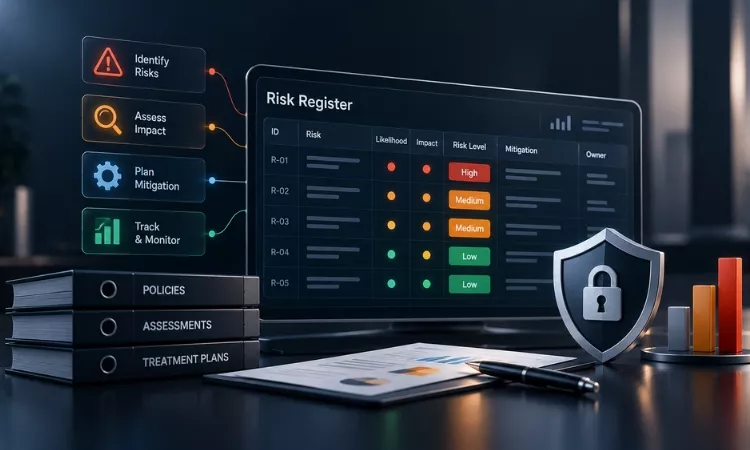
Answers to these questions should feed a documented risk record. If the organization meets several criteria, the board should assume designation is possible and prepare the SDF controls in advance. Designation timing is controlled by government notification, and retrofitting governance under a formal notice is far more costly than building it early.
What Does a Credible SDF Governance Program Include?
A credible program extends the existing privacy program rather than replacing it. Five components carry most of the weight.
- Governance structure: A DPO reporting to the board or a board committee, with a documented charter and authority over data processing decisions.
- Data inventory and mapping: A current record of processing activities, data categories, storage locations, and third-party recipients. Auditors test this record first.
- DPIA methodology: A repeatable template that scores risk to Data Principals, lists safeguards, and records residual risk acceptance by a named executive.
- Independent audit planning: An annual audit calendar, auditor selection criteria that screen for conflicts of interest, and a process for tracking remediation of audit findings.
- Evidence management: Centralized storage for consent records, access reviews, incident logs, and vendor assessments, so the organization can produce documentation within a short deadline.
Organizations often underestimate the inventory component. An SDF cannot assess risk for data it cannot locate, and shadow data stores in analytics tools or spreadsheets frequently undermine otherwise sound programs.
How Should Organizations Align the SDF Requirements With Other Frameworks?
Many Indian enterprises also serve international customers or hold ISO/IEC 27001 certification. The DPDP Act and ISO/IEC 27701:2019, the privacy extension to ISO/IEC 27001, share several structural elements, including risk assessment, processor oversight, and documented accountability. A single control environment can often satisfy both sets of requirements when the mapping is documented. The ISO/IEC 27001 standard defines the information security management foundation on which many privacy controls rely.
Cross-border transfers add another layer. Organizations that move Indian personal data to offshore cloud platforms or shared service centers need transfer records that show where the data travels and which safeguards apply at each location. The Act permits transfers to countries the Central Government does not restrict, but an SDF should document its transfer decisions with the same rigor it applies to domestic processing.
What Mistakes Leave an SDF Exposed?
Three gaps appear repeatedly in early assessments. Each one is structural and correctable.
- Appointing a DPO without authority: A DPO who cannot stop a launch or question a vendor relationship offers the appearance of compliance without its substance.
- Treating the DPIA as a one-time document: Processing activities change with new features, new vendors, and new markets. A DPIA that does not update after those changes no longer describes the risk.
- Choosing an auditor who also implements controls: Independence is a condition of the requirement, and an auditor who built the program cannot credibly assess it.
Ready to assess whether your processing activities meet the SDF threshold?
| Contact Ampcus Cyber to get a DPDP readiness review with a DPIA framework and an independent audit plan. |
People Also Ask
What is a Significant Data Fiduciary under the DPDP Act?
It is a data fiduciary the Central Government designates under Section 10 because its processing of personal data carries elevated risk to individuals, the State, or public order.
What criteria determine SDF designation?
The Act lists the volume and sensitivity of personal data, risk to Data Principals’ rights, impact on India’s sovereignty, risk to electoral democracy, security of the State, and public order.
Must an SDF appoint a Data Protection Officer?
Yes. The DPO must be based in India and serve as the representative and point of contact for the fiduciary.
What is the penalty for failing SDF obligations?
Failure to comply with Section 10 obligations can attract a penalty of up to INR 150 crore under the Act’s penalty schedule.
Can an organization designate itself as an SDF?
No. Designation rests with the Central Government, although organizations should assess their own risk profile to prepare.
Enjoyed reading this blog? Stay updated with our latest exclusive content by following us on Twitter and LinkedIn.