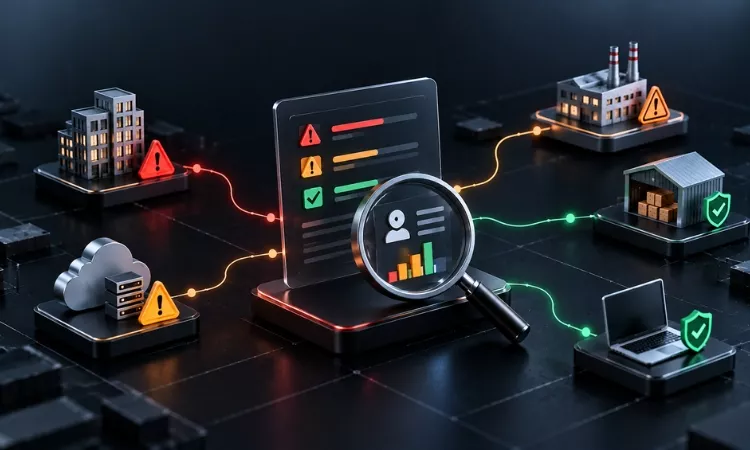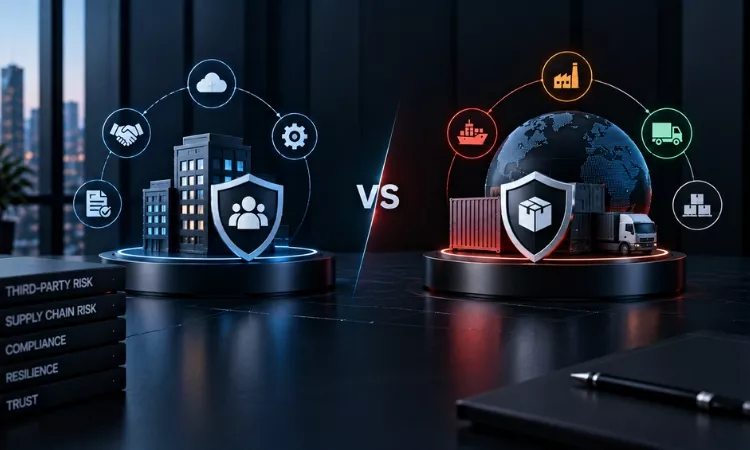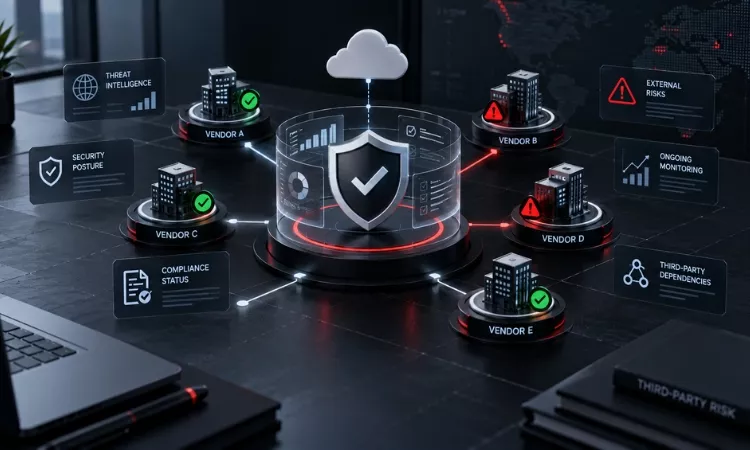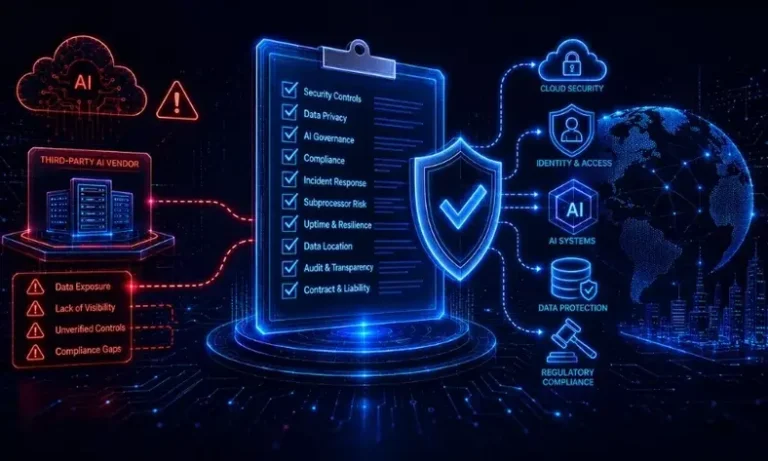










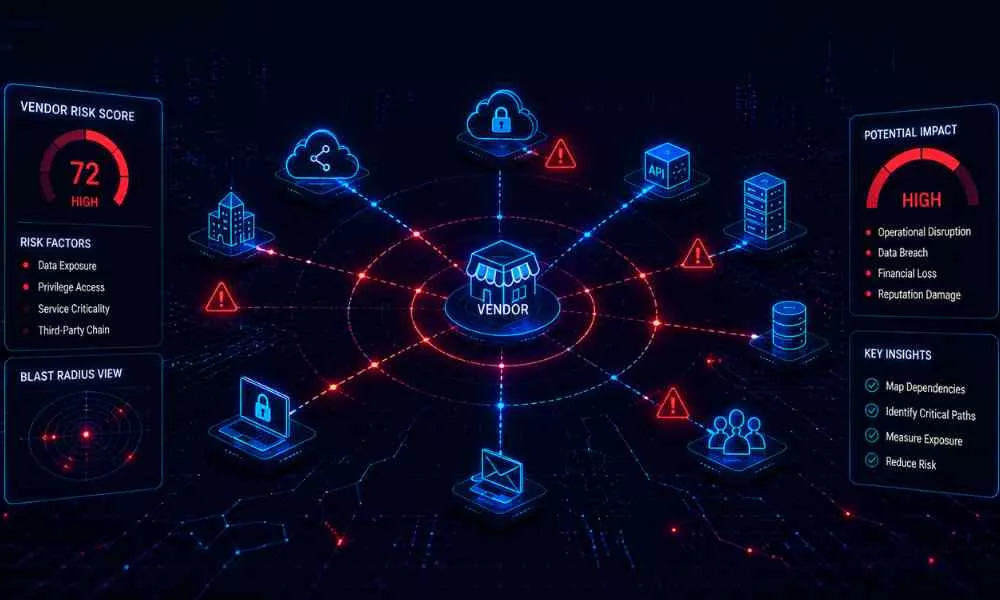
Most organizations know who their vendors are. Far fewer understand how much damage each vendor could cause if compromised. Vendor blast radius measures the potential operational, financial, regulatory, and cybersecurity impact a third-party breach could have on your organization. Understanding it helps security teams prioritize vendor risk based on business impact rather than questionnaires alone.
When a cyberattack compromises a critical software provider, the consequences rarely stop with that vendor. Customers lose access to essential services. Sensitive data may be exposed. Business operations slow down. Regulators demand answers, and security teams scramble to understand which systems, users, and business processes have been affected.
This pattern has repeated itself in recent years through incidents involving file transfer platforms, IT management software, cloud providers, and identity services. These attacks have reinforced a critical lesson: your organization’s security is increasingly shaped by the security of the vendors you depend on.
The question is “If this vendor is breached tomorrow, how much of our business goes down with it?”
That’s your vendor blast radius.
What Is Vendor Blast Radius?
Vendor blast radius is the measurable impact a third-party cybersecurity incident could have on your organization. Instead of assessing whether a vendor has security certifications or completed a questionnaire, blast radius focuses on business consequences.
It answers questions such as:
- Which critical systems depend on this vendor?
- What sensitive data can they access?
- How many business processes would be disrupted?
- Could the breach spread into internal networks?
- What regulatory obligations would be triggered?
- How quickly could operations recover?
Think of it as moving from vendor risk scoring to vendor impact modeling.
Two vendors may receive similar security ratings, yet one may process payroll for your entire workforce while the other simply provides an internal collaboration tool. Their blast radius is vastly different.
What is the Issue with the Traditional Vendor Risk Assessments?
Most organizations still rely on annual questionnaires, compliance certificates, and periodic security reviews to evaluate vendors. While these remain important, they provide only a snapshot of a vendor’s security posture.
Modern supply chains are dynamic. Vendors update software weekly, integrate AI capabilities, change cloud providers, acquire other companies, and introduce new subcontractors. Meanwhile, attackers increasingly target trusted suppliers because compromising one organization can provide access to hundreds or even thousands of downstream customers.
As a result, organizations need to understand not only whether a vendor is secure, but also how much business risk that vendor represents if security fails.
What are The Five Factors That Determine Your Vendor Blast Radius?
1. Data Exposure
What information does the vendor access? A payroll provider handling employee records presents a different level of risk than a marketing platform managing publicly available content.
The more sensitive the data, the larger the potential blast radius.
2. System Privileges
Access that determines impact. Vendors with privileged administrative access, VPN connectivity, API integrations, or identity federation can significantly expand an attacker’s opportunities following a compromise.
The principle of least privilege should extend to every third party.
3. Business Dependency
Some vendors are important, but others are indispensable.
Question yourself:
- Would operations stop if this vendor became unavailable today?
- How long could the business function without them?
- Is there an alternative?
Critical dependencies dramatically increase vendor impact.
4. Fourth-Party Dependencies
Your vendors also rely on vendors. Cloud providers, payment processors, AI platforms, software libraries, and outsourced development partners all create hidden dependencies that many organizations never map.
Understanding these indirect relationships is becoming essential for effective third-party risk management.
5. Recovery Readiness
Even well-secured vendors can experience cyber incidents.
Organizations should evaluate:
- Incident response maturity
- Backup capabilities
- Business continuity planning
- Disaster recovery testing
- Communication procedures
A vendor’s ability to recover often determines the overall business impact.
How to Measure Vendor Blast Radius Before a Breach?
Rather than assigning every vendor the same level of scrutiny, organizations should prioritize assessments based on potential business impact.
A practical approach includes:
Inventory critical vendors
Identify every vendor with access to systems, sensitive data, or business-critical processes.
Map dependencies
Understand which applications, users, cloud services, and business operations depend on each vendor.
Classify data access
Determine whether vendors access regulated information, intellectual property, customer records, financial data, or operational technology.
Assess technical connectivity
Review privileged accounts, APIs, network integrations, identity relationships, and remote administration privileges.
Quantify business impact
Estimate operational downtime, regulatory exposure, financial loss, reputational damage, and customer disruption if the vendor becomes unavailable.
Continuously monitor risk
Vendor risk is constantly changing. Continuous monitoring provides visibility into security posture changes, emerging vulnerabilities, leaked credentials, ransomware activity, and external threat intelligence that may affect third parties.
What is the Importance of Vendor Blast Radius?
The cybersecurity conversation is shifting from “How secure is this vendor?” to “How resilient is our business if this vendor fails?”
Organizations adopting AI-powered services, cloud-native platforms, and interconnected digital ecosystems are increasing the number of external dependencies within their environments.
Boards, regulators, customers, and cyber insurers increasingly expect organizations to demonstrate that they understand these dependencies not just document them.
Vendor blast radius analysis helps organizations make smarter procurement decisions, prioritize security investments, improve incident response planning, and strengthen operational resilience before a cyber incident occurs.
To Conclude
Every organization depends on third parties. The challenge isn’t eliminating that dependence but understanding its consequences.
Vendor blast radius provides a more meaningful way to evaluate third-party risk by focusing on business impact rather than compliance checklists alone. By identifying critical dependencies, limiting unnecessary access, and continuously monitoring vendor risk, organizations can reduce the likelihood that a single supplier becomes a widespread business disruption.
In today’s interconnected digital ecosystem, the question isn’t whether a vendor will experience a security incident. It’s whether your organization has already measured how far that incident could reach.
| Don’t wait for a third-party breach to reveal hidden dependencies. Call our experts to gain deeper visibility into your vendor ecosystem with Ampcus Cyber. |
Enjoyed reading this blog? Stay updated with our latest exclusive content by following us on Twitter and LinkedIn.