









TL;DR
- Automated penetration testing tools earn their place when they prove a vulnerability is exploitable, not just when they add it to a longer alert list.
- The right tool pairs AI-driven exploit chaining with continuous, always-on coverage, since 42% of vulnerabilities exploited in 2025 were used before they were ever publicly disclosed.
- Selection should center on a live proof-of-exploit trial against your own environment, not a features checklist read off a datasheet.
In August 2025, a Texas-based vendor called Marquis Software Solutions, which supplies data analytics, CRM, and compliance tools to more than 700 banks and credit unions, was hit by a ransomware attack. Attackers got in through a vulnerability in the company’s SonicWall firewall, a device class that had been under active exploitation by ransomware groups since late 2024. By the time state regulators finished compiling disclosures, at least 74 financial institutions and somewhere between 672,000 and 1.35 million individual customers had been swept into the breach.
The vulnerability itself was not a mystery. It belonged to a firewall product line with a known, publicly documented exploitation campaign running for nearly a year before Marquis was hit. Somewhere in that window, a scan would have flagged it. What a scan could not do was tell Marquis’s security team whether an attacker could reach it, chain it into something worse, and walk out with customer data, or whether it sat behind enough other controls to wait until the next maintenance cycle.
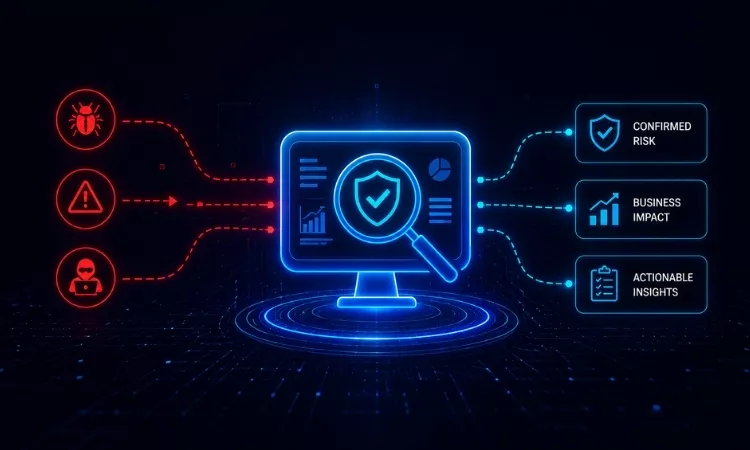
That gap, between a finding on a report and proof of what an attacker can do with it, is exactly what automated penetration testing tools exists to close.
What Is Automated Penetration Testing, and How Is It Different From Vulnerability Scanning?
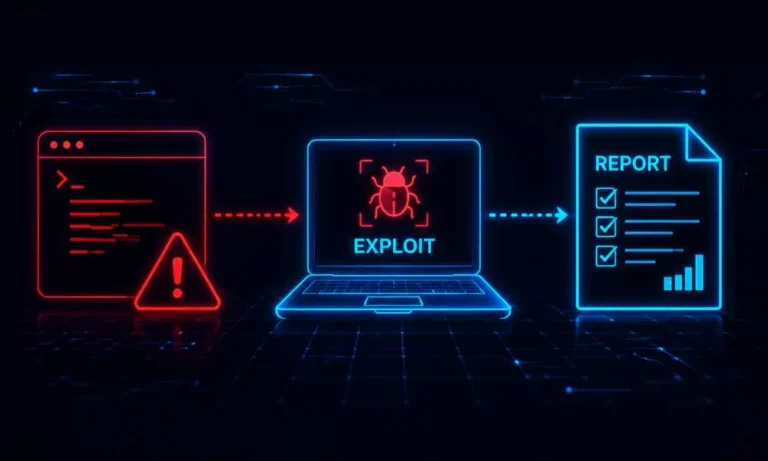
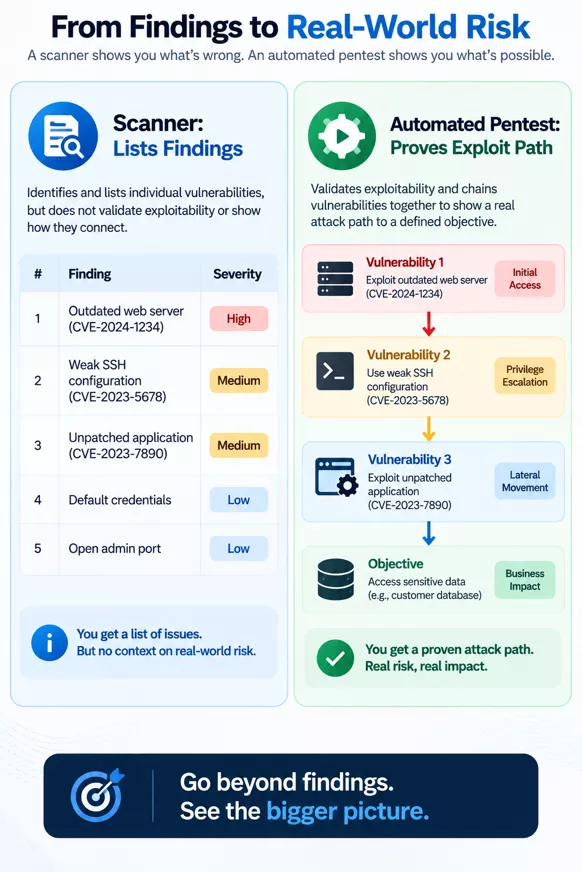
Automated penetration testing uses software, increasingly AI-driven agents, to actively attempt exploitation of discovered weaknesses rather than simply listing them. A vulnerability scanner checks a system against a database of known signatures and returns findings ranked by severity score. An automated penetration testing tool goes a step further: it tries to chain those findings together the way a human attacker would, and it reports back with evidence of what was achievable, not just what might theoretically be wrong.
The distinction matters more every year. CrowdStrike’s 2026 Global Threat Report found that 42% of vulnerabilities exploited in 2025 were used by attackers before they were even publicly disclosed, and the average eCrime breakout time, the gap between initial access and lateral movement, fell to 29 minutes. A scanner that tells you a CVE exists cannot tell you whether your specific configuration makes it reachable, or how far an attacker could get once inside. That was precisely the gap in the Marquis Software incident: the vulnerability class was known, but nothing in the pipeline validated whether it was truly exploitable in that specific environment before attackers did the validating themselves.
What Features Should You Look for in an Automated Penetration Testing Tool?
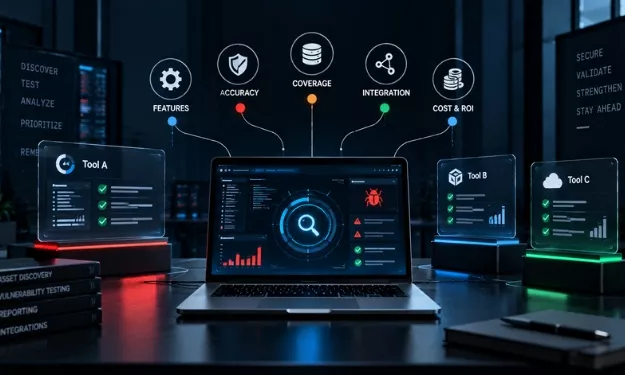
The features that matter are the ones that turn a list of possible issues into proof of what is truly exploitable. Five capabilities separate a real automated penetration testing platform from a rebranded vulnerability scanner.
- AI-driven exploit chaining: The tool should combine individually low-severity findings into realistic attack paths, the way Mirror, an autonomous pentesting tool by Ampcus Cyber uses autonomous AI agents to discover, chain, and validate vulnerabilities across web applications, APIs, infrastructure, and mobile apps rather than testing each asset in isolation.
- Continuous, always-on coverage: Testing should run against your current environment on an ongoing basis, not a scheduled two-week engagement that goes stale the moment a new API ships.
- Proof-of-exploit evidence: Every finding should come with evidence it was exploited in practice, not a CVSS score and a guess, so remediation teams fix what is provably dangerous instead of debating priority.
- Breadth across the modern attack surface: Web applications, APIs, cloud infrastructure, and mobile apps should sit inside one platform, since attackers rarely respect the boundary between them.
- Safe testing controls for production environments: The platform needs guardrails that let it test live systems without risking an outage, since testing that cannot safely run in production only tells you about an environment you are not defending in practice.
A tool built around these five capabilities changes the conversation security teams have with the business, from a list of hundreds of findings ranked by severity to a short list that is provably exploitable, backed by evidence.
What Is the Right Process to Evaluate and Select a Tool?
The right evaluation process starts with your attack surface, not a vendor’s feature comparison chart. Run the evaluation in four steps.
- Map what needs testing before the first demo: List every web application, API, cloud workload, and mobile app in scope, including vendor-operated portals fronted at your own domain, since those get excluded from scoping conversations more often than they should be.
- Request a live proof-of-exploit trial against your own environment: A vendor demo on sample data proves little. A trial against your actual assets shows whether the tool can find and validate a real issue.
- Check the noise ratio, not just the finding count: Ask how many findings came with proof of exploitability versus how many were theoretical, since a platform returning hundreds of unvalidated alerts has simply moved the triage burden rather than removed it.
- Confirm safe-testing guardrails and reporting alignment: The platform should map its output to the frameworks you already report against, and NIST SP 800-115 remains a solid reference point for a defensible testing methodology, regardless of vendor.
Ampcus Cyber’s Advanced Penetration Testing practice runs this same evaluation with clients before any platform decision, since a tool that generates confident-looking reports without proof of exploitability creates a false sense of coverage that is worse than no automated testing at all.
How Do You Measure Whether Your Automated Pentesting Tool Is Working?
You measure success by how much of your findings backlog turns into proof rather than speculation, not by how many scans run each week. Track four indicators.
- Mean time to validate a new CVE against your live environment: When a new vulnerability is disclosed, this is how long it takes to know whether it is reachable and exploitable in your specific setup.
- Share of findings backed by proof-of-exploit evidence: A rising share means remediation teams are fixing provably dangerous issues instead of triaging a severity-sorted guess list.
- Manual triage hours saved per cycle: Compared with the pre-automation baseline.
- Time to remediate confirmed-exploitable findings: Since this number correlates with reduced breach risk far more directly than raw finding counts.
Continuous penetration testing tool like Mirror are built around exactly this shift, delivering a real-time reflection of security exposure with evidence attached, so security leaders can answer whether they are exposed right now with proof, not a guess the next audit will have to revisit.
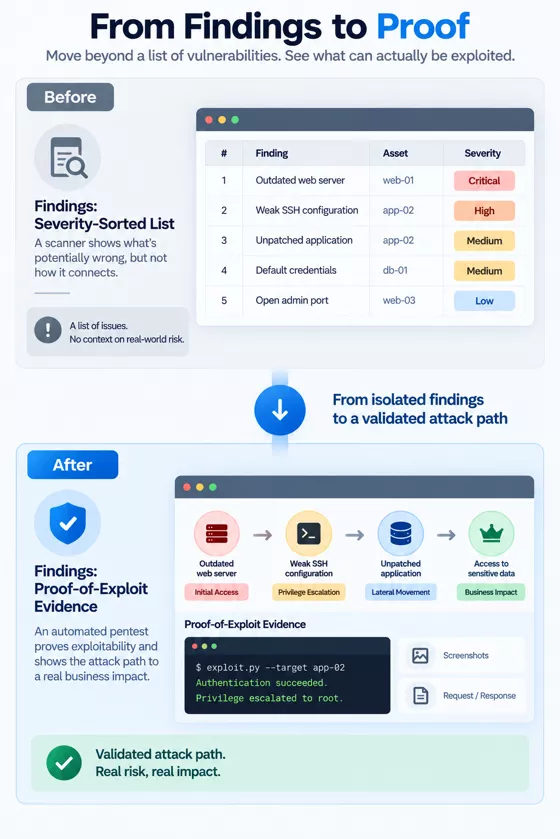
The Marquis Software incident did not happen because nobody scanned for vulnerabilities. It happened in the gap between a known issue and proof of what an attacker could do with it, a gap that widens every day a testing program relies on point-in-time engagements alone. Choosing the right automated penetration testing tool means choosing the one that closes that specific gap, with evidence, continuously.
Ready to stop guessing and start proving what’s exploitable?
| Book a demo of Mirror, Ampcus Cyber’s Mirror, one of the best tools for penetration testing, and see a real-time reflection of your security exposure. |
People Also Ask:
Is automated penetration testing the same as vulnerability scanning?
Can AI-powered penetration testing safely run against production systems?
How often should automated penetration testing run?
Does automated penetration testing replace the need for a human red team?
What industries benefit most from continuous automated penetration testing?
Enjoyed reading this blog? Stay updated with our latest exclusive content by following us on Twitter and LinkedIn.