








Attackers rarely break in anymore, they now log in. Stolen and phished credentials remain one of the fastest paths into an organization, and the password sits at the center of the problem. Phishing-resistant authentication is the response, and in 2026 it has moved from a security ideal to a measurable global trend, with billions of passkeys now in everyday use.
This article explains what phishing-resistant authentication is, why passwords and even legacy multi-factor authentication are failing, and how quickly adoption is accelerating.
What Is Phishing-Resistant Authentication?
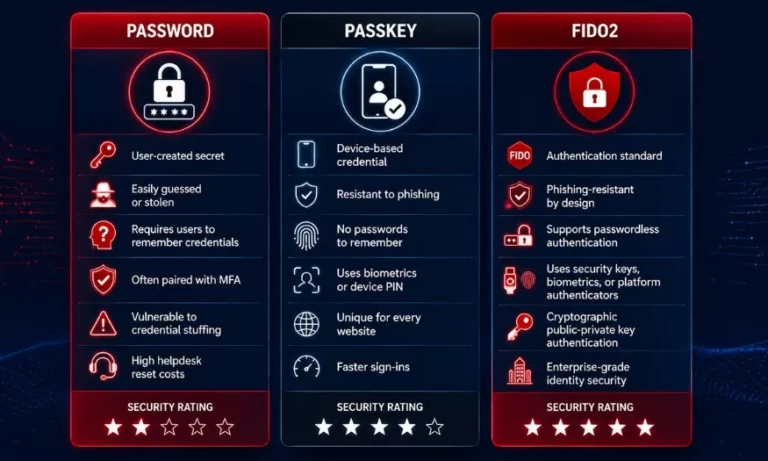
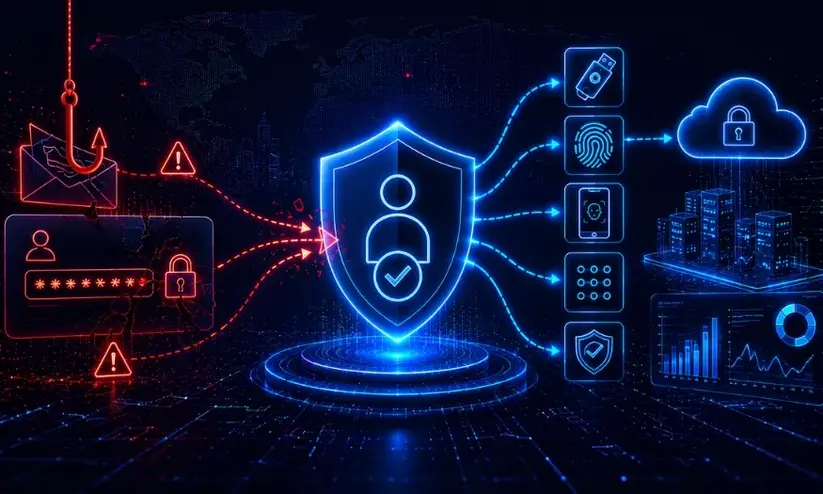
Phishing-resistant authentication is any method that cannot be tricked into handing an attacker a usable credential, because the authentication is cryptographically bound to the legitimate website or service. Instead of a shared secret that a user can be fooled into typing into a fake page, the authenticator signs a challenge that is scoped to the real origin. If the site is fake, the sign-in simply fails. In practice this means FIDO2 and WebAuthn credentials, passkeys, and PKI-based smart cards such as PIV or CAC. For a broader grounding in how these controls fit into an identity program, see our guide to identity and access management.
Why Passwords Alone Are Failing
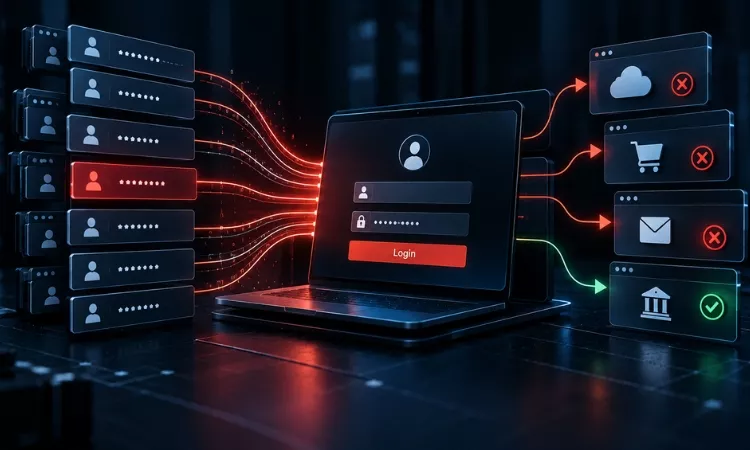
Passwords fail for reasons that no complexity policy can fix. People reuse them across sites, so one breach exposes many accounts. They can be phished, guessed, and bought in bulk from previous breach dumps. And because a password is a shared secret, anyone who obtains it becomes indistinguishable from the legitimate user.
Compromised credentials are consistently among the most common causes of security breaches, and the human element is the weak link attackers exploit most reliably. According to the FIDO Alliance’s State of Passkeys 2026 research, roughly one in three consumers experienced an account compromise or breach notification in the past year, a reminder that the password problem remains unsolved at scale.
Why Legacy MFA Is Not Enough Either
Adding a second factor helped, and it still blocks a large share of opportunistic attacks. Microsoft has reported that multi-factor authentication stops more than 99.9% of automated account compromise attempts. The problem is that the most common second factors are still phishable. One-time passcodes, SMS codes, and push approvals are shared secrets or approvals that an attacker can relay in real time.
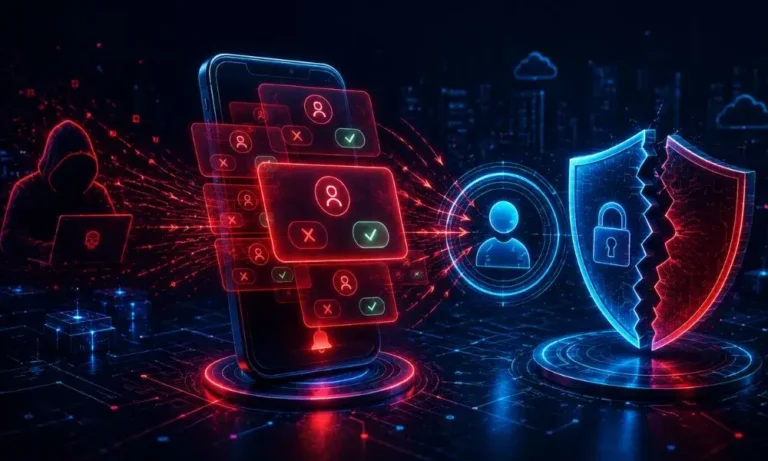
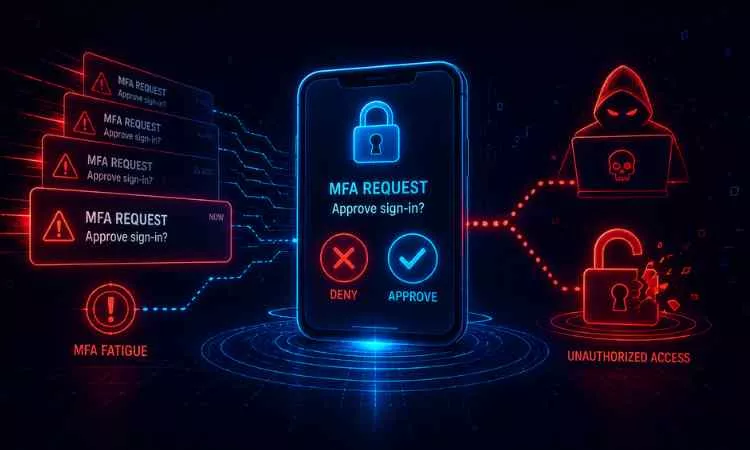
Adversary-in-the-middle phishing kits proxy the login, capture the code, and pass it straight through. Prompt bombing wears users down until they tap approve. SMS is exposed to SIM-swap and network-level interception. This is why CISA states plainly that OTP and push-based MFA are not phishing-resistant, and names FIDO2/WebAuthn and PKI as the gold standard. Legacy MFA raises the bar. It does not close the door.
Adoption Trends: Phishing-Resistant Authentication in 2026
The shift is now measurable and global. On World Passkey Day 2026, the FIDO Alliance estimated that around five billion passkeys are in use worldwide. Its State of Passkeys 2026 research found that 90% of consumers are now aware of passkeys, 75% have enabled one on at least one account, and 68% of organizations are deploying, piloting, or rolling out passkeys for employee sign-ins. Adoption is especially strong in Asia, with awareness in India and China both around 88%.
But awareness is not the same as elimination. The same research found that even among organizations that have deployed passkeys, 57% still rely on a phishable method for primary day-to-day sign-in. Deploying phishing-resistant authentication and retiring passwords are two different milestones, and most organizations are still stuck in the gap between them. That gap is exactly where the risk lives, because a phishing-resistant option that users can still bypass provides a phishing-resistant option, not phishing-resistant security.
The direction of travel is clear, though. The FIDO Alliance reports that 82% of organizations now consider fully password less authentication a goal they have reached or are actively pursuing, with 28% already password-less across most of their workforce. What is notable is why they are moving. Security remains the leading driver, but it is no longer the only one. Organizations cite faster logins, better user experience, and lower help-desk costs as concrete outcomes once passkeys are deployed, which means phishing-resistant authentication increasingly pays for itself rather than sitting on the security budget as pure cost. That combination of stronger protection plus measurable operational savings is what is pushing adoption from early adopters into the mainstream.
What Standards and Regulators Now Expect
Phishing-resistant authentication is no longer only a best practice. It is becoming the baseline that standards assume. NIST’s digital identity guidelines describe verifier-impersonation resistance, the precise property that defeats phishing, and treat phishing-resistant authenticators and passkeys as the expectation for higher assurance levels. This regulatory direction reinforces a Zero Trust posture, in which identity is the control plane and every access request is verified explicitly rather than assumed safe. As perimeters dissolve and even autonomous AI agents begin to request access, identity itself has become the real perimeter, a shift we explore in the era of Agentic IAM.
How to Move Toward Phishing-Resistant Authentication
Moving to phishing-resistant authentication is a program, not a switch. A practical path looks like this.
- Start where the risk and payoff are highest: Roll out FIDO2 or passkeys first for administrators, privileged accounts, email, and single sign-on, since these protect the most valuable access and are already widely supported.
- Retire phishable factors for high-risk workflows: Phase out SMS, email codes, and push approvals for sensitive systems, keeping them only as short-term transitional fallbacks.
- Fix account recovery: Recovery flows that fall back to a one-time code quietly reintroduce the phishing surface you just removed, so design recovery to stay phishing-resistant end to end.
- Tie it into identity governance: Phishing-resistant sign-in is strongest when it sits inside a mature IAM program with least privilege, continuous monitoring, and clean identity lifecycle management, not as a standalone bolt-on.
Close the Gap Between Passwords and Real Protection
Passwords are no longer a control. They are a liability that attackers are counting on. The organizations pulling ahead are the ones moving deliberately toward phishing-resistant authentication before the next credential-based breach forces the conversation. Ampcus Cyber’s Identity and Access Management services help you deploy phishing-resistant authentication, enforce Zero Trust, and govern every identity across your environment.
| Talk to our team and start closing the gap between passwords and real protection today. |
Enjoyed reading this blog? Stay updated with our latest exclusive content by following us on Twitter and LinkedIn.