








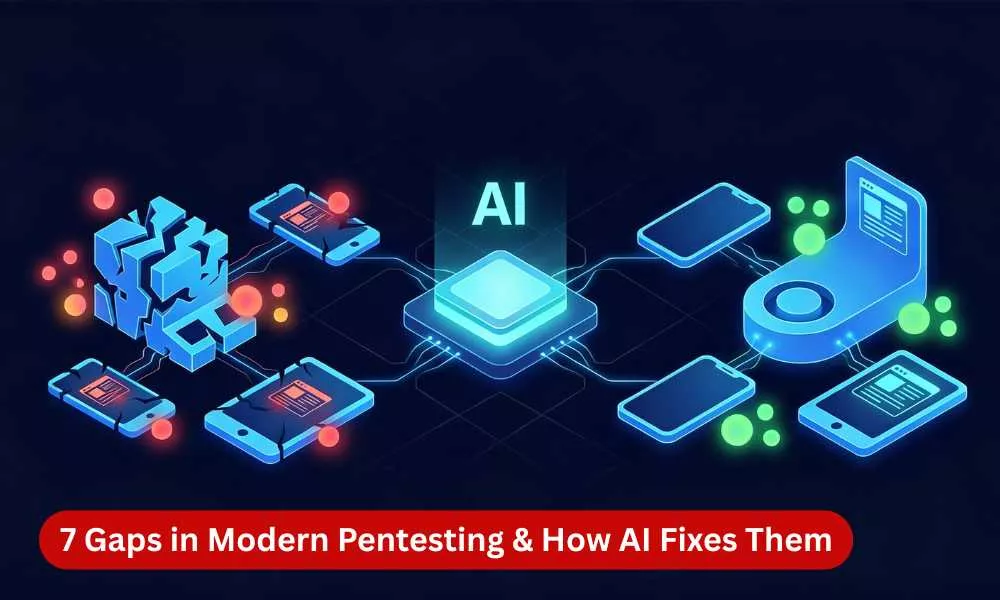
“Discover how Mirror, an AI-driven pentesting platform, fixes gaps in traditional penetration testing with continuous testing and real-time risk validation.“
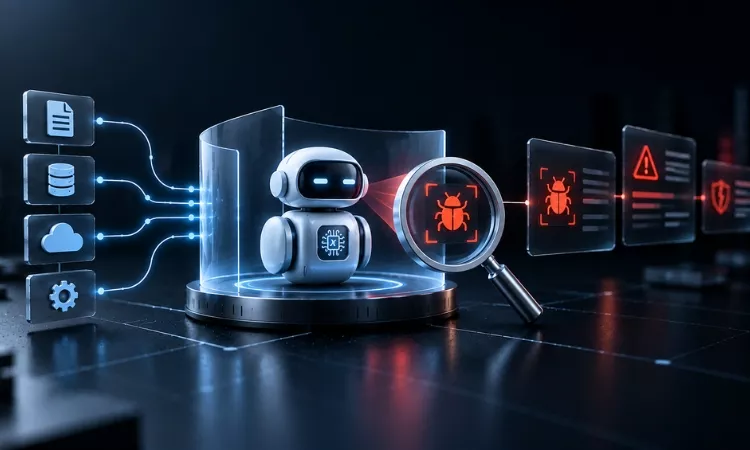
Penetration testing is broken, not the craft, but the model. Offensive security practitioners have never been more skilled. What is broken is how engagements are purchased, delivered, consumed, and acted upon. That model has not meaningfully evolved in a decade, yet the attack surface it protects has transformed beyond recognition. Mirror is an AI penetration testing platform built to fix it.
This article examines the structural gaps in traditional penetration testing and how a continuous, AI-driven model redefines how organizations identify, prioritize, and remediate risk.
Fracture 1: The Periodicity Problem
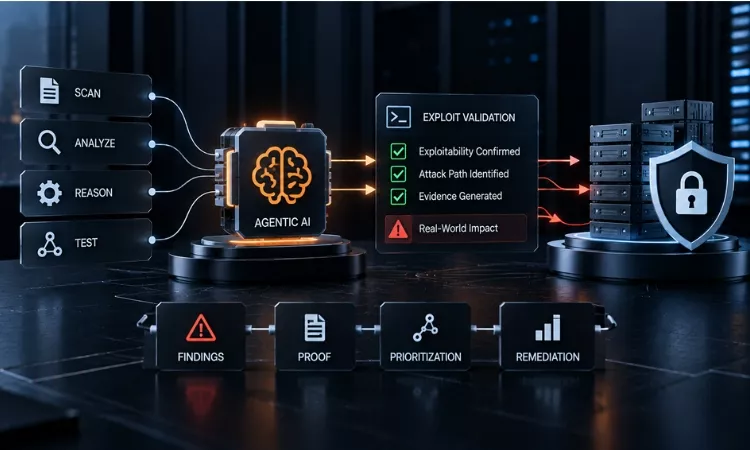
Organizations test once or twice a year, but adversaries probe continuously. A team managing five hundred applications tests each one roughly once a year, yet each application ships code multiple times per day. Every unreviewed delta is an uninvestigated risk. With attackers increasingly leveraging AI to discover and weaponize novel vulnerabilities at unprecedented speed, annual testing cycles cannot keep pace. Mirror deploys persistent AI agents that offer continuous penetration testing across the environment as it changes, treating each deployment event as a trigger, not a footnote.
Fracture 2: The Talent Ceiling
Penetration testing talent is scarce and expensive, forcing coverage of trade-offs that leave parts of the estate uninspected. Mirror doesn’t replace expert judgment; it eliminates the ceiling that scarcity imposes on it. AI agents handle the systematic surface: reconnaissance, known-pattern exploitation, configuration review, and API enumeration. Human practitioners direct their expertise to creative attack chaining and business logic abuse. The result is machine-scale breadth with human-quality depth, simultaneously.
Fracture 3: The Static Report Illusion
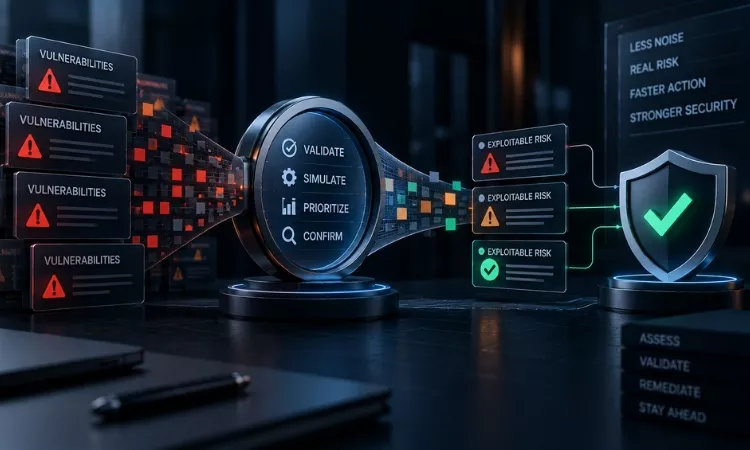
The traditional pentest ends with a PDF; a snapshot delivered weeks after the assessment concluded, disconnected from the ticketing and remediation workflows where actual change takes place. Findings age, new vulnerabilities that emerged after the engagement are invisible to it. Mirror treats every finding as a live data object. Vulnerabilities flow directly into the tools engineering and security teams already use; vulnerability management platforms, SIEMs, and ticketing systems like Jira, ServiceNow, and Linear, through bidirectional integrations. When a fix is deployed, Mirror re-validates it automatically and updates the ticket. The report becomes a living dashboard, not a document that expires on delivery.
Fracture 4: The Compliance Disconnect
In most organizations, penetration testing and GRC operate as parallel streams that rarely converge. Regulators have made convergence mandatory. DORA requires continuous controls for validation of financial services. NIS2 extends comparable obligations across critical infrastructure. SEC disclosure rules demand specificity that annual reports rarely provide. Mirror was purpose-built within the ComplyX GRC platform, giving it a structural advantage most point-solution pentesting tools lack native compliance mapping. Every finding is automatically tagged against ISO 27001, SOC 2, DORA, NIS2, PCI DSS, and HIPAA control references, generating audit-ready evidence as testing happens, not as a separate exercise weeks before an audit. For the first time, pentesting output and compliance output have become the same artifact.
Fracture 5: The Board Communication Failure
Security debt known for vulnerabilities that remain unresolved for months or years, is now endemic. This is not primarily a technical failure but a governance failure. It is a governance failure. When findings cannot be translated into business risk language, they cannot compete for remediation budget. Critical vulnerabilities sit in backlogs for months, not because engineering capacity is absent, but because no one with budget authority understood the urgency. Mirror generates two parallel intelligence streams: one for the technical team, one for the board, with quantified exposure, regulatory liability estimates, and peer benchmarking. Security teams stop waiting for approval. They arrive with the numbers that create it.
Fracture 6: The AI Attack Surface Blind Spot
Every enterprise has deployed AI in the past eighteen months and almost universally, those deployments have outpaced the security practices required to assess them. Conventional penetration testing was not designed to evaluate prompt injection, context window manipulation, or indirect injection through retrieval-augmented systems. It was not designed for agentic capability escalation.
Mirror’s AI Red Teaming module is. It probes LLM-powered applications and autonomous agents against the full taxonomy of adversarial AI attack techniques, prompt injection, jailbreaks, data exfiltration through context manipulation, tool abuse, and agentic capability escalation, chaining strategies autonomously to find what single-prompt testing misses entirely.
Fracture 7: The Remediation Void
Findings are discovered, tickets are created, and the loop is rarely closed. Whether a fix was implemented correctly, or whether a subsequent code change silently reintroduced the same weakness three sprints later, is almost never systematically tracked. Mirror treats remediation validation as a first-class capability. When an engineering team closes a vulnerability ticket, Mirror automatically retests the affected component. Regression testing runs continuously. The gap between a finding reported and a risk verified as closed collapses from months to hours.
Mirror: One AI Pentesting Testing Platform. Seven Problems Solved
All seven fractures share the same root cause: penetration testing has been treated as a discrete technical event rather than a continuous organizational function. The organizations that will navigate the 2026 threat environment are not necessarily those with the largest budgets. They are those whose testing model reflects the reality of how they build, deploy, and govern today.
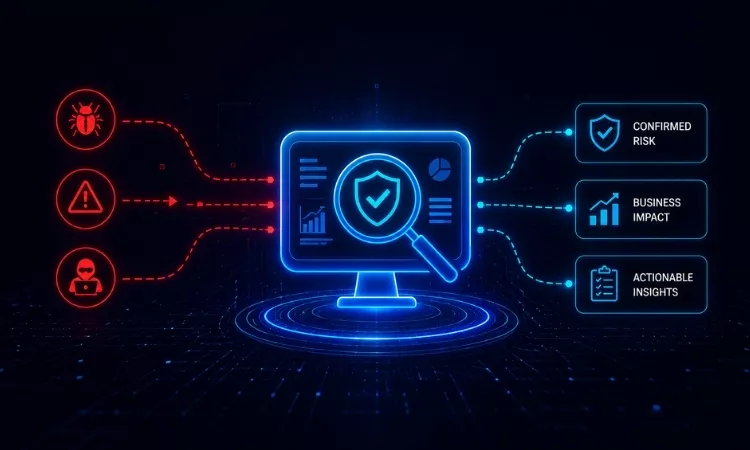
Mirror is that model. It continuously discovers chains, and validates exploitable vulnerabilities across applications, APIs, infrastructure, and AI systems. It integrates directly into engineering and security workflows, maps findings to compliance frameworks, and verifies remediation in real time. What was once periodic, manual, and report-driven is now continuous, automated, and operationalized.
The question is no longer whether you test. It is whether your testing model reflects the reality of how you build and deploy.
Enjoyed reading this blog? Stay updated with our latest exclusive content by following us on Twitter and LinkedIn.