









Modern compliance audits require more than vulnerability scans or outdated penetration test reports. Organizations must now prove that security controls are effective through validated findings, remediation evidence, and continuous testing records. This article explains how ComplyX Mirror helps businesses meet the penetration testing expectations of SOC 2, ISO 27001, PCI DSS, and NIS2 through autonomous AI-driven testing and audit-ready reporting.
Compliance audits have changed. Auditors no longer accept a clean vulnerability scan or a year-old penetration testing report as evidence that your security controls work. They want proof: validated findings, documented attack paths, remediation records, and evidence that your testing keeps pace with your infrastructure.
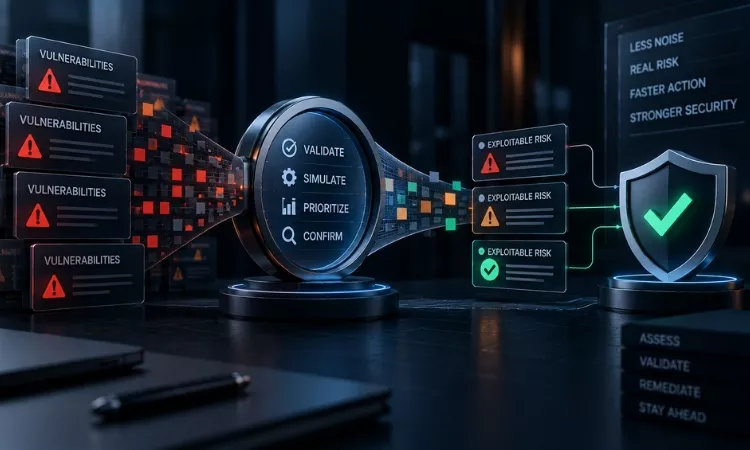
That gap between what most organizations submit and what auditors need is where traditional penetration testing tools fall short. Annual assessments miss changes introduced the day after the engagement ends. Automated scanners surface thousands of theoretical findings without confirming one is exploitable. Security teams are left managing noise instead of risk.
ComplyX Mirror is built for this environment. As an AI-powered penetration testing platform, Mirror uses autonomous AI agents to discover vulnerabilities, chain them across systems, validate exploitability, and produce structured, evidence-backed reports, the kind that satisfy the specific penetration testing obligations embedded in SOC 2, ISO 27001, PCI DSS, and NIS2.
Why Compliance Frameworks Now Demand Proof of Exploitability
The shift is visible across every major framework. Regulators have moved away from asking “did you test?” toward asking “what did testing prove?” This reflects a broader recognition that checkbox compliance does not prevent breaches.
According to IBM’s Cost of a Data Breach Report 2024, the global average cost of a data breach reached USD 4.88 million, a 10% increase over the prior year and the highest figure ever recorded. The report found that organizations with proactive security testing programs identified and contained breaches significantly faster than those relying on reactive approaches.
This is the context in which SOC 2 auditors scrutinize control effectiveness, ISO 27001 certification bodies review technical vulnerability management, PCI QSAs evaluate penetration test scope and methodology, and NIS2 competent authorities assess risk management measures. Theoretical findings do not hold up. Validated attack paths do.
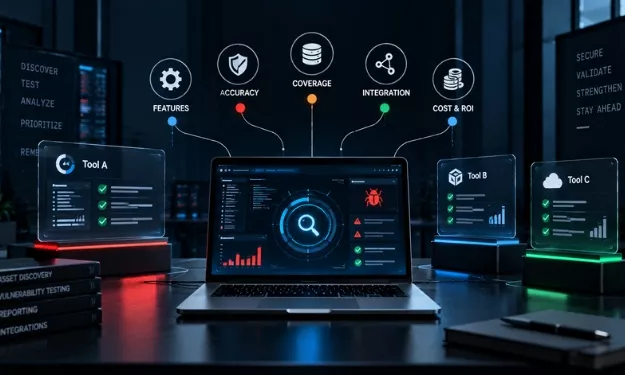
Traditional automated penetration testing tools were not designed to meet this standard. They were designed to scan. Mirror is designed to prove.
What Each Framework Requires from Penetration Testing
Understanding exactly where penetration testing sits within each framework clarifies why Mirror’s approach is relevant.
SOC 2 does not explicitly mandate penetration testing, but it requires organizations to demonstrate that controls are effective, particularly around logical access (CC6.1), threat monitoring (CC7.1–CC7.4), and change management (CC8.1). Auditors routinely treat a well-scoped penetration test with validated findings and remediation records as the most credible evidence available for these criteria.
ISO 27001 recommends penetration testing under Annex A Control 8.8 (management of technical vulnerabilities) and expects ongoing technical review as part of the Plan-Do-Check-Act cycle. Risk assessments must be informed by technical evidence, not assumptions.
PCI DSS v4.0 is the most prescriptive. Requirement 11.4 explicitly mandates penetration testing at least annually, after significant changes to the cardholder data environment, and at least every six months for network segmentation validation by service providers. Scope must cover network and application layers, internal and external perspectives, and findings must be remediated and retested. The framework requires the test to be performed by a qualified resource, internal or external, but does not mandate that the testing be exclusively manual. What it requires is appropriate scope, sound methodology, comprehensive documentation, validated findings, and remediation evidence. Mirror provides all of these as outputs of every assessment.
NIS2 (with national transposition required by October 2024) requires essential and important entities to implement proportionate and demonstrable technical measures for cybersecurity risk management under Article 21. While it does not name penetration testing, validated security testing is the most defensible way to demonstrate that risk management measures are operational and that senior management, who bear personal accountability under NIS2, can evidence their due diligence.
How Mirror Output Maps to Each Framework
| Framework | Specific Requirement | What Mirror Provides |
| SOC 2 | CC6.1, CC7.1-CC7.4, CC8.1 -control effectiveness evidence | Validated exploit findings, remediation records, retesting evidence |
| ISO 27001 | Annex A 8.8 – technical vulnerability management | Continuous testing output, risk-rated findings, methodology documentation |
| PCI DSS v4.0 | Requirement 11.4 – annual + post-change penetration testing | Network + application layer coverage, internal + external perspectives, validated findings, retest evidence |
| NIS2 | Article 21 – proportionate technical risk management | Demonstrable continuous testing, board-level reporting, audit-ready records |
How Mirror Works as an Autonomous Penetration Testing Platform
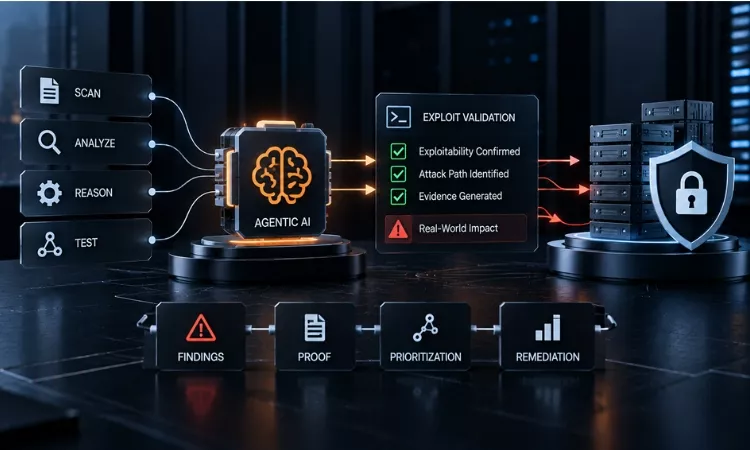
Mirror is not a scanner. It is an autonomous penetration testing platform that operates through agentic AI, coordinated AI agents that simulate the behavior of real attackers across your environment.
Where conventional automated penetration testing software executes predefined checks against known vulnerability signatures, Mirror’s AI-driven engine reasons across your attack surface. It discovers vulnerabilities, assesses how they interact with adjacent weaknesses, chains them into realistic attack paths, and validates whether those paths are exploitable, delivering proof, not probability.
Testing spans web applications, APIs, network infrastructure, mobile apps, source code, and cloud environments. Mirror integrates directly into CI/CD pipelines, enabling continuous penetration testing that evolves with your codebase rather than falling behind it. Every deployment, every configuration change, every new API endpoint is reflected in your security posture in near real-time.
This shifts penetration testing from a periodic compliance task to an operational security capability, which is precisely what frameworks like ISO 27001 and NIS2 are designed to incentivize.
For organizations managing PCI DSS compliance, Mirror’s continuous coverage is particularly valuable: it addresses the requirement to test following significant changes without requiring a new manual engagement each time.
The Evidence Auditors Actually Need
The most common reason penetration test reports fail to satisfy auditors is not insufficient testing, it is insufficient documentation. Reports that lack clear methodology, do not map findings to framework controls, or cannot demonstrate remediation provide little assurance value.
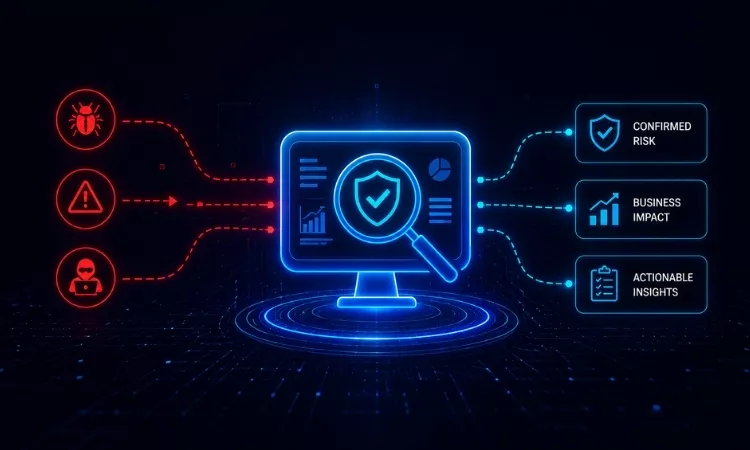
Mirror’s output is structured for compliance consumption. Reports include executive summaries, detailed methodology documentation, validated findings with reproduction steps and severity ratings mapped to relevant framework controls, and remediation guidance. This maps directly to what PCI QSAs, ISO 27001 certification bodies, and SOC 2 auditors require from a penetration test report.
Because Mirror validates exploitability before surfacing a finding, the findings that reach the report are real. There is no need to spend audit cycles explaining why critical-severity items were not remediated because they were false positives. The signal-to-noise ratio is fundamentally different from what conventional penetration testing tools produce.
Continuous Penetration Testing as a Compliance Strategy
The organizations that struggle most with compliance audits are those that treat security testing as a calendar event. They test in Q1, submit the report, and hope nothing significant changes before the next audit cycle. In environments where infrastructure, applications, and vendor integrations change continuously, that approach is not just inefficient, it is a liability.
Continuous penetration testing changes the compliance equation. Instead of demonstrating a point-in-time snapshot of security, organizations can demonstrate an ongoing, documented record of security validation, evidence that controls are not just present but consistently tested against real-world attacker behavior.
Mirror, as part of the broader ComplyX platform alongside GRACE for compliance automation and Wizard for third-party risk management, enables this model at scale. Mirror is not just a penetration testing tool. It is the technical evidence layer that turns continuous compliance from an aspiration into an operational realit.
For security and compliance teams navigating the combined demands of SOC 2, ISO 27001, PCI DSS, and NIS2, that distinction matters.
| Ready to see what Mirror finds in your environment? Book a demo. |
Enjoyed reading this blog? Stay updated with our latest exclusive content by following us on Twitter and LinkedIn.