








When organizations think about cybersecurity threats, they often picture ransomware gangs, nation-state actors, or external hackers attempting to breach their networks. However, some of the most damaging security incidents originate from within.
Insider threats continue to be one of the most difficult risks to detect because they involve trusted users operating with legitimate access. Employees, contractors, vendors, and privileged administrators often have access to sensitive information and critical systems as part of their daily responsibilities. When that access is misused, whether intentionally or accidentally, the consequences can be significant.
For financial institutions, where customer trust and regulatory compliance are paramount, insider threats represent a risk that cannot be ignored.
The Challenge of Identifying Insider Threats
Unlike external attacks, insider threats rarely trigger traditional security alarms. There is no obvious malware infection, brute-force attack, or suspicious IP address to investigate. Instead, the activity often appears legitimate on the surface.
An employee downloading customer records, accessing financial reports, or reviewing sensitive documentation may simply be performing their job duties. The challenge lies in determining when normal activity crosses the line into risky behavior.
As financial institutions continue to expand their digital operations, adopt cloud-based platforms, and support hybrid work environments, maintaining visibility into user activities becomes increasingly complex.
When Visibility Becomes the Biggest Security Gap
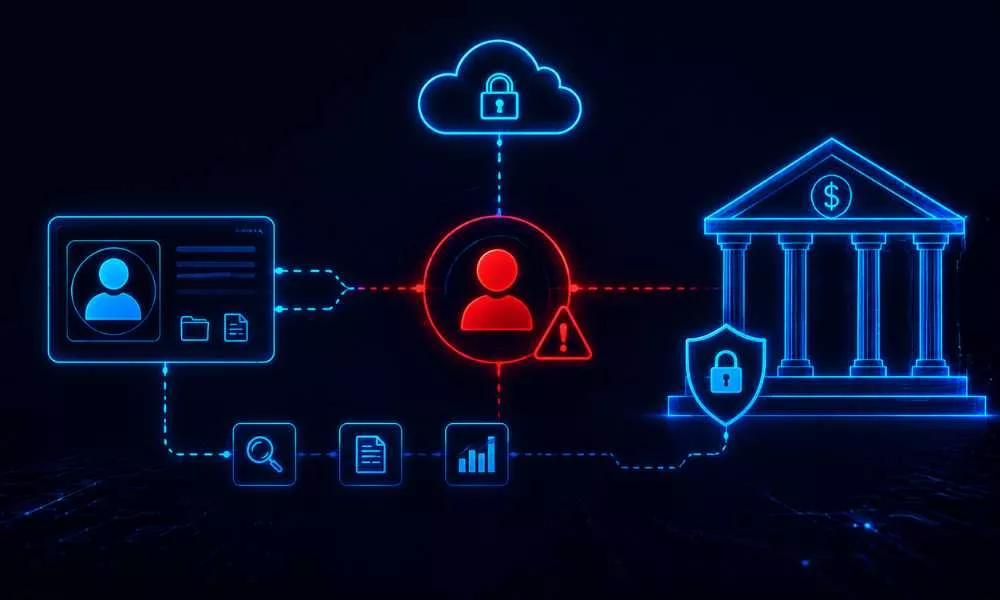
A leading financial institution approached Ampcus Cyber with concerns about potential insider risks and limited visibility into user activities across critical systems. The organization had invested heavily in cybersecurity controls, yet leadership recognized that understanding who had access to sensitive information, and how that access was being used, required a more focused assessment.
Rather than looking for a specific incident, the objective was to identify hidden risks before they evolved into security events. Through a structured investigation, Ampcus Cyber analyzed user activity patterns, access privileges, authentication records, and system logs to gain a deeper understanding of the organization’s internal risk landscape.
What emerged was a familiar challenge seen across many enterprises: security controls existed, but visibility into user behavior was not always consistent.
The Hidden Risks Behind Legitimate Access
One of the most important lessons from insider threat investigations is that risk is not always associated with malicious intent. In many cases, organizations discover excessive permissions, outdated access rights, weak monitoring practices, or gaps in governance that create opportunities for misuse.
A user may retain access long after changing roles. A contractor account may remain active beyond the duration of a project. Sensitive data may be accessible to more individuals than necessary.
Individually, these issues may appear minor. Collectively, they create an environment where insider risks become much harder to detect and control. For financial institutions managing large volumes of customer and financial data, these gaps can quickly translate into operational, compliance, and reputational risks.
Building a Stronger Insider Threat Strategy
Addressing insider threats requires more than deploying additional security tools. Organizations need a combination of visibility, governance, and continuous monitoring.
User behavior analytics, access reviews, privileged access management, and centralized logging all play important roles in creating a proactive insider threat program. Equally important is ensuring that access privileges remain aligned with business responsibilities and that monitoring capabilities evolve alongside organizational growth.
The goal is not to assume malicious intent but to establish sufficient visibility to identify risks before they become incidents.
Conclusion
Insider threats remain a complex cybersecurity challenge facing financial institutions today. As organizations continue to invest in protecting themselves from external attackers, equal attention must be given to understanding the risks that already exist within trusted environments.
The engagement with this financial institution reinforced a lesson that applies across industries: organizations cannot protect what they cannot see. By improving visibility into user activities, access patterns, and internal risk exposures, financial institutions can strengthen their security posture, support compliance objectives, and build greater resilience against one of cybersecurity’s most persistent threats.
Looking to strengthen your insider threat program?
| Connect with Ampcus Cyber to assess internal risks, improve visibility, and build a proactive strategy for protecting sensitive data and critical systems. |
Enjoyed reading this blog? Stay updated with our latest exclusive content by following us on Twitter and LinkedIn.