










TL;DR
- Hire a vCISO when an outside party asks a security question that your team cannot answer with authority, and company size matters less than exposure.
- Enterprise questionnaires, a first audit, fundraising, cyber insurance, regulated data, and incidents are the six triggers that most often start the search.
- A vCISO fits until daily executive decisions or a resident team need a full-time CISO, and clear 90-day deliverables show whether the engagement works.
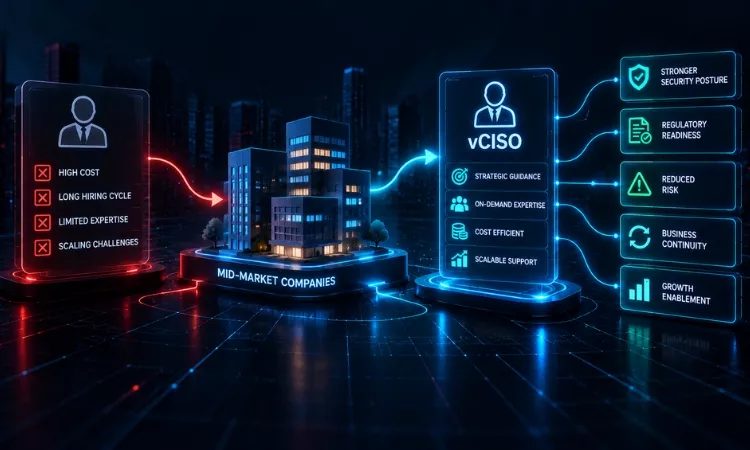
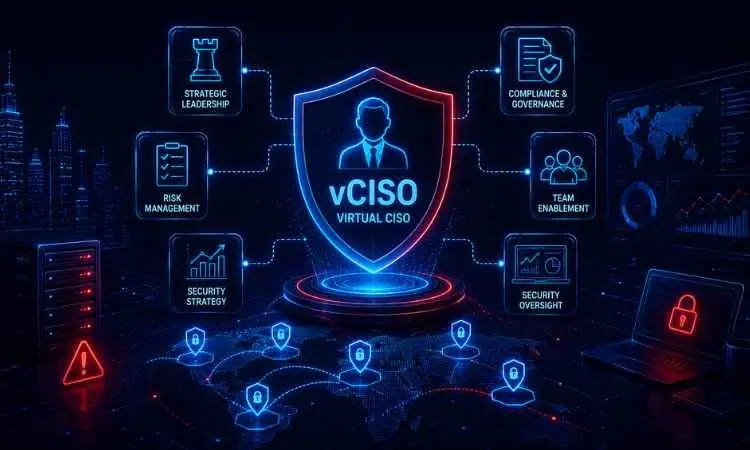
A growing company leads to an exposure of security responsibilities. It becomes difficult to manage security without dedicated executive oversight. A vCISO provides strategic security leadership, helps establish accountability, addresses compliance and risk requirements, and prepares the organization to respond to customer, audit, investor, insurer, or regulatory demands.
This guide explains when a company should hire a vCISO, the key business signals that indicate the right time, and how to determine whether a vCISO engagement fits the company’s current stage of growth.
When Should a Growing Company Hire a vCISO?
A growing company should hire a vCISO when an outside party asks a security question that the team cannot answer with authority. The outside party might be an enterprise customer, an auditor, an investor, a cyber insurer, or a regulator. Company size and revenue matter less than exposure, so a 40-person firm that handles payment or health data may need a vCISO before a 300-person firm that holds little sensitive data. When two of the triggers below appear in the same quarter, the company has usually waited long enough.
Teams that wait until a deal stalls pay twice, once in lost momentum and again in rushed remediation. A useful test asks whether the company can answer five questions today: who owns security risk, which frameworks apply, when the last risk assessment took place, how the team would handle an incident, and what the board last heard about security.
Which Business Events Signal That It Is Time?
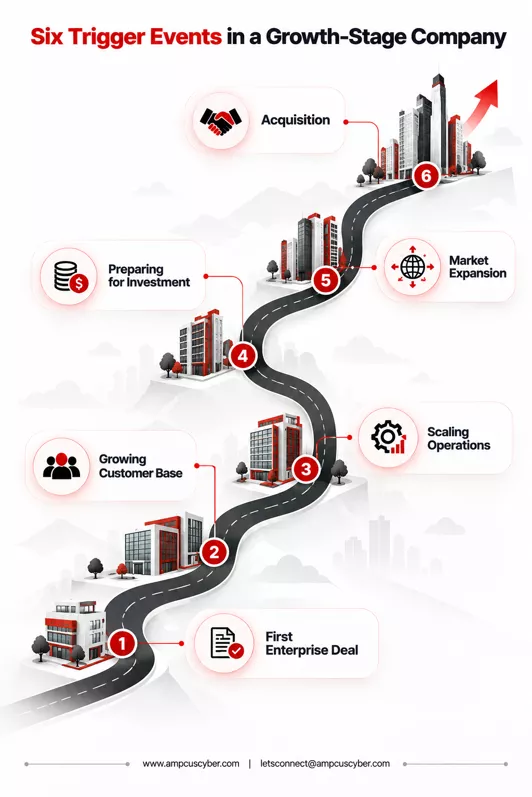
Six business events account for most vCISO engagements, and each one forces a decision about who owns security.
- Enterprise questionnaires: Prospects ask for evidence of governance that the current team cannot produce quickly.
- A first audit: Work toward SOC 2, ISO 27001, or HIPAA starts without a senior owner.
- Fundraising or acquisition: Due diligence adds a cybersecurity section that needs a credible answer.
- Cyber insurance: An application or renewal requires a named executive and documented controls.
- Regulated data: The company begins to handle payment, health, or defense data that brings PCI DSS, HIPAA, or CMMC obligations.
- An incident or near miss: The event shows that nobody steers the program from end to end.
Any single event is manageable with internal effort, but a second or third event in the same year usually exposes the absence of senior ownership.
Is It Too Early to Hire a vCISO?
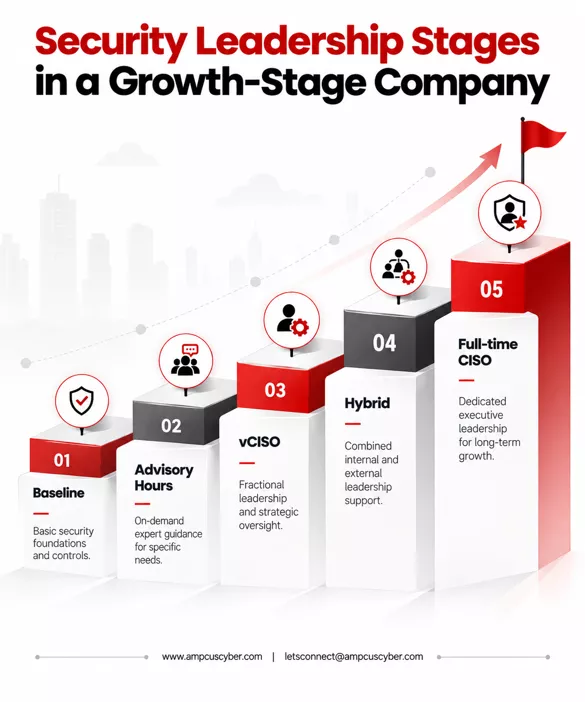
It is too early when no outside party is asking questions, the company holds little sensitive data, and basic controls are still missing. In that situation a lean baseline serves better, with multi-factor authentication, tested backups, an asset list, and a short set of policies. A vCISO should not be hired merely to borrow a title for customer calls, because the engagement needs measurable outcomes and enough access to change the program.
Many companies start with a few advisory hours each month and increase the scope when a trigger arrives, which keeps cost proportional to risk. The company should also revisit the decision whenever it signs a larger customer, opens a new market, or adds a new category of data.
What Is the Difference Between a vCISO, an IT Manager, and an MSSP?
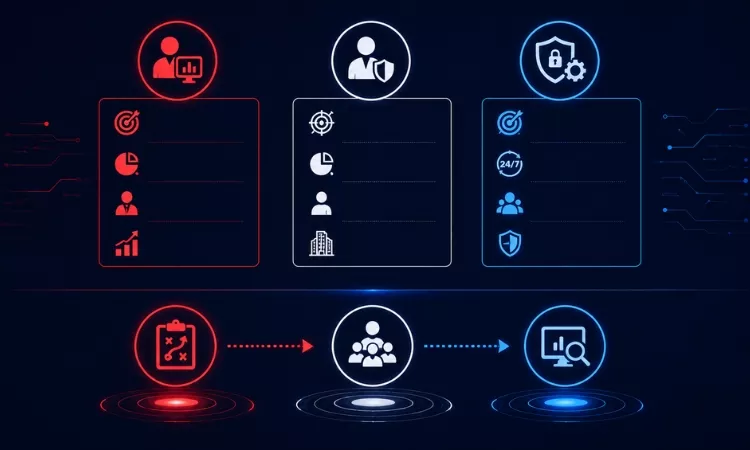
A vCISO sets strategy and owns accountability for risk, while an IT manager runs systems and a managed security service provider operates monitoring and response. The three roles complement each other.
The vCISO prioritizes risk and reports to the board, the IT manager implements controls, and the MSSP watches the environment around the clock.
Companies that hire a vCISO without an operating team often see the roadmap stall, so they should confirm who executes each action before the engagement begins. Providers also differ in how they price these services, so buyers should ask each one to list what the retainer includes.
What Should a vCISO Deliver in the First 90 Days?
A strong vCISO delivers a baseline, a roadmap, and visible quick wins within 90 days.
- Days 1 to 30: A security program maturity assessment identifies gaps and sets priorities.
- Days 31 to 60: A risk register, a core policy set, and a reusable library of questionnaire answers go live.
- Days 61 to 90: The incident response plan receives a tabletop test, the audit timeline is agreed, and the first board report goes out.
Companies that agree on these deliverables in the contract can judge progress at each 30-day checkpoint.
When Should a Company Move From a vCISO to a Full-Time CISO?
A company should move to a full-time CISO when security demands daily executive decisions, a growing team needs a resident manager, or the board requires an on-site officer.
Until then, a vCISO usually costs less, with retainers commonly quoted between $3,000 and $20,000 per month against $250,000 to $500,000 or more in total compensation for a full-time hire. (Note: The aforementioned pricing is an average of the market reports and defer from company to company).
An engagement can start within 2 to 4 weeks, while a CISO search often runs 4 to 6 months. Senior talent also remains scarce, since the ISC2 2025 workforce study reports that 95% of teams have at least one skills gap. Many companies use the vCISO to build the program and to define the full-time role. A hybrid arrangement also works, in which a full-time security manager reports to a vCISO until the company is ready to promote or recruit a CISO. The vCISO versus full-time CISO comparison covers the cost trade-offs in more depth.
Your growth should not outpace your security.
| Partner with Ampcus Cyber to strengthen security governance, manage risk, and determine the right path from vCISO to full-time security leadership |
People Also Ask:
When should a company hire a vCISO?
What does a vCISO do for a growing company?
How much does a vCISO cost?
How long does it take to onboard a vCISO?
Can a vCISO get us SOC 2 certified?
Is a vCISO the same as an MSSP?
Is it too early to hire a vCISO for a startup?
When should a company move from a vCISO to a full-time CISO?
Enjoyed reading this blog? Stay updated with our latest exclusive content by following us on Twitter and LinkedIn.