








A Chief Information Security Officer sets the strategy that keeps an organization’s data, systems, and reputation protected, yet hiring one full-time has become both expensive and genuinely difficult, because the global cybersecurity workforce gap reached 4.8 million professionals in 2024 and experienced security leaders are among the hardest roles of all to fill, according to the ISC2 Cybersecurity Workforce Study. A virtual CISO answers that problem by giving an organization access to senior security leadership on a flexible, fractional basis, and it delivers the same strategic direction, risk oversight, and board-level guidance without the cost or commitment of a permanent executive hire. This guide explains what a virtual CISO is, what the role covers, and how to decide whether your organization would benefit from one.
What Is a Virtual CISO (vCISO)?
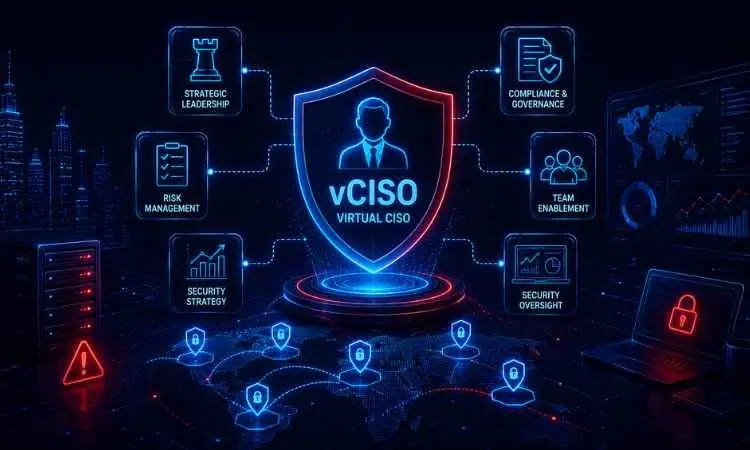
A virtual CISO or vCISO, is an experienced security leader or team that provides Chief Information Security Officer expertise to an organization on a part-time, shared, or project basis rather than as a full-time employee. The role carries the same remit as an in-house CISO, so a vCISO owns security strategy, governance, risk management, and compliance direction, and the difference lies in the engagement model rather than the seniority or scope of the work. Because a vCISO is typically drawn from a firm with deep bench strength across industries and frameworks, an organization gains not just one individual but the collective experience behind them, and that breadth is often difficult to replicate through a single full-time hire.
Why Demand for Virtual CISOs Is Rising?
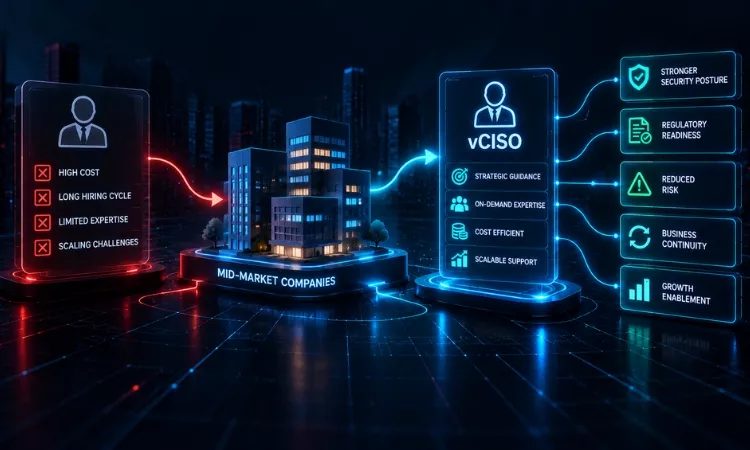
Several forces are pushing virtual CISO adoption at the same time, and the most obvious is the talent shortage, because the ISC2 Cybersecurity Workforce Study found that demand for professionals continues to outpace supply while the active workforce has effectively plateaued. Regulation is a second driver, since data-protection laws, sector rules, and customer security questionnaires increasingly expect a named and accountable security leader, and boards now treat cyber risk as an enterprise risk that requires executive ownership rather than an IT afterthought. Cost is the third factor, because a full-time CISO commands a substantial salary and benefits package that many mid-market and growth-stage organizations cannot justify, and a fractional model lets them access equivalent leadership at a fraction of that expense while scaling the engagement up or down as their needs change.
What Does a Virtual CISO Do?
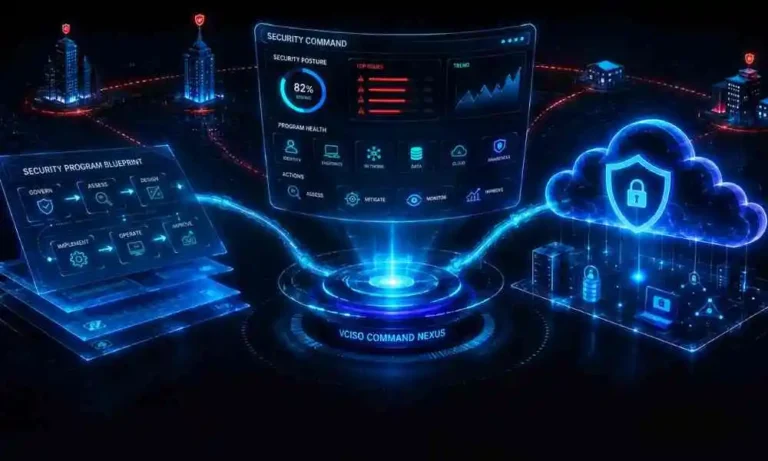
The responsibilities of a virtual CISO mirror those of a full-time security executive, and although each engagement is scoped to the client, the core functions stay consistent across mature providers.
- A vCISO develops and owns the security strategy, so they translate business objectives into a prioritized security roadmap and make sure that investment flows to the risks that matter most.
- They lead governance and risk management, because they establish policies, run risk assessments, and maintain the control framework that keeps the organization defensible over time, and this discipline connects directly to broader programs such as modern third-party risk management.
- They direct compliance and audit readiness, so they align the organization to frameworks such as PCI DSS, ISO 27001, SOC 2, and HIPAA, and they keep it prepared for assessments rather than scrambling before each one, a theme explored in our guide to audit readiness in cybersecurity.
- They own incident response leadership, because they build and rehearse the response plan in advance, and they provide calm executive direction at the moment an incident occurs.
- They report to the board and executives, so they present cyber risk in business language, and they give leadership the visibility needed to make informed decisions and to satisfy cyber insurance and regulatory expectations.
What is the difference between Virtual CISO, Full-Time CISO, and Managed Security Services
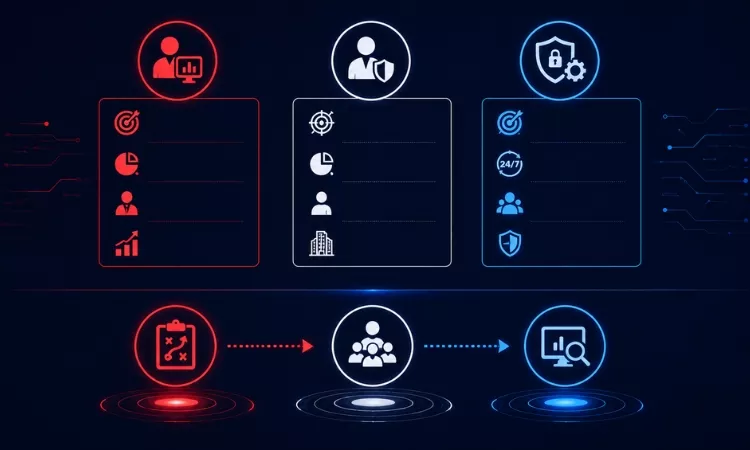
It helps to be precise about a virtual CISO, because the role is frequently confused with both a full-time hire and a managed security service. A vCISO is an executive advisory relationship focused on strategy, governance, and leadership, and it differs from a managed security service provider, which delivers day-to-day operational tasks such as monitoring and alert triage rather than program ownership. A vCISO also differs from a full-time CISO mainly in engagement model and cost, so a larger enterprise with highly complex needs may still warrant a permanent executive, while a growing or mid-sized organization often gains more value from fractional leadership that flexes with its stage.
Which Organizations Benefit Most from a Virtual CISO?
Virtual CISO engagements deliver the strongest return for organizations that need senior security leadership but cannot justify a full-time executive, and this describes a large share of the market today. Small and mid-sized enterprises benefit because they face the same threats and regulatory expectations as large firms yet rarely have the budget for a permanent CISO, and fast-growing companies benefit because their risk profile changes quickly and a fractional leader can scale alongside them. Regulated businesses in finance, healthcare, and payments benefit because a vCISO brings the framework expertise that shortens the path to compliance, and organizations recovering from an incident or a failed audit benefit because experienced leadership can stabilize the program quickly and restore trust with customers and regulators.
How to Choose the Right Virtual CISO?
Choosing a virtual CISO is a decision about trust as much as capability, so it is worth looking past the job title to the depth behind it. The strongest providers combine seasoned leadership with a wider delivery team, and this matters because a vCISO backed by assessors, engineers, and compliance specialists can execute the roadmap rather than only advise on it. You should also look for relevant framework and industry experience, along with a governance approach grounded in recognized standards such as the NIST Cybersecurity Framework, and you should confirm that the engagement model genuinely flexes to your size and stage rather than forcing you into a fixed template.
| Need executive cybersecurity leadership without the full-time cost? Partner with Ampcus Cyber’s Virtual CISO services to strengthen governance, compliance, and build a resilient security strategy |
Enjoyed reading this blog? Stay updated with our latest exclusive content by following us on Twitter and LinkedIn.