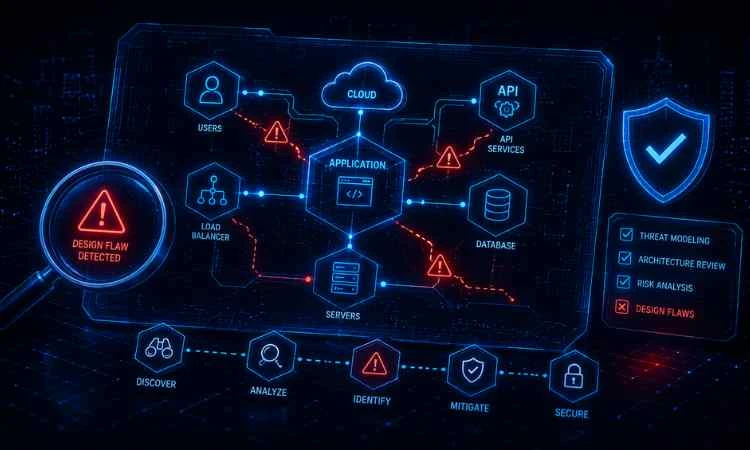











A security architecture review is a structured assessment of an organization’s security design, covering network segmentation, identity and access controls, data flows, cloud configuration, and how security policies are enforced across that infrastructure.
Unlike a penetration test, which looks for exploitable vulnerabilities, an architecture review evaluates whether the underlying design decisions still make sense given the current threat landscape and business direction. A system can pass every vulnerability scan and still be architecturally unsound if trust boundaries are drawn in the wrong place.
Why Waiting for the Annual Review Can Turn Out a Mistake
Many organizations treat architecture review as a once-a-year compliance ritual, scheduled around an audit rather than around actual risk. That cadence made sense when infrastructure changed slowly. It does not hold up anymore.
IBM’s 2025 Cost of a Data Breach Report found that breaches spanning multiple environments, meaning attacks that crossed between cloud and on-premises systems, were the costliest category studied and took the longest to contain, at 276 days on average. That gap between cloud and on-premises visibility is almost always an architecture problem, not a tooling problem. It is the direct result of infrastructure that grew faster than the security design meant to govern it.
Architecture drifts continuously. New services get added, cloud accounts multiply, acquisitions bolt on unfamiliar networks, and nobody schedules a review until something forces the question. The organizations that manage this well are not the ones with the most frequent reviews. They are the ones that know which events should trigger one immediately, regardless of where they sit in the annual calendar.
The Nine Triggers for a Full Architecture Review
1. Mergers, Acquisitions, or Divestitures
Integrating another company’s network, identity systems, and applications introduces risk that nobody fully understands until it is mapped. Legacy systems, undocumented trust relationships, and inherited technical debt regularly slip past deal due diligence. A review before systems is connected identifies these gaps while they are still contained to one side of the merger.
2. Cloud Migration or Multi-Cloud Expansion
Moving workloads to the cloud or expanding from a single cloud provider to a multi-cloud footprint, changes the entire trust model. Network perimeters that used to be physical become logical, and misconfigured storage, overly permissive IAM roles, and inconsistent encryption become the default risk instead of the exception. Any material cloud migration should trigger a review before go-live, not after the first incident.
3. A Security Incident or Near Miss
After a breach, ransomware event, or even a contained near miss, the immediate priority is containment and recovery. Once that is done, the incident deserves a second look through an architecture lens: was this a configuration mistake, or does it reveal a design flaw that will produce the same outcome again under a different name. A structured incident response plan should already include a step for this kind of post-incident architecture review, where organizations either fix the root cause or spend the next two years patching the symptom.
4. Major Regulatory or Compliance Change
New obligations under frameworks like PCI DSS 4.0, evolving state privacy laws, or sector-specific mandates often require architectural evidence, beyond policy documents, to demonstrate compliance. When a regulation changes what “adequate security” means for your industry, that is a direct signal to verify the architecture meets the new bar rather than assuming existing controls still qualify. Mapping the review against your existing governance, risk, and compliance program keeps the evidence audit-ready instead of scattered across separate reports.
5. Rapid Growth in Headcount or Infrastructure
An architecture designed for 200 employees and a handful of applications does not scale cleanly to 2,000 employees and a sprawling SaaS footprint. Growth that outpaces the original design assumptions is one of the quietest sources of risk, because nothing technically “broke.” The architecture simply stopped matching the environment it was built for.
6. Shift to Remote, Hybrid, or Distributed Work
A network architecture built around a defined office perimeter does not hold up when a meaningful share of the workforce connects from home networks, coworking spaces, and personal devices. Organizations that made this shift without revisiting their architecture often discover that VPN-centric designs and implicit trust assumptions from the old office perimeter are still doing the heavy lifting, badly.
7. New AI Tools or Expanded Third-Party Integrations
AI copilots, generative tools, and an expanding list of SaaS integrations each create new data flows and new points of access into core systems. If these tools were adopted without a corresponding look at how they connect into the broader architecture, the organization has likely accumulated integration risk that a standard vulnerability scan will not surface.
8. Turnover in Security Leadership
When a CISO or head of security architecture leaves, institutional knowledge about why certain design decisions were made often leaves with them. A review under new leadership, or with an interim vCISO engaged, creates a documented baseline instead of relying on tribal memory that walked out the door.
9. No Review in the Past Two Years
Even without a specific triggering event, architecture that has gone unreviewed for more than two years should be treated as overdue by default. Threat techniques evolve, vendor products change their default configurations, and what counted as a secure design two years ago may no longer reflect current guidance, including reference models like NIST’s Zero Trust Architecture.
Trigger Scoring Checklist
Use this checklist to decide how urgently a review is needed. Score one point for each trigger that applies to your organization right now.
- Active M&A, acquisition, or divestiture in progress or completed in the last 12 months
- Cloud migration or multi-cloud expansion underway or completed in the last 12 months
- Security incident, breach, or notable near miss in the last 12 months
- New regulatory obligation applies to your industry within the last 12 months
- Headcount or infrastructure has grown more than 30% since the last review
- Meaningful shift toward remote or hybrid work since the last review
- New AI tools or third-party integrations added without architecture review
- Change in CISO or head of security architecture in the last 12 months
- No formal architecture review conducted in over two years
What a Security Architecture Review Produces
A well-run review is not a single meeting or a checklist exercise. It typically includes a review of network and data flow diagrams against the current environment, an assessment of identity and access controls including privilege sprawl, validation of encryption and segmentation practices, and a gap analysis against the frameworks your organization is expected to follow. The output should be a prioritized roadmap, beyond a list of findings, so leadership knows what to fix first and why.
Technical validation matters here as much as the design review itself. Pairing an architecture review with hands-on testing through cloud security assessment and VAPT services confirms whether the intended design holds up when tested, rather than relying on diagrams and policy documents alone.
Making Architecture Review Part of How You Operate
The organizations that avoid costly, slow-to-contain breaches are not the ones with perfect architecture. They are the ones that treat these nine triggers as decision points rather than warning signs to notice after the fact. Building review triggers into your change management and governance process, the same way you already require sign-off for major infrastructure changes, closes the gap between when architecture changes and when someone finally looks at whether it still makes sense.
If any of the triggers above apply to your organization right now, that is worth acting on before it becomes a finding in an incident report.
| Talk to Ampcus Cyber about scoping a security architecture review built around where your organization stands today. |
Enjoyed reading this blog? Stay updated with our latest exclusive content by following us on Twitter and LinkedIn.