









Ransomware has evolved from a blunt instrument into an industrialized criminal business. Today, a threat actor does not need to write a single line of code to deploy a ransomware attack. They subscribe to a platform, pay a commission on revenue collected, and leverage someone else’s malware, infrastructure, and negotiation support.
This is Ransomware-as-a-Service (RaaS). It is now the primary delivery mechanism behind the majority of enterprise ransomware incidents and it has fundamentally changed who can launch an attack, how quickly, and against whom.
What Is Ransomware-as-a-Service (RaaS)?
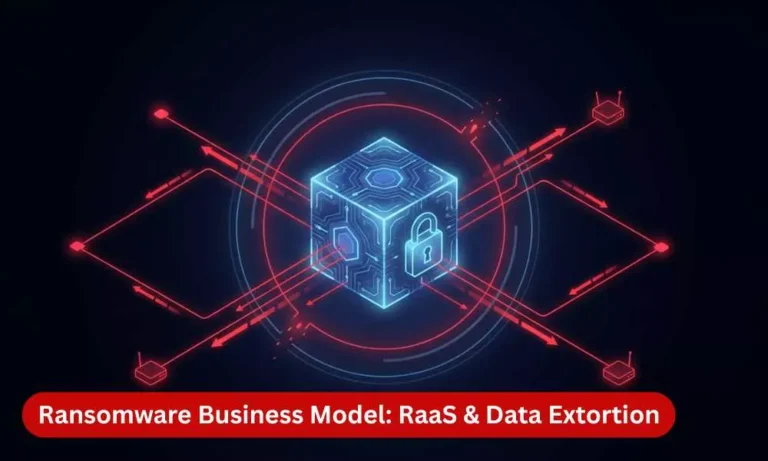
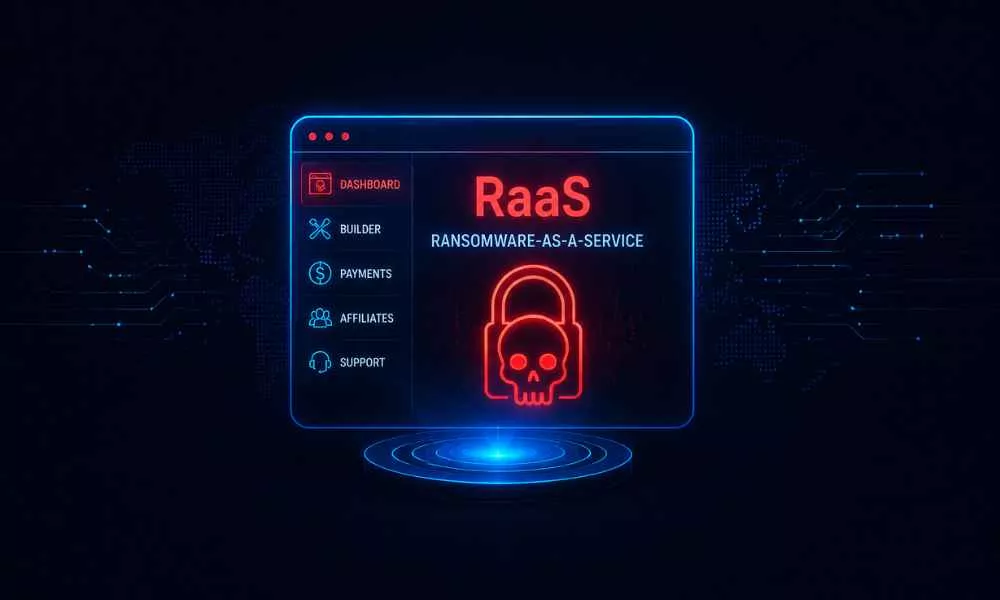
Ransomware-as-a-Service is a criminal subscription model in which malware developers, called operators, build and lease ransomware platforms to other criminals, called affiliates. Affiliates deploy attacks and split ransom revenue with operators, typically on a 70/30 or 80/20 basis.
The model mirrors legitimate SaaS businesses with striking structural similarity: affiliate dashboards, victim-facing negotiation portals, technical support channels, onboarding processes, and even uptime SLAs. The criminal economy has professionalized ransomware to the point where operational competence determines success.
This shift has driven attack volume to unprecedented levels. Cybercrime damages are projected to reach $10.5 trillion annually by 2025, with ransomware representing a disproportionate share of both incident frequency and average cost per breach.
How the RaaS Criminal Ecosystem Works?
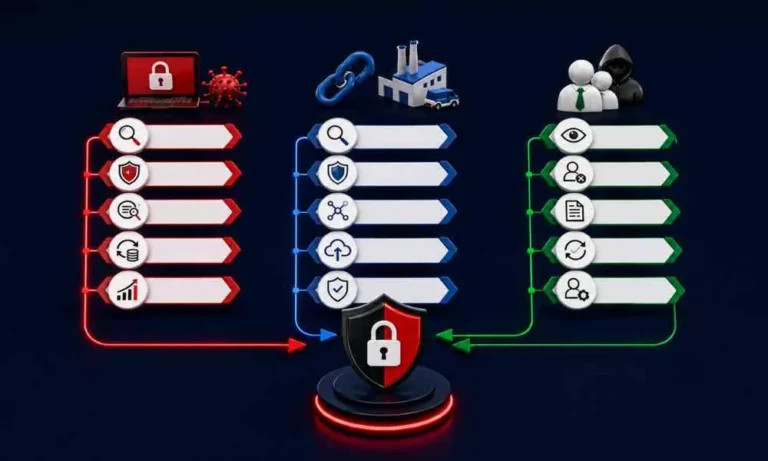
RaaS is not a single organization, it is a layered criminal supply chain with distinct roles, incentive structures, and interdependencies. Understanding who does what is essential to understanding where defenses must be applied.
RaaS Role Breakdown:
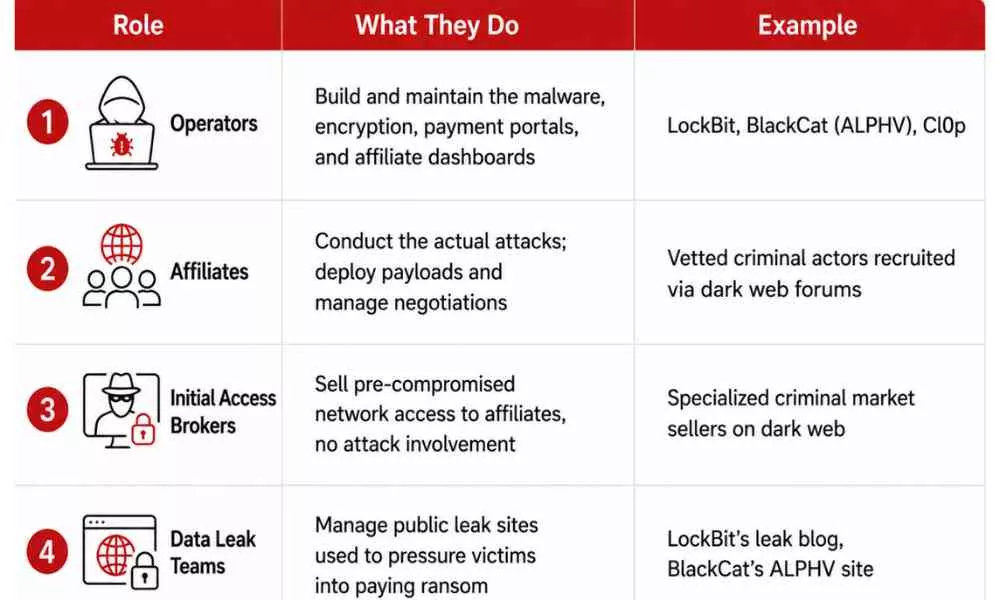
Operators: the platform builders
Operators develop and maintain the malware codebase, encryption logic, payment infrastructure, and decryption key management. Groups such as LockBit, BlackCat (ALPHV), and Cl0p ran full-service platforms with version releases, bug fixes, and support channels. They run what are effectively software businesses, their “product” is a ransomware platform; their “customers” are affiliates.
Affiliates: the attackers
Affiliates conduct the actual intrusions. Their skill sets vary widely, some spend weeks performing sophisticated reconnaissance before deploying ransomware; others use commodity tools and lean almost entirely on the operator’s infrastructure. The affiliate model allows operators to scale attacks across multiple industries simultaneously without managing individual campaigns.
Initial access brokers: the unlocked doors
Initial access brokers (IABs) specialize in compromising networks, through phishing, credential stuffing, or exploiting unpatched vulnerabilities, and selling that access to affiliates via dark web marketplaces. An IAB may never deploy ransomware. They simply sell the entry point, creating a fragmented supply chain that is harder to disrupt by targeting any single actor.
Double and triple extortion
Modern RaaS attacks rarely rely on encryption alone. Double extortion involves exfiltrating data before encryption and threatening to publish it. Triple extortion adds a third lever, notifying customers, regulators, or partners, or launching simultaneous DDoS attacks.
The MOVEit file transfer breach demonstrated the extreme of this model: Cl0p weaponized a single supply chain vulnerability across hundreds of organizations without traditional encryption-and-ransom mechanics, instead using data extortion exclusively.
RaaS Target Industries: Who Gets Hit and Why
Affiliates select targets based on a calculated mix of factors: payment likelihood, data sensitivity, reputational cost of exposure, and operational criticality. Common high-value targets include:
- Healthcare and critical infrastructure: Systems that cannot afford downtime create maximum payment pressure. The 2024 ransomware attack on one of the largest U.S. healthcare payment processors disrupted nationwide claims processing for weeks.
- Financial services: Regulated data, client confidentiality, and reporting obligations create powerful extortion leverage beyond simple encryption.
- Manufacturing and OT environments: Just-in-time production dependencies amplify every hour of downtime into direct revenue loss.
- Legal, professional services, and government: High volumes of sensitive third-party data create simultaneous encryption and publication leverage.
Targeting is increasingly research driven. Some RaaS platforms provide affiliates with victim profiling tools, including cyber insurance coverage data, revenue figures, and prior breach history, as part of the service package.
How a RaaS Attack Unfolds: The Kill Chain
While techniques vary by group and affiliate skill level, most RaaS campaigns follow a recognizable sequence. Understanding where detection is possible is as important as understanding the attack itself.
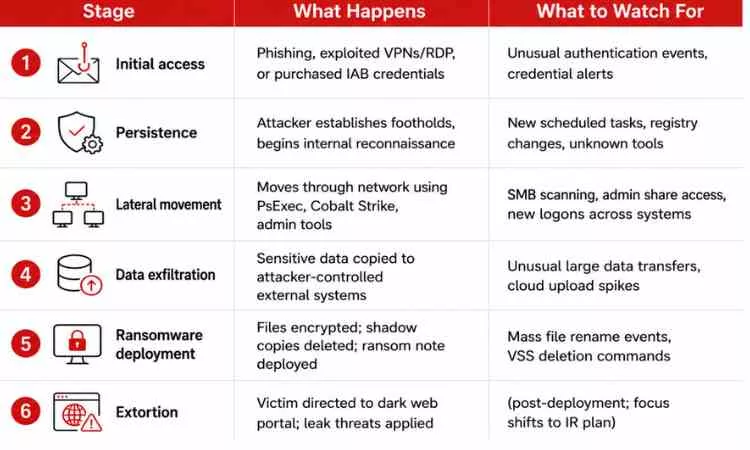
The dwell time, the period between initial access and ransomware deployment, can range from hours to several weeks. Longer dwell times typically indicate more sophisticated affiliates conducting thorough reconnaissance to maximize the encryption footprint.
Why RaaS Is a Third-Party Risk Problem
A critical but underappreciated aspect of the modern RaaS threat is how frequently attacks originate outside your perimeter. As attack groups discovered that compromising a single software provider or managed service provider could yield access to dozens of downstream victims, the economics shifted decisively toward supply chain targeting.
For security teams, this means a RaaS incident may not begin in your environment. It may begin in your payroll provider, your cloud backup service, your legal software platform, or any other vendor with privileged access to your systems. Third-party risk management has become a direct line of defense against ransomware, not a compliance formality.
How to Defend Against RaaS Attacks?
Effective RaaS defense requires layering controls across the entire kill chain. There is no single tool or framework that addresses all stages.
Reduce the initial access surface
Regular network and web application VAPT identifies exploitable vulnerabilities before affiliates or IABs do. Multi-factor authentication on all remote access points, email security controls, and disciplined patch management close the most exploited entry paths.
Detect lateral movement before deployment
Most RaaS attacks spend meaningful time inside the environment before deploying ransomware. Continuous security monitoring using SIEM and SOAR platforms, combined with behavioral analytics, can detect anomalous privilege escalation, lateral movement patterns, and bulk data access that precede encryption. Extended Detection and Response (XDR) provides unified visibility across endpoint, network, and cloud layers.
Validate resilience through simulation
Tabletop exercises and cyber crisis simulations test whether your incident response plan holds under real ransomware pressure. Red team assessments that replicate RaaS kill chains test detection and containment against authentic threat actor techniques.
Govern your vendor exposure continuously
Map your vendor ecosystem for access levels, data sensitivity, and dependency depth. Continuous vendor risk monitoring, breach notification SLAs, and fourth-party sub-processor visibility are now baseline requirements. Wizard by Ampcus Cyber provides the continuous ecosystem visibility and risk quantification needed to understand and limit your blast radius when a vendor is compromised.
Maintain immutable backups and test them
Offline, immutable backups that are tested regularly remain the most reliable ransomware recovery capability. Network segmentation limits the lateral movement that allows affiliates to maximize encryption footprint. Both controls are only as effective as their last test.
RaaS Attacks and Regulatory Compliance
A successful RaaS attack is almost always a compliance event as well as a security incident. Depending on the data involved, organizations may face mandatory breach notification obligations under HIPAA, PCI DSS, India’s DPDPA, GDPR, or other applicable frameworks.
Ransom payment decisions also carry legal dimensions. Depending on jurisdiction and the OFAC sanctioned status of the ransomware group involved, paying a ransom may trigger reporting obligations to government authorities. Incident response planning should explicitly address payment decision protocols before an incident occurs, not during one.
Is Your Organization Ready for a RaaS Attack?
Most ransomware attacks succeed because gaps exist across three areas: undetected vulnerabilities, slow lateral movement detection, and untested incident response plans. Ampcus Cyber helps organizations close all three.
Enjoyed reading this blog? Stay updated with our latest exclusive content by following us on Twitter and LinkedIn.