









TL;DR
- An AI-led Managed SOC uses relevant threat intelligence to refine detection, prioritise investigation and direct threat hunting, so limited teams focus on activity with the greatest potential business impact.
- Cambodia’s expanding digital infrastructure, its Tier 4 position in the ITU Global Cybersecurity Index 2024 and the updated National Bank of Cambodia (NBC) guidelines strengthen the case for continuous, evidence-backed security operations.
- Choose a provider on how AI shapes detection, hunting, response and reporting, and define measurable outcomes before the service begins.
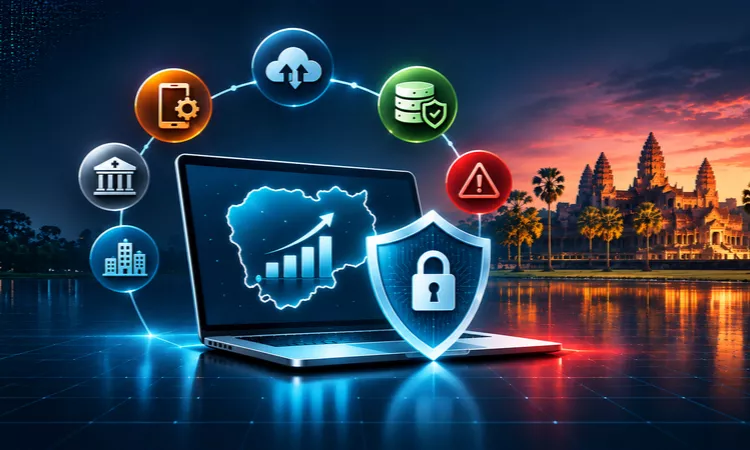
Cambodia’s digital infrastructure is expanding across payments, government services and commerce. Bakong and KHQR have moved payments onto shared digital rails, DataReportal counted 12.4 million internet users in October 2026 (68.5% penetration), and the ITU Global Cybersecurity Index 2024, the latest published edition, places the country in Tier 4, “evolving”.
Published summaries of the National Bank of Cambodia’s updated technology and cyber risk guidelines point to expectations around security operations and threat intelligence for regulated institutions. Many organisations will struggle to build a 24/7 team quickly enough to meet such expectations.
The more useful question is what kind of SOC suits this environment. This article explains why an AI-led Managed SOC is a strong fit for Cambodian organisations and how to evaluate one.
What Is Managed AI SOC?
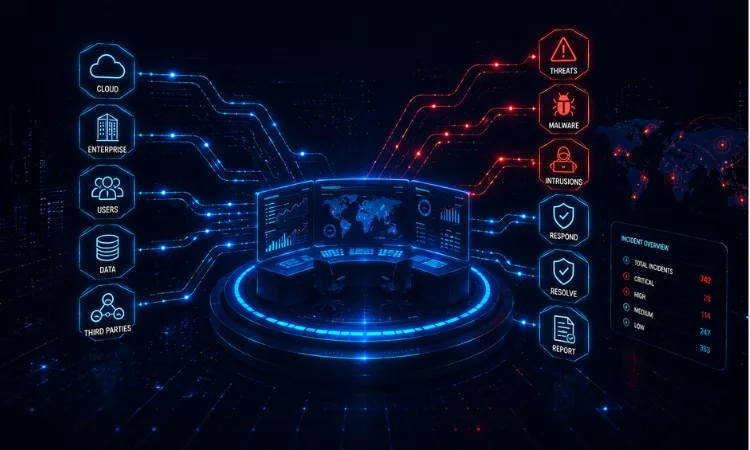
An AI-driven Managed SOC is an outsourced security operations service that uses relevant threat intelligence to decide what to detect, how to prioritise alerts and where to hunt. A security operations centre (SOC) is the function that monitors, investigates and responds to security events around the clock.
Most tools produce alerts, and many SOCs use some threat intelligence. The real difference is how systematically AI influences detection engineering, prioritisation and hunting. AI supplies context: which adversaries target your sector and region, which techniques they favour, and which indicators suggest an active campaign. The contrast shows in daily operations:
| Area | Conventional Alert-Driven Approach | AI-Led Approach |
| Detection | Relies primarily on configured rules and available telemetry. | Uses relevant threat intelligence to refine detection use cases. |
| Triage | Prioritises alerts using severity and predefined rules. | Adds adversary behaviour, threat context and business impact. |
| Hunting | Often driven by alerts or scheduled activity. | Uses AI-powered hypotheses to investigate likely attack paths. |
| Reporting | Focuses heavily on alert volumes and ticket closure. | Connects operational activity to threat exposure, response and risk. |
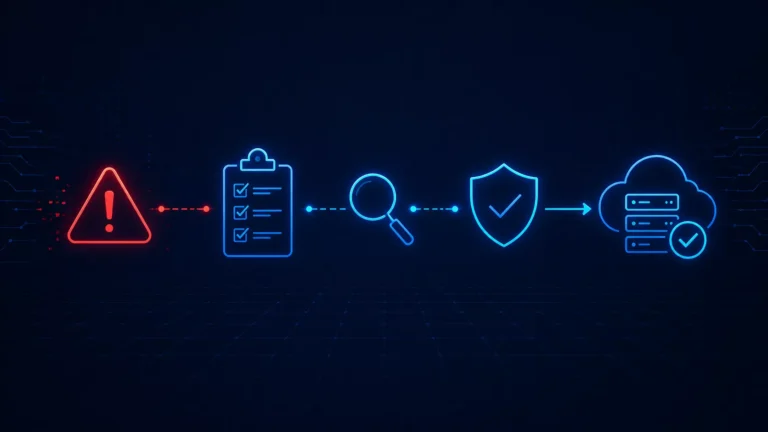
The objective is to reduce time spent investigating low-context alerts and direct analyst attention towards activity with stronger indicators of malicious intent.
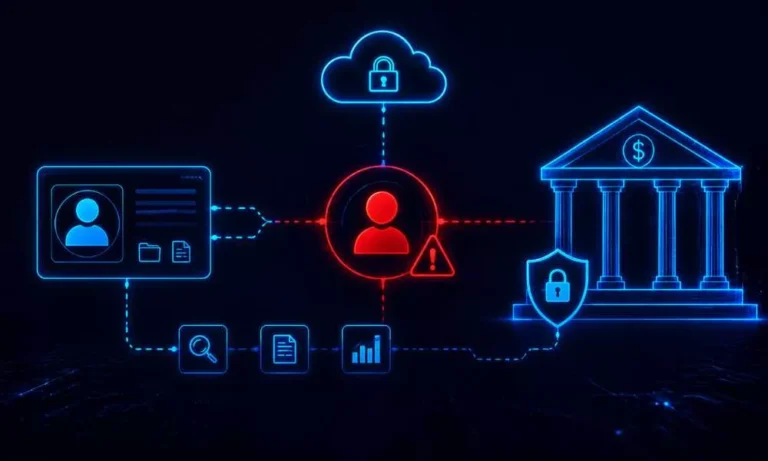
Consider a hypothetical lender running a mobile banking app. A conventional approach sees a spike in failed logins and raises a medium-severity ticket. An AI-empowered SOC recognises the pattern as consistent with a credential-stuffing campaign linked to financial services targets and correlates it with unusual API calls.
An analyst then validates that correlation before escalating it as a likely account takeover attempt and recommending that the source infrastructure be blocked. A match against AI does not confirm an attack on its own. Analyst judgement does.
How Managed SOC Will Help Changing Cambodia’s Digital Identity
Cambodia’s expanding digital infrastructure increases the need for security operations that can identify relevant threats, prioritise investigation and coordinate response. An AI-driven approach helps organisations direct limited security resources towards activity with the greatest potential business impact. Four conditions support the case:
- Interconnected platforms: Bakong, KHQR, banks and government services link many organisations through shared rails, so a compromise in one place can affect others.
- A developing national ecosystem: Tier 4 means organisations cannot assume that external capacity will absorb their risk.
- A staffing constraint: Recruiting and retaining analysts, threat hunters and incident handlers for 24/7 coverage is a recurring challenge for many organisations, and it is costly to solve alone.
- Policy attention to technology risk: The updated NBC guidelines address technology and cyber risk in the financial sector, and the Law on Combating Technology-Based Fraud, promulgated on 6 April 2026, shows that technology-enabled crime is a growing policy concern. The fraud law is criminal law. It sets no control requirements and does not establish a SOC obligation.

What Should Organisations Look for in a Managed SOC Provider?
Look for evidence that AI changes how the service operates, not only how it is described. Six questions separate a strong provider from a monitoring reseller:
- How are detections built: Ask how detection use cases map to MITRE ATT&CK techniques, how they are validated against your environment and how threat intelligence informs their refinement.
- Is threat hunting included: Hunting should be a scheduled, hypothesis-led activity rather than an occasional extra.
- What can analysts do during an incident: Define escalation times, containment authority, response playbooks and the division of responsibilities between the provider and your internal team before signing the contract.
- What evidence will you receive: Request sample reports covering detection timelines, investigation outcomes, containment actions, incident trends and retained evidence. Reporting should demonstrate operational effectiveness, not simply ticket closure.
- How is your data handled: Confirm log location, access controls and exit terms.
How Does Ampcus Cyber Approach AI-Led Security Operations?
Ampcus Cyber’s Managed SOC services provide 24/7 threat detection, threat hunting and incident response across cloud and endpoint environments. The value lies in how the components work together rather than in any single feature:
- AI shapes detection: Proprietary ShadowOpsIntel threat intelligence informs detection use cases and the hypotheses that direct threat hunting.
- Automation protects analyst time: Security automation handles routine enrichment and triage, so experienced analysts can concentrate on validating findings and leading response.
- Coverage follows the clock: Global Security Operations Centres in the USA, UAE, India and the Philippines support a Follow-the-Sun model, so investigations can continue across time zones. The centres in India and the Philippines operate in time zones close to Cambodia’s, while the others extend coverage across the rest of the day.
For Cambodian organisations, the intended outcomes are faster visibility, more focused investigation and audit-ready records without building a full internal team. Ampcus Cyber will discuss this approach with security leaders at the Cambodia Cybersecurity Summit 2026 on 20 November.

AI-Led Managed SOC for a Secure and Growing Digital Cambodia
Cambodia’s digital economy will keep expanding, and the security operations behind it must keep pace. Technology, regulation and collaboration all have a part to play, and an AI-enabled Managed SOC gives organisations continuous visibility, prioritised response and the evidence regulators expect, without waiting for the national ecosystem to mature. Choose providers on how AI shapes their operations and define outcomes before launch.
Advancing cyber resilience takes technology, regulation and collaboration.
| Join Ampcus Cyber and First Cambodia at the Cambodia Cybersecurity Summit 2026 on 20 November 2026 and learn how AI-led security operations can strengthen continuous protection. |
People Also Ask
What is the difference between a SOC and a managed SOC?
A SOC is the team, processes and technology that monitor and respond to security events. A managed SOC delivers that function as a service, so the provider supplies the analysts, tooling and round-the-clock coverage.
Do banks in Cambodia need a SOC?
The National Bank of Cambodia’s 2026 guidelines address technology and cyber risk for regulated institutions. Which institutions face SOC-related expectations, and whether those can be met through an outsourced model, should be confirmed in the official text and with the regulator.
Can a SOC be outsourced under the NBC guidelines?
Confirm this in the official NBC document before contracting. Outsourcing delivery does not typically transfer accountability, so institutions should review oversight, data location and exit terms alongside any outsourcing expectations.
What is a Follow-the-Sun SOC?
It is an operating model in which monitoring passes between security operations centres in different time zones, so analysts are working in daylight hours around the clock.
Enjoyed reading this blog? Stay updated with our latest exclusive content by following us on Twitter and LinkedIn.