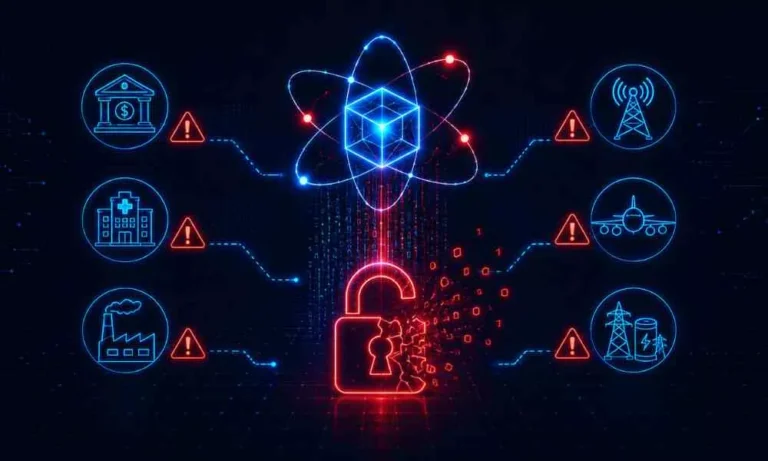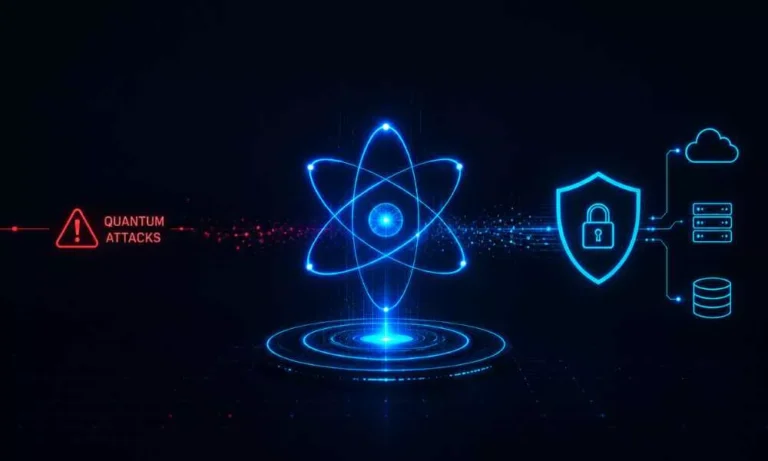






Every encryption system in use today, TLS, RSA, AES key exchange, VPN tunnels, derives its security from a single assumption: that certain mathematical problems are too hard for any currently available computer to solve quickly. Quantum computers threaten to invalidate that assumption.
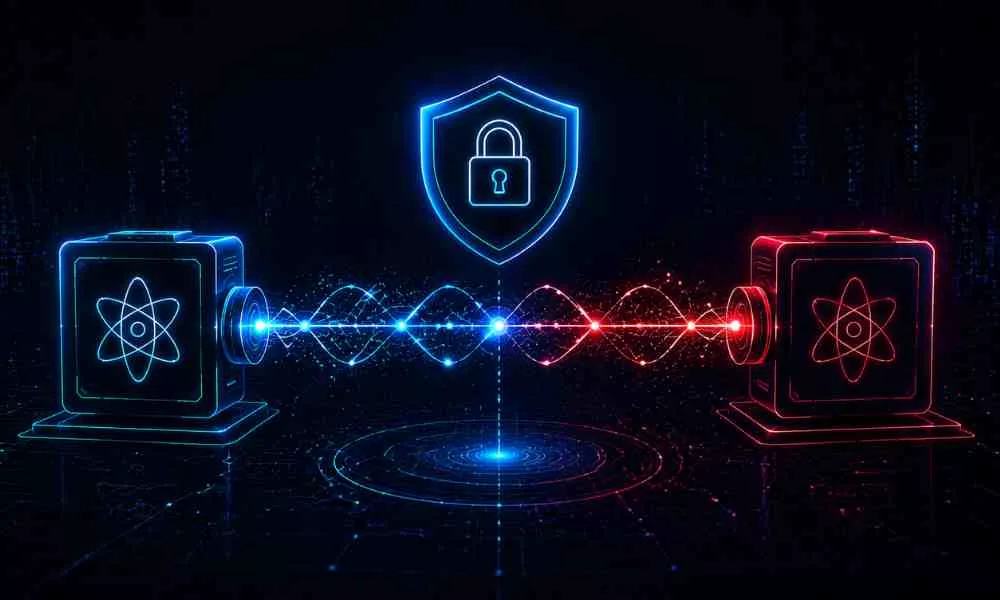
Quantum Key Distribution (QKD) takes a fundamentally different approach. Instead of basing security on computational difficulty, it uses the laws of quantum physics to distribute encryption keys in a way that is physically impossible to intercept without detection. It represents one of two major responses to the quantum threat, the other being Post-Quantum Cryptography (PQC).
This guide explains what QKD is, how it works, where it is being deployed, and how it differs from PQC, so security leaders can understand both paths and make informed decisions about quantum-readiness strategy.
What Is Quantum Key Distribution (QKD)?
Quantum Key Distribution is a method of secure cryptographic key exchange that uses quantum mechanical properties of photons, individual particles of light, to transmit key material between two parties.
The defining characteristic of QKD is its security guarantee: any attempt to intercept the key in transit physically disturbs the quantum state of the photons, introducing measurable errors that alert the communicating parties to the presence of an eavesdropper. The security does not depend on computational assumptions that could eventually be broken by a sufficiently powerful computer. It depends on the No-Cloning Theorem and the Heisenberg Uncertainty Principle, established laws of physics that cannot be circumvented by any technological advance.
QKD does not encrypt data directly. It distributes the keys used to encrypt data. Once a shared secret key has been established via QKD, it can be used with any symmetric encryption algorithm, typically combined with One-Time Pad (OTP) or AES-256, to achieve information-theoretic security.
How Does Quantum Key Distribution Work?
The most widely implemented QKD protocol is BB84, developed by Charles Bennett and Gilles Brassard in 1984. It establishes a secret key between two parties, conventionally named Alice (sender) and Bob (receiver), over a quantum channel while detecting any eavesdropper, conventionally named Eve.
| Step | Phase | What Happens |
| 1 | Quantum transmission | Alice (sender) encodes random bit values onto individual photons using quantum properties such as polarization. She transmits them to Bob (receiver) over a quantum channel. |
| 2 | Basis selection | Alice and Bob each independently choose a random measurement basis for each photon. Because quantum measurement disturbs the state, their choices may not always align. |
| 3 | Classical reconciliation | Over a standard (classical) channel, Alice and Bob publicly compare which basis they used for each photon, not the values themselves and discard mismatched measurements. |
| 4 | Error detection | They compare a subset of their matching measurements. A high error rate signals that an eavesdropper (Eve) has intercepted and disturbed the quantum states. |
| 5 | Privacy amplification | If error rates are within acceptable bounds, Alice and Bob apply mathematical techniques to distill a shorter but provably secure key from the reconciled bit string. |
| 6 | Key confirmation | The final secret key is used to encrypt subsequent communications. The key was never transmitted in classical form, it was established through quantum physics. |
The critical insight is that Eve cannot intercept photons and re-transmit identical copies. Quantum mechanics forbids perfect copying of an unknown quantum state (the No-Cloning Theorem). Any interception attempt introduces a statistical anomaly that Alice and Bob detect during error rate comparison. If errors exceed the threshold, they discard the key and restart.
What Types of QKD Protocols Exist?
Multiple QKD protocols have been developed, each with different technical properties:
Prepare-and-Measure protocols (BB84 family)
Alice prepares quantum states and sends them to Bob. BB84 uses four polarization states across two bases. Variants include B92 (two non-orthogonal states), SARG04, and decoy-state BB84 which addresses practical vulnerabilities in non-ideal photon sources. These are the most mature and widely deployed protocols.
Entanglement-Based protocols (E91 family)
Developed by Artur Ekert in 1991, E91 uses quantum entanglement, pairs of photons whose quantum states are correlated regardless of distance. Alice and Bob each receive one photon from an entangled pair and derive matching key bits from correlated measurements. Security is certified by testing Bell inequalities, which detect any classical simulation of quantum correlations.
Continuous-Variable QKD (CV-QKD)
Rather than encoding bits on single photons, CV-QKD encodes key information in continuous quantum properties such as the amplitude and phase of coherent light states. CV-QKD is compatible with standard telecom fiber infrastructure and detection equipment, lowering hardware costs and enabling longer transmission distances without quantum repeaters.
How Does QKD Differ from Post-Quantum Cryptography (PQC)?
QKD and Post-Quantum Cryptography (PQC) both address the quantum threat but through fundamentally different mechanisms. Understanding the distinction is essential for security architects evaluating quantum-readiness strategies.
| Dimension | QKD (Quantum Key Distribution) | PQC (Post-Quantum Cryptography) |
| Security basis | Physics, laws of quantum mechanics guarantee eavesdropping detection | Mathematics, algorithms believed to be hard for quantum computers to break |
| Infrastructure required | Dedicated quantum channel (fiber or free-space optical link) | Runs on existing classical network infrastructure |
| Deployment complexity | High, requires specialized hardware, quantum repeaters for distance | Moderate, software and algorithm update to existing systems |
| NIST standardization | Not part of NIST PQC process, evaluated separately by national programs | NIST finalized first 3 PQC standards in 2024 (CRYSTALS-Kyber, CRYSTALS-Dilithium, SPHINCS+) |
| Key distribution method | Quantum states (photons) encode and transmit key material | Classical key exchange protocols replaced with quantum-resistant algorithms |
| Current readiness | Limited production deployments; primarily government, financial, and defense sectors | Production-ready; active migration underway across enterprise and cloud |
| Eavesdrop detection | Guaranteed by physics, any interception disturbs quantum states measurably | Relies on computational assumptions; no physical detection of interception |
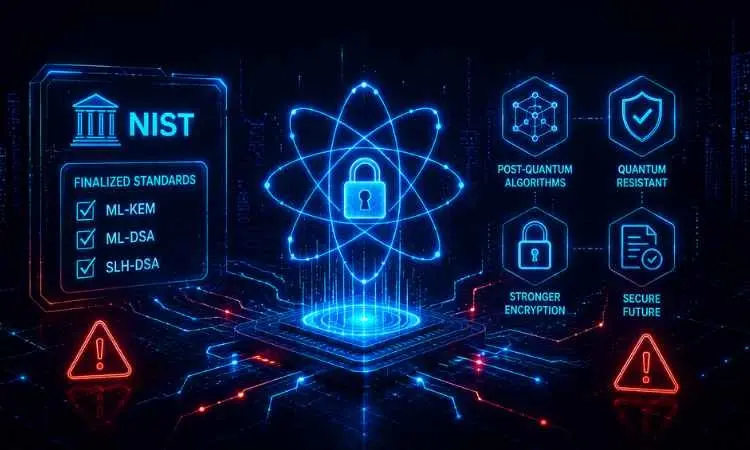
In 2024, NIST finalized its first three Post-Quantum Cryptography standards: CRYSTALS-Kyber (key encapsulation), CRYSTALS-Dilithium (digital signatures), and SPHINCS+ (hash-based signatures). These are software-implementable on existing infrastructure. QKD, by contrast, requires dedicated physical infrastructure and remains primarily a specialized deployment for high-security environments.
Most enterprise organizations will implement PQC for broad infrastructure migration. QKD is the appropriate choice for point-to-point connections requiring unconditional security, government communications, critical infrastructure control networks, financial interbank settlement, and classified data channels.
What Are the Limitations of QKD?
QKD’s physics-based security guarantee comes with significant practical constraints:
- Distance limitations: Photons degrade over fiber. Current practical limits without quantum repeaters are approximately 100-200 km in fiber. Trusted node architectures extend range but reintroduce classical security assumptions at relay points.
- Infrastructure cost: QKD requires specialized hardware, single-photon detectors, quantum light sources, and dedicated fiber or free-space optical channels. Costs remain orders of magnitude above classical cryptographic infrastructure.
- Implementation vulnerabilities: Theoretical security does not always transfer to physical devices. Side-channel attacks against imperfect photon detectors (photon-number-splitting attacks, detector blinding) have been demonstrated against real QKD systems, requiring careful hardware design and regular auditing.
- Network scalability: QKD currently supports point-to-point key distribution. Building large-scale QKD networks requires quantum repeaters (not yet production-ready) or trusted node architectures, each with their own security tradeoffs.
- No authentication guarantee: QKD establishes a shared secret but requires an authenticated classical channel to prevent man-in-the-middle attacks during reconciliation. Authentication typically relies on initial shared secrets or conventional asymmetric cryptography.
What Should Security Leaders Do Now?
For most enterprise organizations, the immediate priority is crypto-agility, the ability to inventory all cryptographic dependencies, identify algorithms vulnerable to quantum attack (primarily RSA, ECC, and Diffie-Hellman key exchange), and execute a migration plan to NIST-standardized PQC algorithms.
QKD belongs in a security architecture review conversation for organizations that:
- Hold data with long-term sensitivity requirements (government, defense, healthcare, financial records)
- Operate point-to-point high-security communication links between facilities where physical QKD infrastructure is justifiable
- Face regulatory environments in sectors where quantum-specific requirements are emerging (EU financial services, critical national infrastructure)
- Are evaluating quantum-secured backbone networks as a strategic long-term infrastructure investment
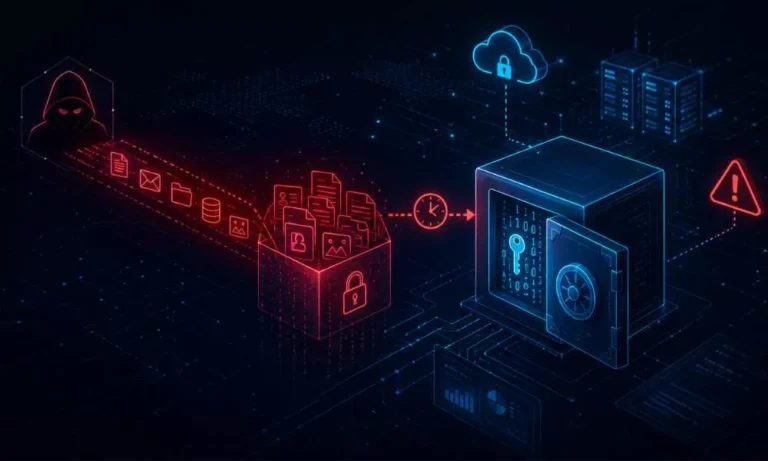
The “harvest now, decrypt later” attack is the most immediate reason not to defer. Adversaries are already collecting encrypted traffic today with the intention of decrypting it once quantum computers become capable. For any data with sensitivity extending beyond 5-10 years, the window to begin migration is now, whether the path is PQC, QKD, or a hybrid of both.
Organizations across regulated industries, from those managing health records to cardholder data should incorporate quantum risk into their data governance and risk assessment programs today.
| Is Your Organization Prepared for the Quantum Security Transition? Talk to a Cryptographic Security Expert! |
Enjoyed reading this blog? Stay updated with our latest exclusive content by following us on Twitter and LinkedIn.