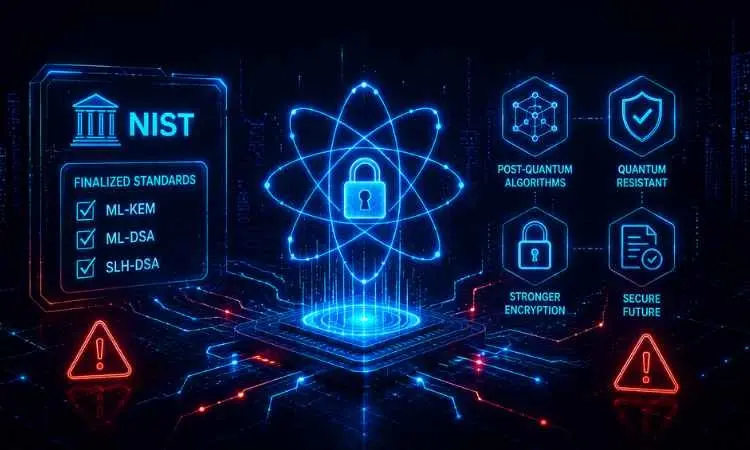










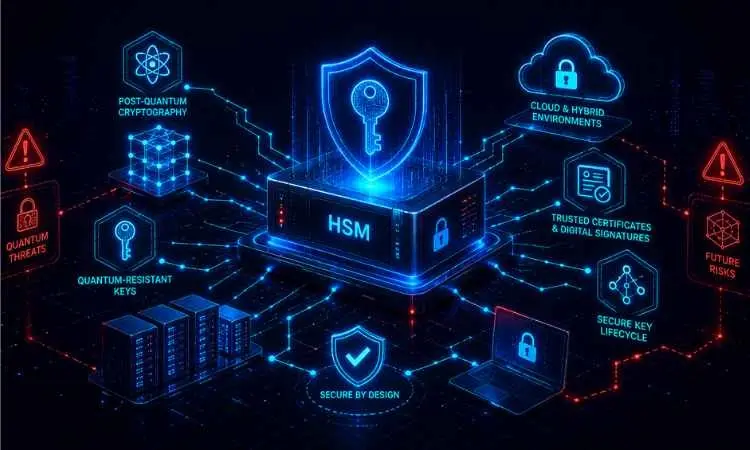
Quantum computing is no longer a theoretical concern parked in a research paper. NIST finalized its first set of post-quantum cryptography standards, ML-KEM (FIPS 203), ML-DSA (FIPS 204), and SLH-DSA (FIPS 205), in August 2024, and organizations across finance, healthcare, defense, and critical infrastructure are now expected to plan their migration away from RSA and elliptic curve cryptography. This shift is not just about swapping algorithms in software. It requires rethinking how cryptographic keys are generated, stored, and protected at the hardware level. That is where Hardware Security Modules, or HSMs, take center stage.
What Is a Hardware Security Module (HSM)?
A Hardware Security Module is a dedicated, tamper-resistant physical device built to generate, store, and manage cryptographic keys, and to perform operations such as encryption, decryption, and digital signing within a hardened boundary. Unlike software-based key storage, an HSM isolates private keys from the operating system, applications, and the broader network. If someone attempts to physically breach the device, it is designed to detect the intrusion and destroy the key material before it can be extracted.
HSMs are validated against established benchmarks, most notably FIPS 140-2 and its successor, FIPS 140-3, managed through the NIST Cryptographic Module Validation Program. This validation gives organizations independent assurance that a given HSM meets defined physical, logical, and operational security requirements, which matters when regulators, auditors, or customers ask how private keys are protected.
Why Do HSMs Matter for Post-Quantum Cryptography?
Post-quantum algorithms behave differently from their classical predecessors. ML-KEM and ML-DSA rely on lattice-based mathematics rather than the integer factorization or elliptic curve problems that underpin RSA and ECC. Key sizes are larger, computational profiles differ, and signature and ciphertext structures do not map cleanly onto legacy hardware designed a decade ago.
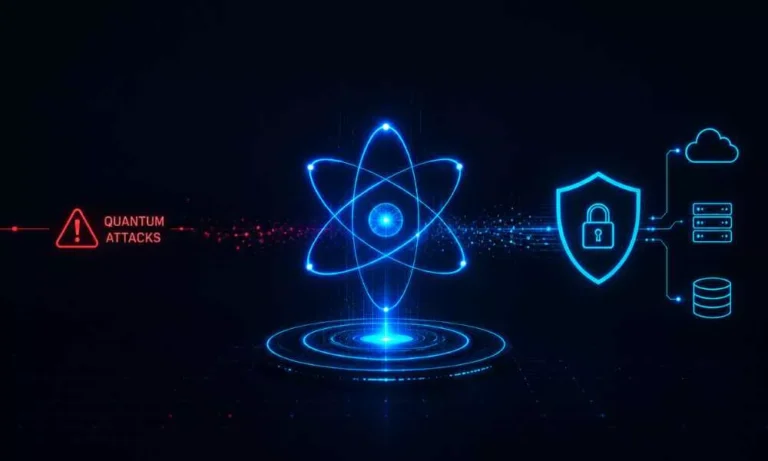
An HSM that cannot support these new algorithms becomes a bottleneck the moment an organization tries to migrate. Worse, if private keys for classical algorithms remain exposed in software while PQC rollout is delayed, adversaries practicing harvest now, decrypt later attacks can capture encrypted traffic today and decrypt it once cryptographically relevant quantum computers exist. For data with a long confidentiality horizon, such as medical records, government communications, and financial archives, this risk is already active. HSMs give organizations a controlled, auditable point where cryptographic transitions can happen without exposing key material during the switch.
How Do HSMs Support Post-Quantum Cryptography Deployment?
HSMs support PQC migration in several concrete ways.
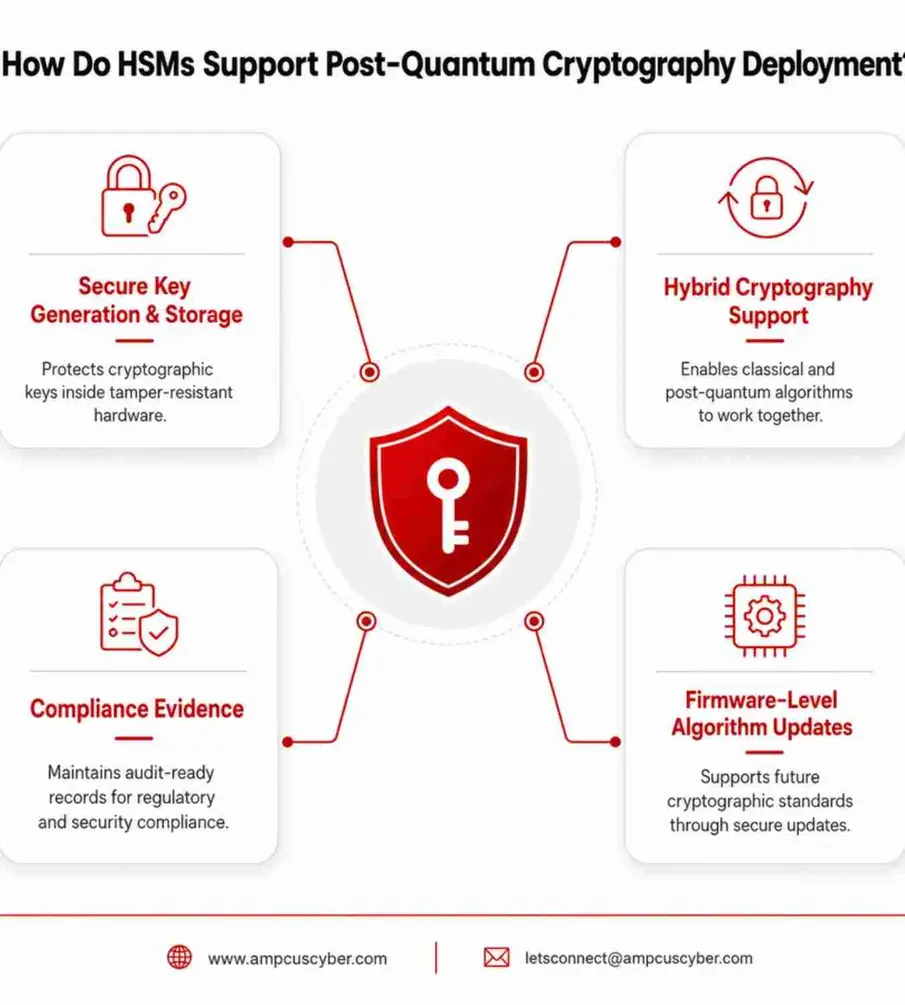
Secure key generation and storage: post-quantum private keys, whether for ML-KEM key encapsulation or ML-DSA signatures, are generated inside the HSM boundary and never leave it in plaintext form, limiting exposure even if the surrounding application or server is compromised.
Hybrid cryptography support: Most enterprises are not switching to PQC overnight. Instead, they run hybrid schemes that combine a classical algorithm with a post-quantum algorithm, so a system stays secure even if one of the two is later broken. Modern HSMs increasingly support hybrid key establishment, letting organizations pilot PQC in production without abandoning proven classical protections.
Firmware-level algorithm updates: Because PQC standards are still maturing, HSM vendors are shipping firmware updates that add support for new algorithms without requiring a full hardware replacement, extending the useful life of existing infrastructure investments. Dedicated accelerators inside newer HSMs also help absorb the heavier computational load of lattice-based operations, so TLS handshakes and certificate issuance do not slow down noticeably for end users.
Compliance evidence: For frameworks tied to NIST security standards, FIPS-validated HSMs give auditors a documented chain of custody for keys, simplifying reporting during PQC audits.
When and Who Should Drive PQC-Ready HSM Deployment?
Timing matters for this. NSA’s Commercial National Security Algorithm Suite 2.0 sets a phased schedule for National Security Systems, with new acquisitions expected to support quantum-resistant algorithms starting in 2027 and broader deprecation of classical algorithms through the early 2030s. These deadlines formally apply to defense and government contractors, but regulated commercial sectors increasingly treat them as a reference model. A practical trigger point is any refresh cycle for existing HSM infrastructure, since replacing hardware mid-cycle is costly. Enterprises protecting long-lived, high-sensitivity data, financial records, health information, or intellectual property, should treat PQC-capable HSM deployment as an immediate priority, connected to building crypto agility into the broader architecture.
Ownership cannot rest with a single team. The CISO typically owns the risk decision and overall migration roadmap. Security architects and cryptography engineers handle technical implementation, including hybrid deployment and key lifecycle design. Governance, risk, and compliance leaders track regulatory obligations and translate technical milestones into board-level reporting, where boards increasingly expect a documented view of cryptographic risk, much like they already expect visibility into residual risk across the security program.
Where Do HSMs Fit in a Post-Quantum Security Architecture?
HSMs anchor key management across several layers of the enterprise. On-premises HSMs typically protect keys for core banking systems, certificate authorities, and code signing pipelines. Cloud-based HSM services, offered by major cloud providers, extend the same tamper-resistant protection to workloads running in AWS, Azure, or Google Cloud, and several already hold FIPS 140-3 Level 3 validation. Network HSMs sit centrally and serve multiple applications, while PCIe HSMs sit inside individual servers for latency-sensitive use cases such as payment processing.
For PQC specifically, HSMs matter most wherever long-term trust decisions are made: certificate authorities, software and firmware signing infrastructure, VPN and TLS termination points, and database or file-level encryption key stores.
What are the Challenges Associated with HSMs Deployment for PQC?
The biggest challenge is inventory. Many organizations lack a complete, accurate map of where cryptographic keys live, which algorithms protect which systems, or which vendor products can be upgraded to support PQC. Without this inventory, prioritization becomes guesswork.
Vendor readiness is another constraint. Not every HSM on the market supports ML-KEM or ML-DSA natively, and FIPS 140-3 validation for PQC algorithms is still rolling out. Procurement teams need to ask vendors directly about their PQC roadmap rather than assuming legacy FIPS 140-2 certification is enough. Cost and operational disruption round out the list, since replacing HSM infrastructure across a distributed enterprise while keeping existing systems running requires careful sequencing and rollback planning.
What Are Best Practices for HSM Deployment in a Quantum-Safe Strategy?
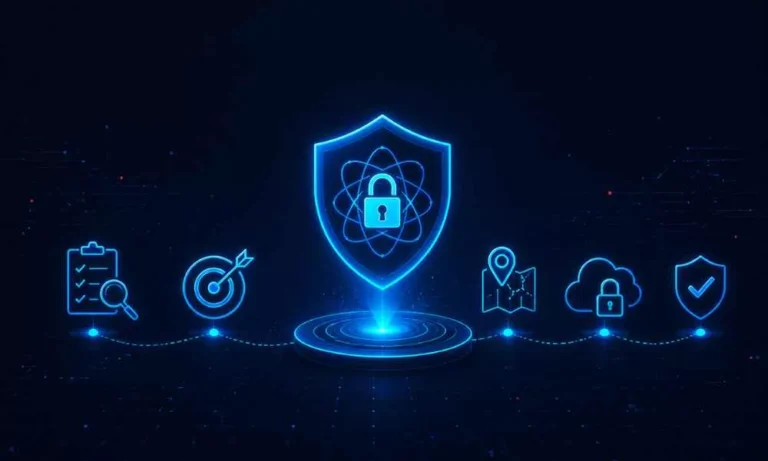
Start with a full cryptographic asset inventory, mapping algorithms, key locations, and system criticality. Prioritize HSM upgrades for systems protecting long-lived, sensitive data. Insist on FIPS 140-3 validated hardware with a documented PQC roadmap from the vendor. Pilot hybrid classical and post-quantum key establishment in non-production environments before wider rollout. Build crypto agility into application architecture so cryptographic functions stay abstracted from business logic. Treat this as an ongoing governance process, with periodic reassessment tied to your cybersecurity maturity assessment.
Final Thoughts
Post-quantum migration is a multi-year undertaking, and HSMs are the hardware foundation that makes it trustworthy. Organizations that treat HSM readiness as a governance priority today, rather than a reactive purchase later, will be better positioned when quantum-resistant algorithms move from recommended practice to regulatory requirement. Ampcus Cyber helps build practical, auditable PQC roadmaps backed by data encryption and key management solutions built for the quantum-safe transition.
| Ready to assess your organization’s post-quantum cryptography readiness? Talk to Ampcus Cyber’s security experts today. |
Enjoyed reading this blog? Stay updated with our latest exclusive content by following us on Twitter and LinkedIn.