









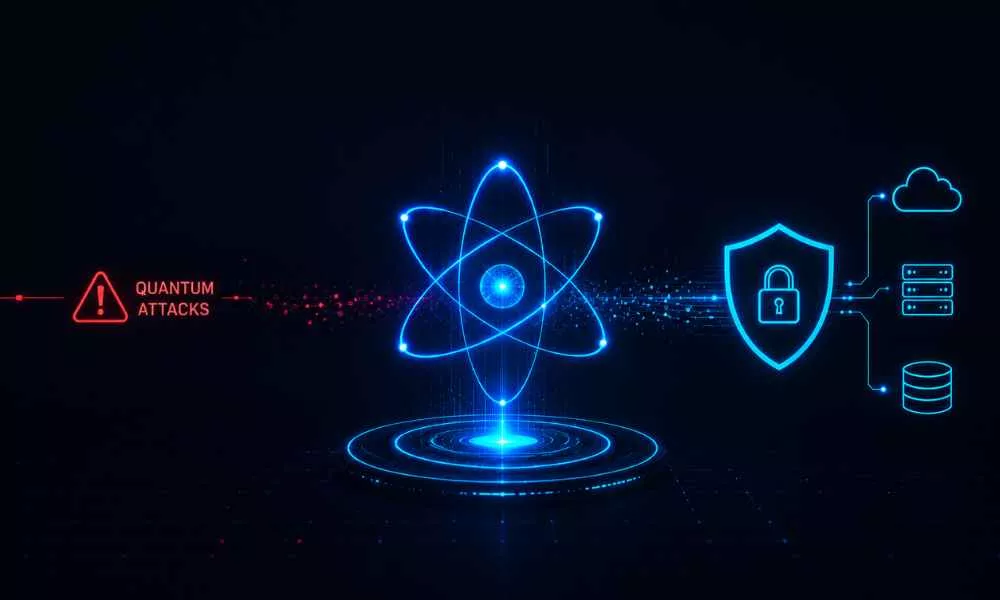
A quantum attack is a cyberattack that leverages the unique processing capabilities of a quantum computer to exploit and break vulnerabilities in standard cryptographic algorithms, effectively neutralizing modern data encryption standards.
The evolution of quantum computing represents a dual-use paradigm shift. While it promises massive breakthroughs in complex data processing, it poses an immediate, existential threat to global enterprise data security. As organizations accelerate their reliance on cloud infrastructure, securing cryptographic foundations against quantum-enabled threat actors has emerged as a critical regulatory and operational imperative.
The Mechanics of a Quantum Attack
A quantum attack occurs when a threat actor uses a quantum computer to execute specialized algorithms designed to crack encryption keys.
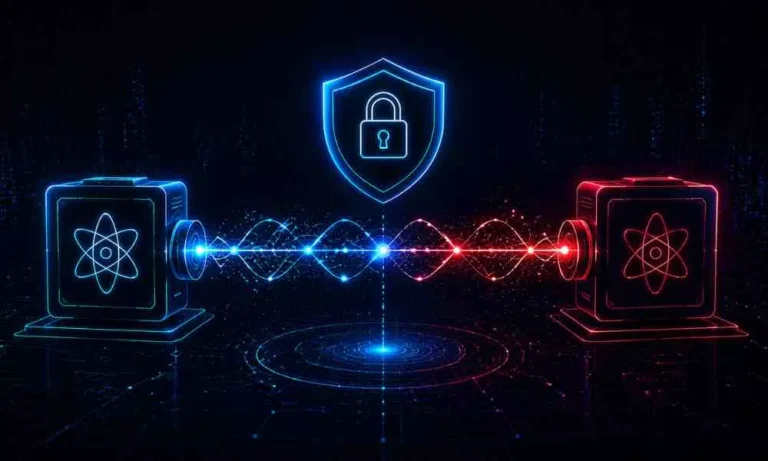
Traditional computers process data sequentially using classical bits representing either a 0 or a 1. Quantum computers utilize quantum bits, or qubits, which leverage the quantum mechanics principles of superposition (existing in multiple states simultaneously) and entanglement (linked state dependencies). This architectural difference allows quantum systems to calculate vast numbers of mathematical possibilities at the same time, solving problems that would require classical supercomputers thousands of years to compute.
Why Are Quantum Attacks a Threat to Encryption?
Modern digital security relies on two primary categories of cryptographic architectures. A cryptographically relevant quantum computer impacts each category differently:
Asymmetric (Public Key) Cryptography
- Current Standards: RSA, ECC (Elliptic Curve Cryptography), and Diffie-Hellman protocols.
- The Vulnerability: Asymmetric encryption relies on the mathematical complexity of factoring large prime numbers or calculating discrete logarithms.
- The Quantum Impact: Shor’s Algorithm, a quantum mathematical framework, can solve these prime factorizations almost instantaneously. A quantum adversary executing Shor’s algorithm can reverse-engineer a private key from its publicly available counterpart, intercepting and decrypting secure communications completely.
Symmetric Cryptography
- Current Standards: AES-256 (Advanced Encryption Standard).
- The Vulnerability: Symmetric encryption uses a single, shared key to encrypt and decrypt data, making it inherently more resilient to mathematical shortcuts.
- The Quantum Impact: Grover’s Algorithm optimizes brute-force attacks on symmetric systems, drastically reducing the time required to guess a key.
Grover’s algorithm effectively halves the bit security of symmetric encryption. However, because AES-256 retains 128 bits of true quantum security even when halved, it remains computationally infeasible to crack and is considered mathematically safe against quantum threats.
Who Is At Risk of a Quantum Attack?
Because quantum infrastructure requires immense capital investment, initial attacks will be highly targeted, state-sponsored, or executed by sophisticated cyber-syndicates. The primary high-risk sectors include:
- Critical Infrastructure & Defense: Energy grids, aerospace manufacturing, and public sector communications networks handling classified national security data.
- Banking, Financial Services, and Insurance (BFSI): Global cross-border transactional routing networks, digital clearinghouses, and high-value sovereign asset portfolios.
- Healthcare & Life Sciences: Biomedical firms, pharmaceutical labs holding proprietary drug formulas, and healthcare networks storing decades of protected health information (PHI).
- Compliance-Driven Enterprises: Corporations subject to strict global data privacy regulations that mandate long-term, non-repudiable data protection.
When Will Quantum Attacks Occur?
The timeline for a viable attack depends on the arrival of a Cryptographically Relevant Quantum Computer (CRQC), a machine stable enough and with enough logical qubits to sustain Shor’s algorithm. Consensus among bodies like the Cloud Security Alliance estimates that “Q-Day”, the point at which RSA-2048 encryption is broken, could occur between 2030 and 2035.
The “Harvest Now, Decrypt Later” (HNDL) Threat
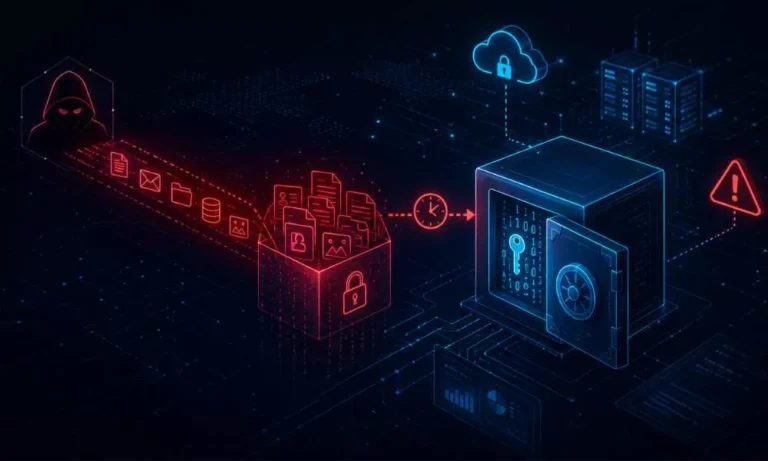
The quantum threat is active today. Adversarial entities and nation-state actors are actively engaging in Harvest Now, Decrypt Later (HNDL) tactics. They intercept, exfiltrate, and archive highly encrypted enterprise traffic right now.
When a functional CRQC is realized, this archived data will be decrypted retroactively. Consequently, any corporate data that must remain confidential for the next 5 to 10 years is already exposed to quantum risk if protected only by legacy asymmetric encryption.
Where Are Post-Quantum Defenses Being Standardized?
The regulatory landscape is shifting globally to mandate quantum resilience, anchored by international standardization bodies and strict regional directives.
NIST PQC Standards
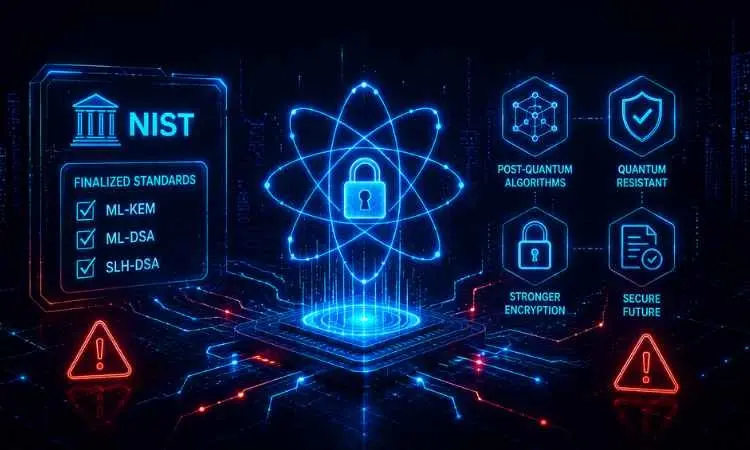
The U.S. National Institute of Standards and Technology (NIST) has finalized its primary Post-Quantum Cryptography (PQC) standards, specifically ML-KEM (for general encryption) and ML-DSA (for digital signatures). These algorithms serve as the international baseline for updating vulnerable software stacks.
Global Compliance Alignments
- United States: The National Security Agency’s Commercial National Security Algorithm Suite (CNSA 2.0) directive mandates explicit PQC adoption timelines for national security systems through 2033.
- Europe: The NIS2 Directive and the Cyber Resilience Act (CRA) push systemic cryptographic modernization across critical infrastructure sectors.
- India: The long-term data protection obligations embedded within the Digital Personal Data Protection (DPDP) Act make historical data exposure a direct compliance risk for organizations managing sensitive personal data.
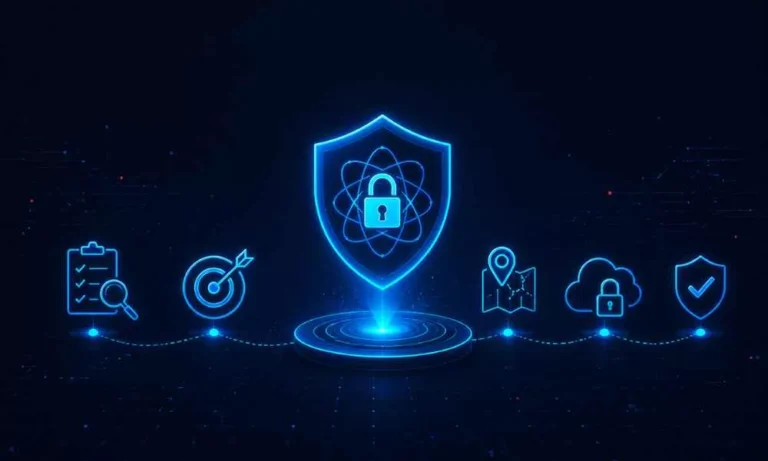
How to Protect Against Quantum Attacks: A 4-Step Migration Roadmap
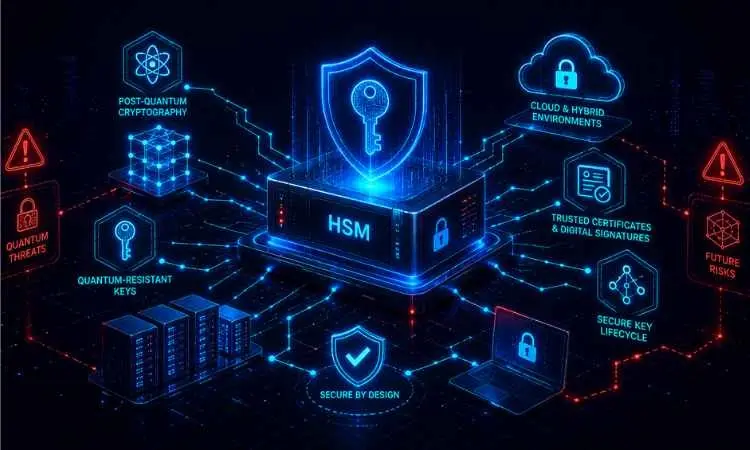
Achieving quantum resilience requires transitioning from rigid cryptographic protocols to a crypto-agile architecture, one capable of dynamically swapping algorithms without altering underlying software codebases.
Step 1: Conduct a Cryptographic Discovery Audit
Map, catalog, and inventory every single instance of public-key cryptography used across your enterprise ecosystem. This includes cloud environments, on-premises applications, digital certificates, third-party vendor APIs, and embedded firmware.
Step 2: Categorize Data by Longevity Risk
Evaluate your data assets based on their shelf-life and survival value. Prioritize migration workflows around assets containing long-term intellectual property, trade secrets, or historical identity data that are highly vulnerable to HNDL strategies.
Step 3: Implement Hybrid Cryptographic Deployment Models
Mitigate implementation risks by layering defenses. Deploy hybrid cryptographic states that run trusted classical encryption (like AES-256 or RSA-3072) simultaneously with newly approved NIST PQC algorithms. If an unforeseen vulnerability is found in the early PQC algorithms, the classical layer maintains systemic security.
Step 4: Establish Vendor and GRC Crypto-Agility Mandates
Update corporate procurement and governance frameworks to mandate quantum readiness. Ensure all software-as-a-service (SaaS), cloud service providers (CSPs), and third-party vendors explicitly demonstrate a verifiable PQC migration timeline within their service level agreements.
Key Takeaways: Understanding the Quantum Threat
- The Core Mechanism: Quantum attacks use unique qubit physics, specifically running Shor’s Algorithm, to instantly break current asymmetric encryption methods (RSA, ECC).
- Symmetric Defenses: AES-256 remains safe. Grover’s Algorithm reduces its effective bit-strength, but it leaves 128 bits of security, which is computationally secure.
- Immediate Danger: Under “Harvest Now, Decrypt Later” (HNDL) strategies, encrypted data stolen by hackers today will be decrypted once cryptographically relevant quantum computers emerge.
- Target Timeline: Industry and regulatory estimates position the arrival of encryption-breaking quantum computing between 2030 and 2035.
- The Strategic Remediation: Organizations must audit their current encryption footprint and shift to a crypto-agile model using NIST-approved post-quantum algorithms.
Final Thoughts: Securing Long-Term Digital Trust
Quantum computing represents an inevitable transition point in corporate data protection. Treating quantum readiness as a future problem ignores the data collection practices currently executed by global threat actors. Protecting your digital assets requires an ongoing commitment to cryptographic visibility, proactive migration planning, and robust crypto-agile architectures.
| Connect with Ampcus Cyber’s experts today to initiate your enterprise cryptographic discovery audit. |
Enjoyed reading this blog? Stay updated with our latest exclusive content by following us on Twitter and LinkedIn.