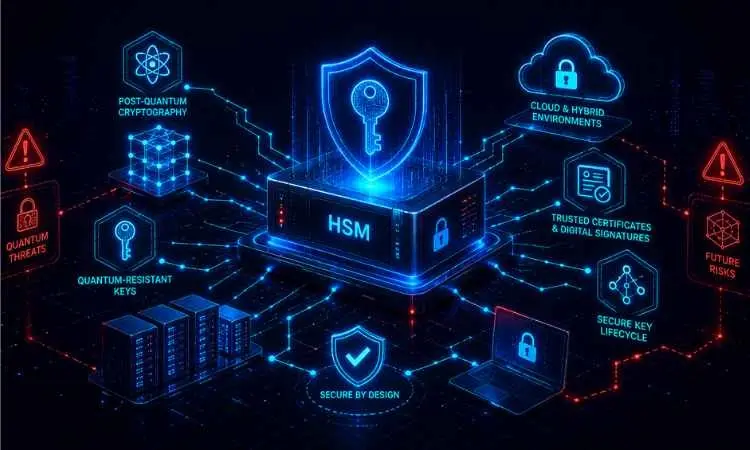










Post-Quantum Cryptography (PQC) is no longer theoretical; it’s an architectural transition already in motion. As quantum capabilities advance, the cryptographic systems underpinning today’s internet are approaching a breaking point.
For security leaders, the real question isn’t if quantum will disrupt encryption but whether your organization is already exposed.
What Is Post-Quantum Cryptography?
PQC refers to cryptographic algorithms designed to resist both classical and quantum attacks. Today’s public-key systems: RSA and ECC, depend on mathematical problems vulnerable to Shor’s algorithm, which can efficiently break them once cryptographically relevant quantum computers (CRQCs) exist.
But quantum risk isn’t limited to public-key cryptography. Grover’s algorithm impacts symmetric encryption and hashing by reducing their effective security:
- AES-128 → ~64-bit quantum-equivalent security
- SHA-256 → ~128-bit collision resistance
PQC replaces vulnerable primitives with alternatives based on problems believed to be quantum-resistant, such as lattice structures and hash-based constructions.
Why Is PQC Important Right Now?
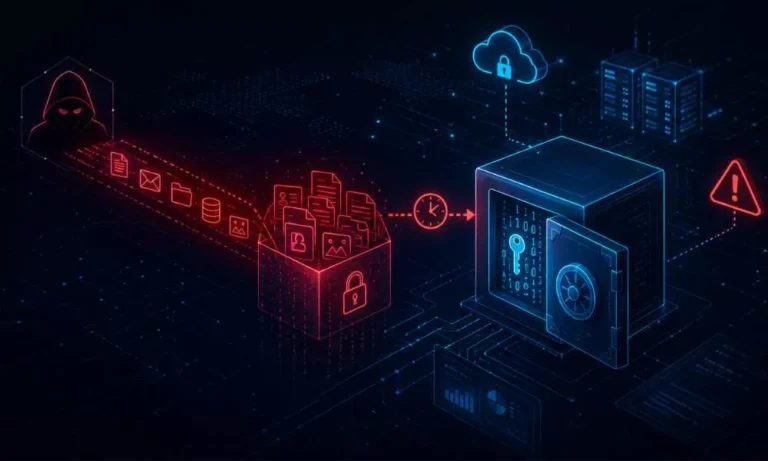
The most immediate risk is already in motion: “harvest now, decrypt later.” Adversaries can capture encrypted data today and decrypt it once quantum systems mature.
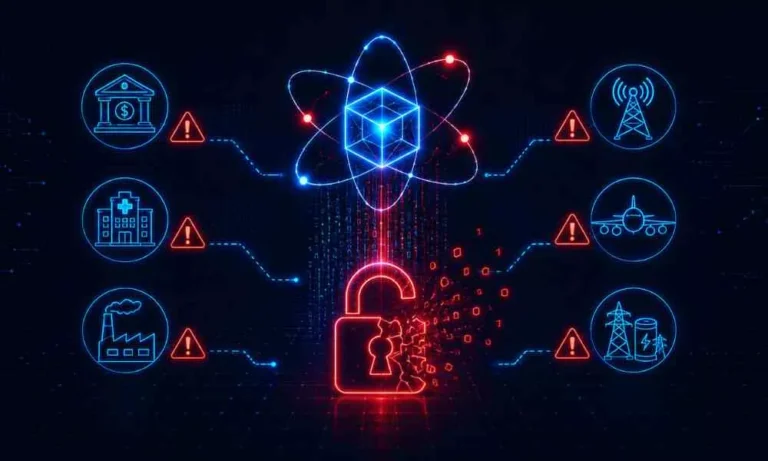
This is critical for financial transactions and records, healthcare data, government and defense communications, and long-lived intellectual property. If your data needs to remain confidential for a decade or more, quantum risk is already relevant.
When Will Quantum Computers Break Encryption?
There is no single timeline and that uncertainty is the risk. Estimates range from:
- ~10–15 years (conservative)
- Potentially sooner, based on accelerating research and state investment
However, enterprise cryptographic migration often takes 5–10 years. That creates a strategic gap: You may need to be quantum-safe before quantum computers arrive.
Where Do Standards Stand Today?
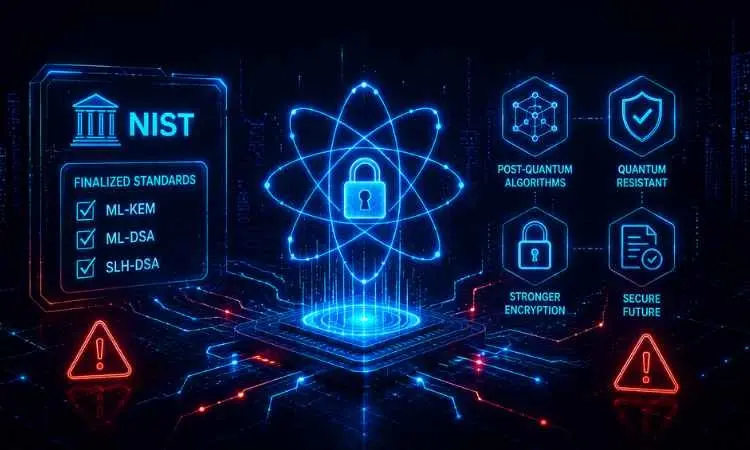
The National Institute of Standards and Technology (NIST) has finalized the first generation of PQC standards:
- ML-KEM (FIPS 203) – Key encapsulation (formerly CRYSTALS-Kyber)
- ML-DSA (FIPS 204) – Digital signatures (formerly CRYSTALS-Dilithium)
- SLH-DSA (FIPS 205) – Hash-based signatures (formerly SPHINCS+)
- FN-DSA (FIPS 206) – Compact signatures (formerly FALCON)
These standards are now the foundation for production adoption. At the policy level, the National Security Agency introduced CNSA 2.0, which includes concrete transition expectations such as new national security systems are expected to support PQC algorithms by 2025 (with phased adoption depending on system lifecycle and procurement timelines). The full transition targets extend to 2033.vThis signals that PQC is moving from research to mandated practice.
Which Algorithms Are Quantum-Resistant?
PQC includes multiple families, each with trade-offs:
- Lattice-based (ML-KEM, ML-DSA, FN-DSA)
Most practical today, but with significantly larger key sizes and more complex implementations.
- Hash-based (SLH-DSA)
Highly conservative and well-understood, but slower and less flexible.
- Code-based (e.g., Classic McEliece)
Cryptographically mature, but public keys are extremely large often impractical for general deployment.
- Multivariate cryptography
A cautionary category major candidates like Rainbow were broken during standardization, showing the field is still stabilizing.
How Does PQC Impact Real Systems (TLS, Infrastructure)?
Most organizations interact with cryptography through protocols like TLS, not raw algorithms. The transition to PQC will occur at the protocol and infrastructure level:
- Hybrid TLS 1.3 handshakes (classical + PQC) are already being tested
- Certificate chains, key exchange, and handshake logic will evolve
- Backward compatibility and interoperability will drive adoption complexity
This is not a simple upgrade, it’s a system-wide transformation.
What Is Hybrid Cryptography (And Why Does It Matter)?
Hybrid cryptography is the most practical transition strategy today. It combines classical and PQC algorithms in parallel. Classical cryptography provides fallback if PQC implementations face early-stage risks. PQC provides forward security against future quantum attacks. In practice, hybrid models: enable phased migration without breaking existing systems, reduce transition risk, and support interoperability during rollout.
What Is Crypto-Agility?
Crypto-agility is what makes PQC adoption feasible at scale. It means designing systems that can switch cryptographic algorithms without major re-engineering.
This includes:
- Abstracting cryptographic functions from application logic
- Decoupling key management from specific algorithms
- Supporting algorithm negotiation in protocols
- Maintaining visibility into cryptographic usage
Without crypto-agility, PQC migration becomes slow, expensive, and operationally risky.
What Are the Practical Challenges?
PQC introduces real engineering constraints mentioned as following:
- Key size expansion: ML-KEM public keys can be 10–50x larger than RSA equivalents, impacting bandwidth, storage, and latency
- Performance overhead: Some algorithms (especially hash-based) introduce slower operations
- Integration complexity: Legacy systems are not designed for algorithm flexibility
- Evolving standards: PQC is stabilizing, but not fully settled
These are not theoretical issues; they directly affect architecture and cost.
Final Thoughts
Post-Quantum Cryptography is not a future concern; it’s a current strategic priority. The organizations that move early will transition deliberately. The ones that wait will be forced to react under pressure. If you don’t have visibility into your cryptographic landscape, now is the time to act.
Connect with a quantum security expert at Ampcus Cyber to assess your PQC readiness, identify risks, and build a crypto-agile transition strategy aligned with emerging standards.
Enjoyed reading this blog? Stay updated with our latest exclusive content by following us on Twitter and LinkedIn.