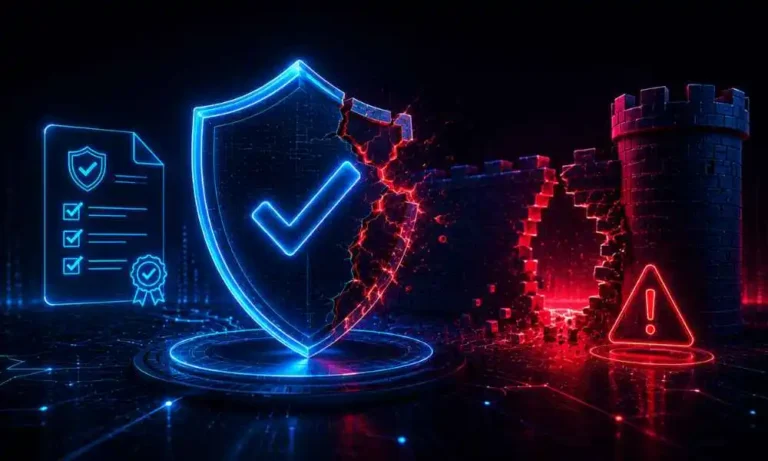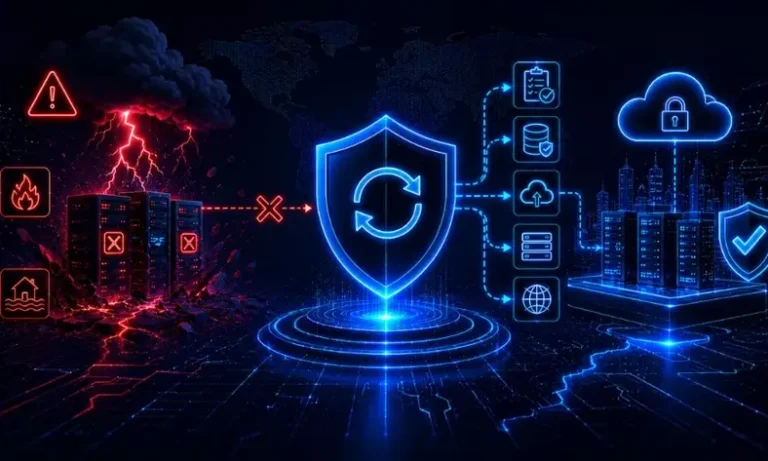










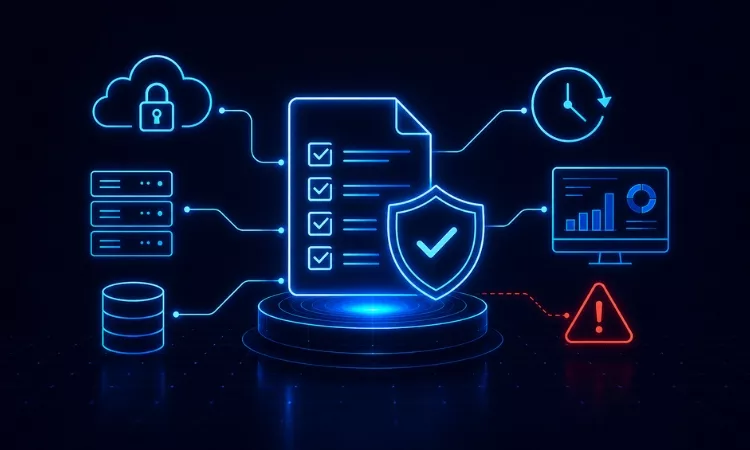
Most compliance programs still run on a calendar. Teams gather screenshots, export configuration reports, and chase control owners for sign-off a few weeks before an audit window opens. The resulting evidence looks clean on paper, but it only describes the environment at one moment. Everything that happens in the weeks and months around that snapshot stays invisible to the audit trail, even though those are the periods when most control drift and misconfiguration take place.
This gap between how fast enterprise infrastructure changes and how slowly compliance evidence gets refreshed is now one of the biggest risks governance leaders face. Real-time evidence collection closes that gap by tying compliance status to live operational data instead of a periodic paperwork exercise.
The Gap Between Audit Cycles and Actual Risk
Cloud environments change constantly. Access permissions shift, new services get provisioned, encryption settings get modified during troubleshooting, and identity configurations evolve as teams onboard new tools. A compliance program built around quarterly or annual reviews assumes that a control validated in January still holds true in September. In practice, that assumption breaks down within weeks for most organizations running dynamic cloud infrastructure.
Auditors and regulators have noticed this disconnect too. Frameworks such as SOC 2 and PCI DSS increasingly expect organizations to demonstrate that controls operate effectively over a defined period, not simply that a policy document exists. A single point-in-time screenshot cannot prove ongoing effectiveness. Only continuous, timestamped evidence can.
What Real-Time Evidence Collection Means for Compliance Teams
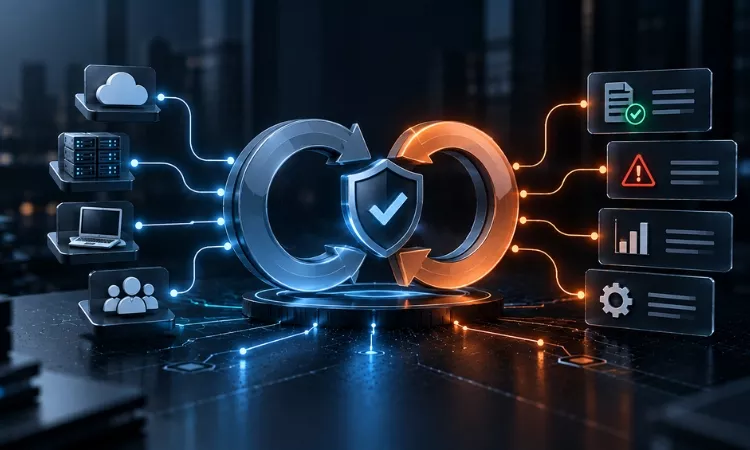
Real-time evidence collection is the practice of pulling proof of control performance directly from the systems that generate it, on an ongoing basis, instead of relying on manual submissions during audit prep. This includes configuration data from cloud platforms, access logs from identity providers, vulnerability scan results, encryption status, patch levels, and change management records.
Instead of a compliance analyst manually logging into a dozen systems to capture evidence before an audit, the evidence is collected as it is generated. A control’s status becomes a live reflection of the underlying system state rather than a value someone typed into a spreadsheet week earlier. When evidence expires or a configuration drift out of compliance, the control status updates automatically, giving governance teams an accurate and current picture at any given time.
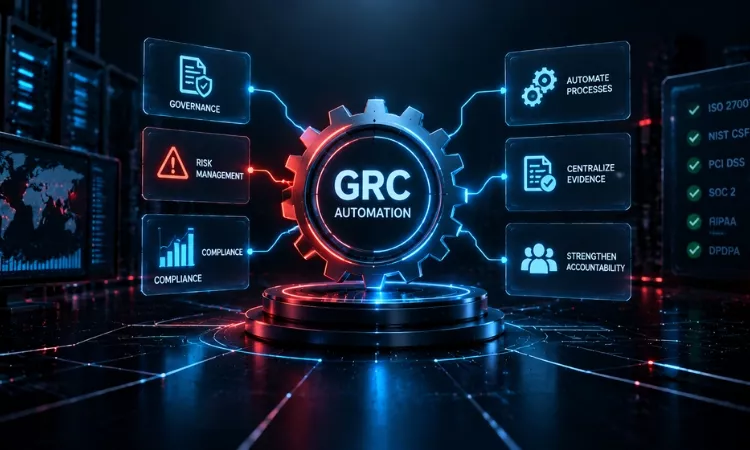
This is the operating model behind continuous compliance monitoring platforms, which map evidence directly to framework requirements and refresh that mapping as the environment changes.
A common trigger for this shift is control drift, which occurs when a system’s configuration quietly moves away from its approved security baseline. A storage bucket becoming publicly accessible, or multi-factor authentication getting disabled during a troubleshooting session, are typical examples. Point-in-time reviews rarely catch drift like this until the next scheduled audit, by which point the exposure window has already passed.
Why Manual and Periodic Evidence Collection Falls Short
Manual evidence collection creates three recurring problems for enterprise compliance teams.
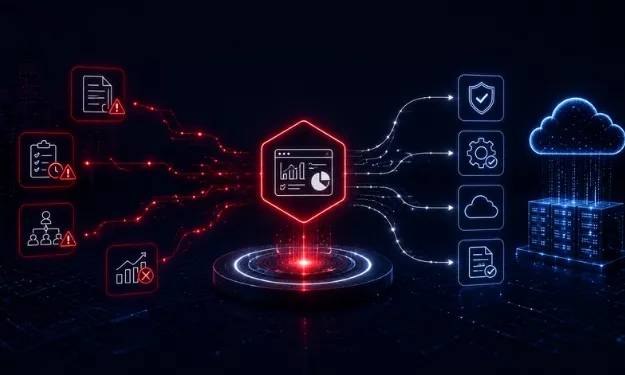
- The first is staleness: Evidence gathered weeks before an audit does not reflect the current state of the environment, which means auditors are effectively reviewing history rather than present-day risk.
- The second is inconsistency: When different control owners collect and format evidence on their own schedules, the resulting documentation varies in quality and completeness, forcing compliance teams to spend significant time reconciling gaps before submission.
- The third is scale: As organizations adopt more frameworks such as ISO 27001, SOC 2, PCI DSS, HITRUST, and NIST CSF simultaneously, the manual effort required to collect overlapping evidence multiplies. Many enterprises end up running near-identical evidence-gathering exercises for each framework separately, which drains security team capacity that should be spent on actual risk reduction.
These issues compound during audits themselves. Auditors ask follow-up questions about how a control performed between assessment dates, and teams without continuous evidence have no reliable way to answer beyond assumption.
The table below summarizes the practical difference between the two approaches.
| Dimension | Manual / Point-in-Time Audits | Real-Time Evidence Collection |
| Data source | Manual screenshots, static exports, spreadsheets. | Direct integrations with cloud, IAM, and security tools. |
| Evidence freshness | Stale, reflecting one isolated date per cycle. | Continuous, updated as system states change. |
| Control drift visibility | Invisible until the next scheduled audit. | Flagged as soon as a control falls out of compliance. |
| Multi-framework scaling | Redundant, separate evidence work per framework. | Unified, one evidence streams maps to multiple frameworks. |
| Audit preparation | High audit fatigue, weeks of evidence chasing. | Ongoing readiness with a live evidence repository. |
How Continuous Evidence Collection Strengthens ISO 27001, SOC 2, and PCI DSS Programs
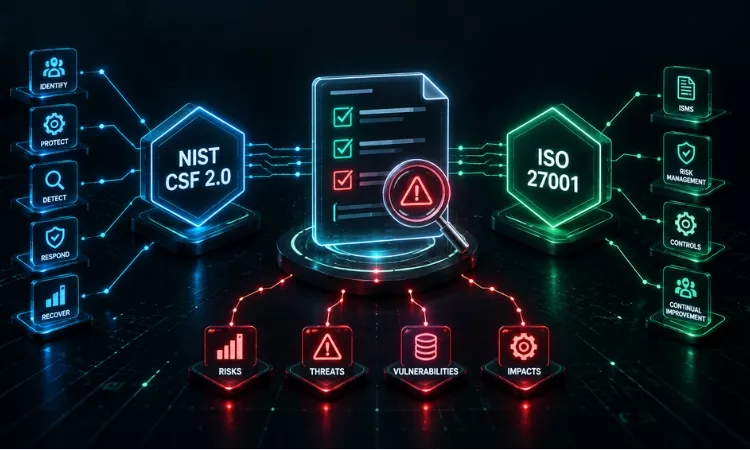
Real-time evidence collection changes the audit conversation from “here is a snapshot” to “here is how this control has performed over time, with proof.” For ISO 27001, this supports the ongoing monitoring and continual improvement requirements built into the ISMS itself, since the standard expects organizations to review and adjust controls as risk conditions change, not just at certification renewal. Organizations working through ISO 27001 mapping against other frameworks benefit even further, because live evidence collected once can satisfy multiple overlapping controls at the same time.
For SOC 2 Type II audits, which specifically evaluate control effectiveness across an entire reporting period, continuous evidence removes the guesswork auditors otherwise face when sampling isolated dates. The AICPA’s SOC framework is built around this idea of sustained, evidenced performance rather than a single point of assessment. For PCI DSS, where requirements around vulnerability management, access control, and network segmentation must be demonstrated on an ongoing basis, real-time evidence directly supports the standard’s expectation of maintained, not just achieved, compliance.
The shift also supports newer governance models such as Agentic GRC, where autonomous agents connect to live infrastructure, collect evidence, flag gaps, and route findings to the right owner without waiting for a scheduled review cycle. This moves compliance teams from reactive documentation work toward proactive risk management.
Building a Real-Time Evidence Collection Strategy
Enterprises adopting real-time evidence collection typically start with three steps.
- They inventory which systems generate compliance-relevant data, including cloud platforms, identity providers, endpoint management tools, and ticketing systems, then connect those sources into a central evidence repository rather than relying on manual exports.
- They map that evidence against control requirements across every applicable framework at once, so a single piece of evidence can satisfy ISO 27001, SOC 2, and PCI DSS requirements simultaneously instead of being collected separately for each.
- They establish clear ownership and alerting, so when evidence expires or a control drifts, the responsible team is notified immediately instead of discovering the gap during the next audit cycle.
Choosing between building this capability internally or adopting a purpose-built platform is a decision many governance leaders face early in the process. Our earlier breakdown on GRC platforms versus compliance automation tools covers how to evaluate that trade-off based on team size, framework complexity, and audit frequency.
The Business Case for Governance Leaders
Real-time evidence collection changes the risk conversation at the board level. Instead of reporting compliance status as a static percentage updated once a quarter, security leaders can show live, evidence-backed control performance whenever it is requested, whether that request comes from a regulator, a customer’s security review, or an internal audit committee.
To compliment, it reduces audit fatigue across the organization. When evidence is collected continuously rather than assembled under deadline pressure, control owners spend far less time on repetitive documentation requests, and compliance teams spend more time on actual risk analysis instead of chasing screenshots.
As regulatory expectations continue to shift toward demonstrated, ongoing control effectiveness, the organizations that treat evidence collection as a continuous operational process, rather than an annual scramble, will be the ones that walk into audits with confidence instead of last-minute preparation.
According to NIST’s guidance on continuous monitoring, organizations that maintain ongoing awareness of information security, vulnerabilities, and threats are better positioned to support risk management decisions in near real time, a principle that applies directly to evidence collection practices across every major compliance framework in use today.
Ampcus Cyber helps enterprises replace manual, point-in-time compliance work with continuous, evidence-backed control monitoring across ISO 27001, SOC 2, PCI DSS, and beyond.
| Talk to our compliance experts to see how real-time evidence collection can fit into your governance program. |
Enjoyed reading this blog? Stay updated with our latest exclusive content by following us on Twitter and LinkedIn.