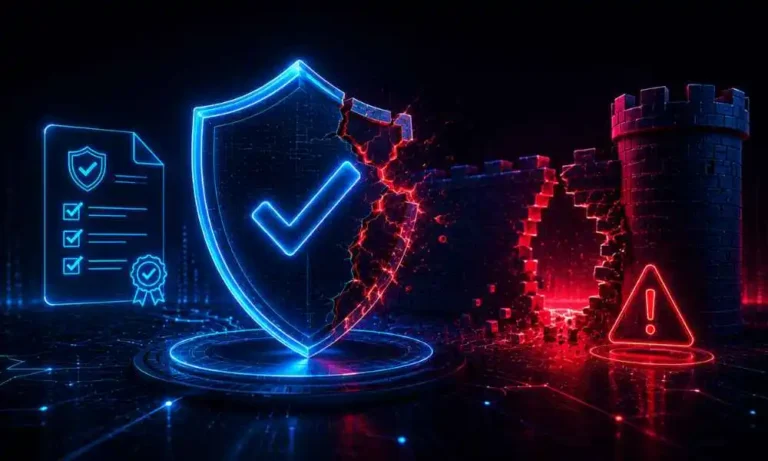










A compliance manager at a healthcare SaaS company opened her SOC 2 Type II evidence folder three weeks before the auditor arrived. Her tracker showed MFA enabled across all admin accounts, encryption active on production databases, and quarterly access reviews completed on schedule. A fresh security scan told a different story: six admin accounts lacked MFA, encryption had been disabled on one database during a migration, and an access review was five weeks overdue.
Nothing in the tracker was intentionally false. The controls had simply changed after the last audit, and no one was monitoring them in between.
That gap between documented controls and their actual state is the problem Continuous Controls Monitoring (CCM) is designed to address. Here’s what CCM means, how it works, and how security and compliance teams can use it to maintain continuous control visibility.
What Is Continuous Controls Monitoring (CCM)?
Continuous Controls Monitoring is the automated, near real-time verification that an organization’s security and compliance controls are configured correctly and operating as intended, rather than checked once a quarter or once a year. Gartner defines CCM as a set of technologies that reduce business losses and audit costs through the ongoing monitoring and auditing of controls, instead of relying on periodic manual testing.
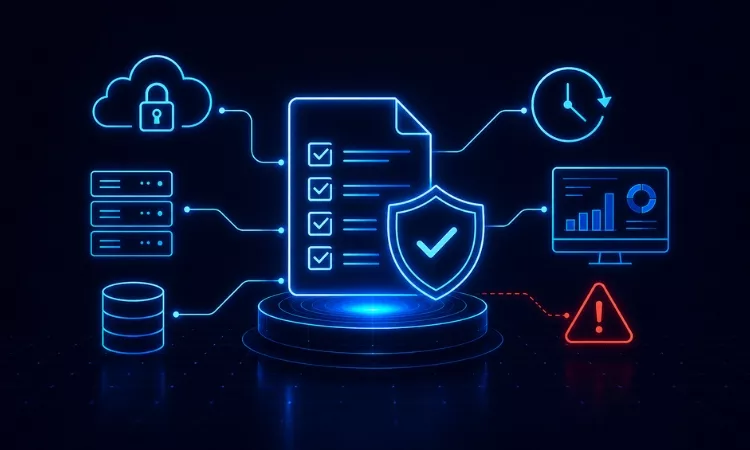
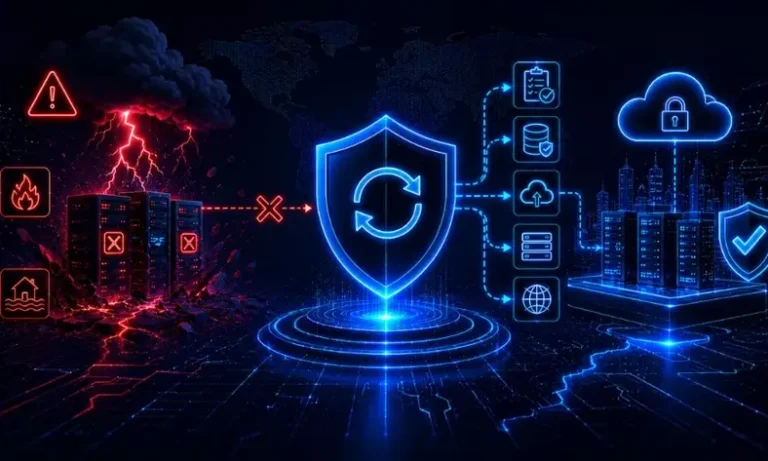
Instead of a compliance team pulling evidence by hand before an audit, CCM connects directly to the systems where controls live, identity platforms, cloud configurations, vulnerability scanners, endpoint management tools, and pulls a live read on whether each control is doing its job. Most controls do not fail all at once. They drift. A firewall rule gets changed during a troubleshooting session and never reverted. A cloud storage bucket loses its encryption setting during a migration. Point-in-time audits catch these gaps only if they happen to fall on the audit date. CCM catches them the day they happen.
How Does Continuous Controls Monitoring Work?
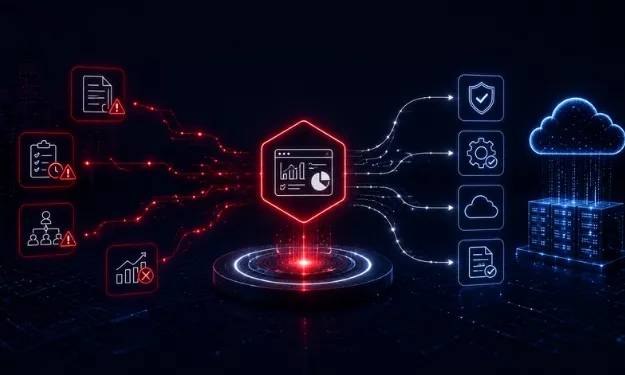
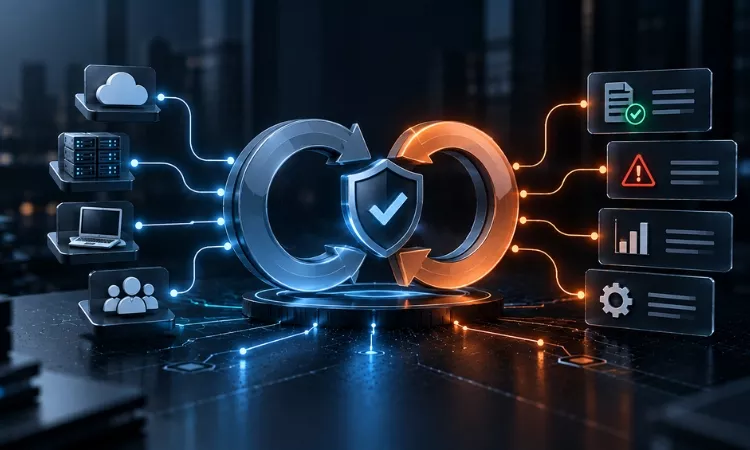
A CCM program starts by translating each compliance requirement into a specific, measurable control objective, for example, “all production databases must have encryption enabled,” rather than a general policy statement. From there, the platform connects to the systems that hold evidence for that control through APIs or lightweight agents, pulling configuration data, logs, and telemetry on an ongoing basis instead of during a scheduled review window.
When incoming data shows a control is not meeting its objective, the system flags the exception and routes it into a ticketing or remediation workflow instead of waiting for someone to notice at the next assessment. The result is a live dashboard showing which controls are healthy, which have drifted, and which need attention now, with the supporting evidence attached to each status rather than typed in separately after the fact.
How Is CCM Different From A Traditional Compliance Audit?
A traditional audit tests a sample of controls at a fixed point in time and assumes that sample represents the state of the environment for the full period under review. CCM tests the full population of relevant controls on an ongoing basis, so the evidence an auditor eventually reviews reflects what was happening throughout the year, not a snapshot from the week before fieldwork began.
This does not eliminate the audit. It changes what walking into one looks like. Teams running CCM typically spend audit season validating evidence that already exists, rather than scrambling to produce it, which is why organizations exploring platforms like ComplyX GRACE describe the shift as moving from a periodic burden to a continuous, provable state of compliance.
What Are The Benefits Of Continuous Controls Monitoring?
The most immediate benefit is time. Compliance teams running CCM typically cut audit preparation from weeks of evidence-gathering down to a few days of review, since the evidence has already been collected and mapped to controls throughout the year. The second benefit is detection speed. A control that fails on a Tuesday gets flagged on a Tuesday instead of surfacing three months later during the next scheduled review.
CCM also strengthens how organizations measure and report cyber risk, since risk scores and compliance health metrics reflect current control state instead of the state of the environment at the last audit. For teams managing multiple frameworks at once, SOC 2, ISO 27001, PCI DSS, and regulations that now expect ongoing oversight rather than annual attestation, a single continuous evidence base can support every framework a given control maps to, instead of gathering the same proof separately for each one.
What Challenges Do Organizations Face When Implementing CCM?
Integration complexity is the first hurdle. Pulling live telemetry from identity systems, cloud platforms, endpoint tools, and ticketing systems into one coherent view takes real engineering effort, and most organizations underestimate how fragmented their control evidence sources are until they try to connect them.
Alert fatigue is the second. A CCM program that flags every minor deviation without prioritization quickly trains a team to ignore its own dashboard. Effective programs tune thresholds and severity levels early, so a control that is truly broken stands out from routine noise.
The third challenge is organizational rather than technical. CCM only works if control objectives are defined clearly enough to be measured automatically. A policy that says access should be reviewed regularly cannot be monitored. A control that requires access reviews to complete within 30 days of a role change can be. Getting that specificity right across an entire control library is often the slowest part of the rollout.
How Should CISOs Get Started With Continuous Controls Monitoring?
NIST’s guidance on information security continuous monitoring recommends starting with a defined strategy rather than instrumenting every control at once, and that principle holds for CCM rollouts generally. Pick the controls tied to your highest-risk framework, or the ones that caused the most pain in your last audit, and instrument those first.
From there, map each control objective to its evidence source, connect the systems that can supply that evidence automatically, and set clear thresholds for what counts as a pass, a warning, and a failure. Platforms built around a single evidence graph rather than a set of disconnected trackers make this easier to scale, since every control’s status stays traceable back to the evidence that produced it instead of living in a spreadsheet cell someone updates from memory.
Manual evidence-gathering does not scale past your next audit cycle
| See how GRACE turns control monitoring into a live, always-current compliance record instead of a once-a-year scramble. |
People Also Ask
Is Continuous Controls Monitoring the same as continuous compliance?
They overlap but are not identical. CCM verifies individual controls in real time. Continuous compliance is the broader outcome of connecting CCM, policy management, and evidence mapping across every framework an organization follows.
Does CCM replace the need for an external audit
No. Auditors still issue the formal attestation. CCM changes how much scrambling happens before that audit and how current the evidence is once the auditor reviews it.
Which frameworks benefit most from CCM?
Any framework with recurring evidence requirements benefits, including SOC 2, ISO 27001, PCI DSS, and HIPAA. Frameworks with explicit real-time or near-continuous expectations benefit even more directly.
How is CCM different from SIEM or SOAR?
SIEM and SOAR focus on detecting and responding to security incidents and threats. CCM focuses on verifying that governance and compliance controls themselves are configured and functioning as intended, a related but distinct discipline.
Enjoyed reading this blog? Stay updated with our latest exclusive content by following us on Twitter and LinkedIn.