






SOC 2 reports carry a fixed observation period, usually twelve months for a Type II examination. Procurement teams, however, evaluate vendors on the day of the deal, not on the last day of the audit window. A report that closed in March can reach a buyer’s desk in October, and the buyer then asks what happened in between. Third-party risk management (TPRM) programs at banks, insurers, and healthcare providers treat that gap as a material question.
A bridge letter answers it in writing, and it has become a routine item in vendor due diligence for SaaS companies, managed service providers, and cloud platforms.
What Is a SOC 2 Bridge Letter?
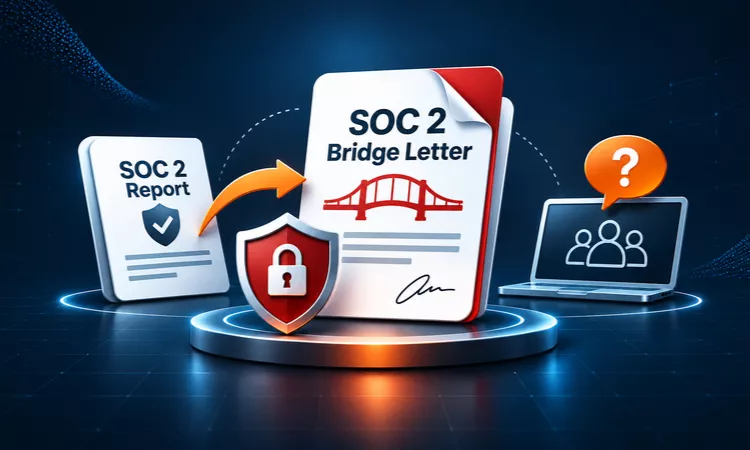
A SOC 2 bridge letter is a written statement from service organization management that covers the period between the end of the most recent SOC 2 report and a specified date, usually the date of the customer’s request. It confirms whether management is aware of any material changes to the system description, the service commitments, or the controls relevant to the Trust Services Criteria during that interval. It also states whether any known exceptions or incidents occurred.
The letter is not an audit opinion. An independent CPA firm does not examine it, and it does not extend the attestation period. It is a management representation, which means the signatory accepts responsibility for its accuracy. That distinction matters for legal review and for how much weight a buyer place on it.
Customers request one because the report alone can be stale by the time it reaches them. Under AICPA attestation standards, a SOC 2 report describes controls over a defined window, so a reader needs assurance about what has changed since that window closed.
Procurement and Vendor Due Diligence
Security questionnaires often ask whether the SOC 2 report remains current. A bridge letter gives a procurement team a documented answer without forcing a new audit. Enterprise buyers with formal vendor tiering frequently require one for critical or high-risk suppliers.
Regulatory and Contractual Expectations
Financial institutions operating under third-party oversight expectations, including those set out in the FFIEC IT Examination Handbook, ask how vendor control environments stay current between audits. Contract clauses that require notice of material changes often reference the same concept. Under PCI DSS, service providers face parallel scrutiny, and the PCI Security Standards Council publishes the current requirements that shape how acquirers evaluate them.
When Should a Bridge Letter Be Requested?
Requests typically arise in three situations, and each one carries a different level of urgency.
- The report is approaching its expiration in buyer policy: Many organizations treat a SOC 2 report older than twelve months as stale. A bridge letter extends the usable window while the next audit cycle is underway.
- The audit period closed several months before the deal: The longer the gap, the more scrutiny the buyer applies to what happened in between.
- A material change occurred after the period ended: Examples include a cloud migration, a new subservice organization, a material security incident, or a change in the system boundary.
Vendors should prepare the letter before the request arrives. A rushed letter drafted during a live sales cycle tends to contain gaps that a buyer’s security team will question.
What Does a SOC 2 Bridge Letter Typically Cover?
A well-structured letter addresses four areas. Each one answers a specific question the reader will ask.
| Area | What the Letter States | Question It Answers |
| Period covered | Start and end dates of the bridge interval | What time frame does this letter address? |
| System changes | Material changes to infrastructure, software, people, or processes | Did the environment change in ways that affect controls? |
| Control exceptions | Known deviations, incidents, or control failures during the interval | Did any controls fail or operate outside their design? |
| Subservice organizations | Changes to carve-out vendors and their assurance status | Did any dependency change? |
Accuracy depends on what management knows. The signatory should confirm each statement with the teams that own infrastructure, HR, incident response, and vendor management before signing.
How Does a SOC 2 Bridge Letter Differ from a SOC 2 Report?
A SOC 2 report is an independent CPA attestation over a defined period. It includes the auditor’s opinion, the system description, and the test results for each control. A bridge letter is a management representation over a shorter, post-period window, and it carries no auditor opinion.
The difference shapes how buyers use each document. The report establishes that controls were designed and operated effectively during the audit period. The bridge letter tells the buyer whether that conclusion still holds. Neither replaces the other.
How Should Organizations Prepare for Bridge Letter Requests?
Preparation reduces the work each request creates. Organizations that handle these requests well share four habits.
Maintain a Change Log Throughout the Year
Record material system changes, personnel shifts in security roles, incidents, and subservice organization updates as they occur. Reconstructing a change history at request time introduces errors.
Standardize the Letter Template
Keep a current template approved by legal and the CPA firm. Consistent language across requests makes review faster and reduces the risk of conflicting statements to different customers.
Align the Letter With Continuous Evidence
Continuous compliance automation platforms collect control evidence on an ongoing basis, which makes the statements in a bridge letter easier to verify.
Engage Qualified Assessors Early
An organization that expects frequent requests from regulated buyers should discuss the approach with its CPA firm before the period closes. Ampcus Cyber’s vCISO as a Service offering can coordinate the governance side of this preparation, including change management records and control ownership, without replacing the attestation firm.
What Mistakes Make a SOC 2 Bridge Letter Ineffective?
Three errors appear most often in weak letters.
- Vague coverage dates: A letter that says “recently” instead of stating exact start and end dates gives the buyer nothing to verify.
- Omitted incidents: A letter that states no exceptions while a buyer later discovers a reportable incident damages trust far more than the incident itself would have.
- Overstated assurance: A letter that implies auditor involvement, or that describes itself as an attestation, invites legal challenge. Management should state what it knows and no more.
| Ready to prepare your SOC 2 bridge letter process? Contact Ampcus Cyber to build a template, change log, and governance workflow aligned with your SOC 2 audit cycle. |
People Also Ask
What is a SOC 2 bridge letter used for?
It gives a customer written management assurance that no material control changes occurred between the audit period’s end and a later date.
How far back does a SOC 2 bridge letter cover?
It covers the gap between the report’s end date and the date requested, which buyers often set at the time of the deal.
Is a SOC 2 bridge letter the same as a SOC 2 Type II report?
No. A Type II report is an independent CPA attestation over a defined period, while a bridge letter is a management representation covering a later interval.
Does a SOC 2 bridge letter need to be audited?
No. It is not an audit opinion, and a CPA firm does not examine it, although the organization’s legal team should review it.
How often do customers ask for a bridge letter?
Frequency depends on the buyer’s vendor policy and the timing of the report, so it arises most often during renewals and new enterprise sales.
Enjoyed reading this blog? Stay updated with our latest exclusive content by following us on Twitter and LinkedIn.