








TL;DR
- Managed SOC providers relevant to Cambodia include MekongDefense SOC, Technovage Solution, Ampcus Cyber, Tata Communications, and Thales.
- MekongDefense has a documented Cambodian operating model. Other providers’ local delivery must be confirmed with them.
- Shortlist on telemetry coverage, containment authority, response commitments, and data residency, measured against the National Bank of Cambodia’s TCRMG.
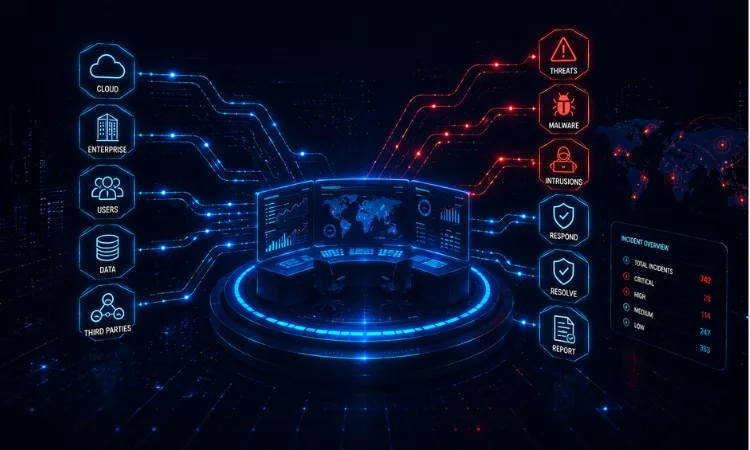
Cambodian banks and financial institutions now operate under the National Bank of Cambodia’s Technology and Cyber Risk Management Guidelines (TCRMG), which took effect in 2026 and replace the 2019 guidelines. A managed security operations center (SOC) can help an institution meet those expectations around monitoring, logging, and incident response, but the provider must be evaluated on what it covers, not on the label “managed SOC.”
This guide sets out the regulatory baseline and the criteria CISOs should use to shortlist providers.
What Is a Managed SOC, and How Does It Differ from MDR?
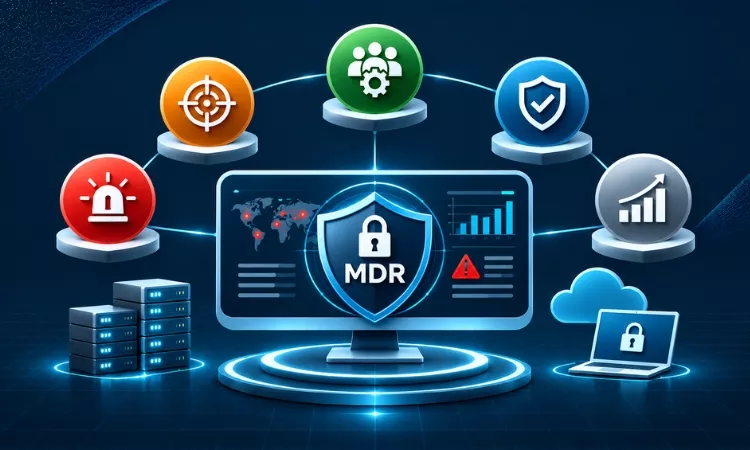
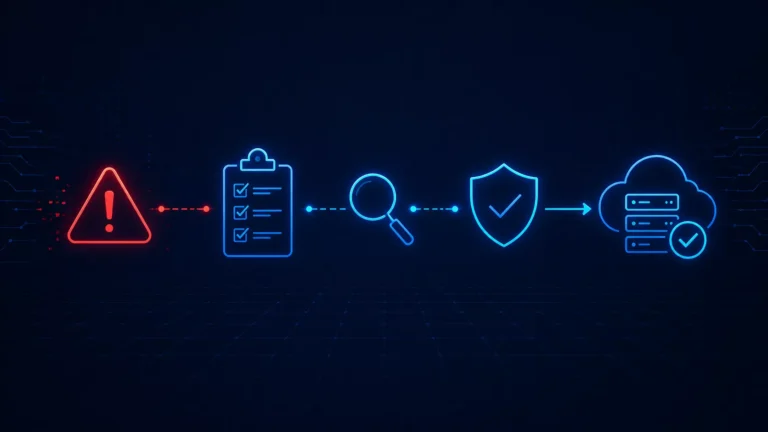
A managed SOC is an outsourced security operations function in which a provider supplies analysts, detection tooling, and round-the-clock monitoring for an organization’s systems. It typically covers alert triage, investigation, and escalation. Managed detection and response (MDR) adds active threat hunting and response actions, such as containing an endpoint or suspending a compromised account. Many providers sell both, so the contract should state which responsibilities apply.
For institutions in Cambodia, the distinction matters because the TCRMG places emphasis on monitoring and on the ability to respond to incidents, not only on detecting them. A managed SOC that triages alerts without authority to act leaves the response burden with an internal team that may not be staffed around the clock.
What the Regulatory Baseline Requires
The TCRMG applies to all licensed banks and financial institutions in Cambodia. Its controls are meant to be proportionate to each institution’s complexity and risk profile. The provisions most relevant to a managed SOC include:
| Control area | What the guideline addresses | What a managed SOC should evidence |
| Remote access | Monitoring and review of remote access, with logging. | Remote session logs ingested and alerted on. |
| Authentication | Two-factor authentication for security-sensitive access, and for high-value fund transfers. | Detection of MFA bypass, token theft, and suspicious sign-ins. |
| Perimeter | Web application firewall deployment. | Alerts and telemetry from WAF and network controls. |
| Vulnerability management | Periodic, authenticated scanning under the prior 2019 guidelines. | Scan results fed into remediation tracking. |
| Incident response | Continuous improvement from security incidents. | Timestamped records that support root-cause analysis. |
Two points deserve care. First, the vulnerability scanning requirement cited in some secondary sources comes from the 2019 guidelines, so confirm the current wording in the 2026 TCRMG before relying on it. Second, I did not find an explicit obligation in the sources reviewed that requires every bank to operate a SOC. Institutions should confirm their supervisory expectations directly with the National Bank of Cambodia rather than assume a mandate.
Personal data protection is a separate and developing area. Cambodia’s draft personal data protection law was in its final draft in mid-2025, and existing obligations for e-commerce data come from Article 32 of the Law on E-Commerce (2019), which requires reasonable safeguards against loss, modification, leakage, and unauthorized disclosure.
How to Evaluate a Managed SOC Provider in Cambodia
CISOs should assess providers against five criteria before shortlisting:
- Telemetry coverage: Request a coverage matrix showing which sources are ingested by default, including endpoints, identity platforms, cloud control planes, SaaS applications, and network devices such as remote access gateways and firewalls. Gaps should be labeled, not assumed away.
- Response commitments: Require measurable targets for acknowledgment, triage, and containment, with percentile reporting and defined clock start and stop points. Averages hide slow responses to high-severity alerts.
- Containment authority: Document which actions the provider may take immediately, such as isolating an endpoint or suspending an account, and which require customer approval. Every action should be logged with the actor, timestamp, and justification.
- Data residency and retention: Confirm where log data is stored, how long it is retained, and whether that meets your regulator’s expectations and your own policies. Ask whether data can leave Cambodia and under what terms.
- Exit terms: Specify export formats, log return timelines, post-termination retention, and deletion certification. These terms protect your ability to switch providers.
Where Managed SOC Engagements Break Down
Most underperforming engagements trace back to incomplete onboarding and undefined authority. When log sources are connected late or partially, the provider cannot detect activity in the gaps. Detection rules that were never tuned to the environment generate alert volume that analysts learn to dismiss. Institutions that treat a managed SOC as a purchased outcome, rather than a shared operating model, often find these gaps during an incident.
A joint tabletop exercise before go-live is one of the most practical safeguards. It tests escalation paths, decision authority, and communication with a realistic scenario, such as compromised remote access credentials used to reach core banking systems.
Managed SOC Providers in Cambodia
The managed security operations center (SOC) providers covered here offer cybersecurity services relevant to organizations in Cambodia, but they differ in how much of that service is delivered locally. MekongDefense SOC has a documented Cambodian operating model. Technovage Solution, Ampcus Cyber, Tata Communications, and Thales are included based on their managed security offerings, with varying levels of Cambodia-specific evidence noted below.
- MekongDefense SOC: MekongDefense is a 24/7 security operations center co-engineered by MekongNet, a Cambodian provider, and VNPT, a Vietnamese provider. Its published service includes IBM QRadar SIEM, AI-driven security orchestration, automation, and response (SOAR), continuous monitoring, real-time threat detection, incident investigation, and monthly security reporting. Pricing is based on events per second (EPS), with a free trial of up to three months. According to its website, customer data is processed and stored in Phnom Penh, while anonymized metadata is transmitted to VNPT in Vietnam. Buyers should verify these data-handling arrangements against their regulatory obligations.
- Technovage Solution: Technovage Solution is a Cambodian cybersecurity firm offering managed SOC capabilities. An August 2025 sponsored article documents its collaboration with MillenniumIT ESP and describes a managed SOC architecture incorporating SIEM, SOAR, threat intelligence, cloud-native monitoring, and automated response playbooks. The article also describes 24/7 monitoring and reporting capabilities, although independently verified performance metrics and contractual service levels were not provided. Buyers should request documentation of telemetry coverage, incident response responsibilities, local support arrangements, and service-level commitments.
- Ampcus Cyber: Ampcus Cyber, headquartered in Chantilly, Virginia, offers AI-assisted, expert-led 24/7 managed SOC services covering threat detection, threat hunting, and incident response across cloud and endpoint environments. It has published Cambodia-focused guidance on evaluating AI-led managed SOC providers and has announced participation in the Cambodia Cybersecurity Summit 2026. Its local SOC infrastructure and delivery arrangements for Cambodia have not been independently verified. Buyers should confirm service availability, escalation procedures, and data-handling terms before engagement. Ampcus Cyber publishes this article, so readers should consider that relationship when evaluating its inclusion.
- Tata Communications: Tata Communications provides managed SOC and managed detection and response services supported by its global network infrastructure and threat intelligence capabilities. It was named a Major Player in the 2022 IDC MarketScape assessment of Asia/Pacific managed security and professional services. Its published customer case studies include organizations in India and the Middle East, but the sources reviewed do not confirm Cambodia-specific delivery arrangements. Buyers should verify which security operations centers and support teams would handle Cambodian engagements, along with contractual response commitments and data residency requirements.
- Thales: Thales delivers security operations center and managed detection and response services through eight global security operations centers and reports cybersecurity service deployments in 148 countries, according to its published figures. Its cybersecurity services information identifies SOC operations across Europe, Australia, and New Zealand. Thales has also published a compliance brief addressing the National Bank of Cambodia’s Technology and Cyber Risk Management Guidelines (TCRMG) for Cambodian financial institutions. However, this guidance does not establish the presence of a Cambodia-based SOC. Buyers should confirm the delivery location, service availability, incident response responsibilities, and regulatory support arrangements for Cambodian engagements.
What to Verify Before Shortlisting
Choosing a provider should start with the regulator’s expectations. The TCRMG applies to licensed banks and financial institutions and sets controls proportionate to each institution’s risk profile. For a managed SOC, the most relevant areas are remote access monitoring, two-factor authentication, and incident response.
Read the related guidance on Cambodia’s cybersecurity readiness before finalizing requirements. Then ask each provider for a telemetry coverage matrix, percentile-based response data, documented containment authority, and clear exit terms.
Let Ampcus Cyber Be Your Partner
Ampcus Cyber works alongside security leaders in Cambodia to review telemetry coverage, response commitments, and containment authority before a managed SOC provider is selected or renewed.
| Explore Ampcus Cyber Managed SOC Services to start that review. |
People Also Ask
Do banks in Cambodia need a managed SOC?
The TCRMG does set controls for remote access monitoring, authentication, and incident response that a managed SOC can help evidence. Institutions should confirm their supervisory expectations directly with the National Bank of Cambodia.
Does a managed SOC satisfy TCRMG requirements on its own?
No. A managed SOC can provide monitoring, logging, and incident response capabilities that support TCRMG controls, but the institution remains responsible for its governance, control design, and evidence. Assess compliance against the current TCRMG text and the institution’s risk profile.
What is the difference between a managed SOC and MDR?
A managed SOC supplies analysts and round-the-clock monitoring, typically covering alert triage, investigation, and escalation. Managed detection and response adds active threat hunting and response actions, such as isolating an endpoint or suspending a compromised account. Many providers offer both, so the contract should specify which responsibilities the provider holds.
Which managed SOC providers operate locally in Cambodia?
MekongDefense SOC has a documented Cambodian operating model, co-engineered by MekongNet and VNPT. Technovage Solution is a Cambodian firm that offers managed SOC services, though its local delivery claims come from a sponsored source. Ampcus Cyber, Tata Communications, and Thales offer managed SOC services, but their Cambodia delivery arrangements need to be confirmed directly with each provider.
What should I ask a managed SOC provider before signing?
Request a telemetry coverage matrix mapped to MITRE ATT&CK, percentile-based response data, documented containment authority with approval thresholds, and data residency and retention terms. Also confirm exit provisions, including log export formats and deletion certification. Verify response claims against sample incident records before accepting them.
Enjoyed reading this blog? Stay updated with our latest exclusive content by following us on Twitter and LinkedIn.