










In November 2013, Target’s malware detection system flagged suspicious activity on its network. The alert reached the security team but was not treated as urgent. Attackers had entered through stolen HVAC vendor credentials, moved into the point-of-sale environment, and began exfiltrating data. The breach ultimately exposed more than 40 million payment card records and 70 million customer records.
The detection system had identified the threat. The missing piece was understanding its business context and risk.
That gap between detecting a threat and knowing what it means for the business is exactly what cyber risk intelligence is designed to close.
What Is Cyber Risk Intelligence?
Cyber risk intelligence is the practice of taking raw security and threat data and translating it into prioritized, business-relevant decisions about where an organization is exposed. Rather than stopping at “here is a vulnerability” or “here is a suspicious login,” it adds the layer of context that answers which assets are affected, how likely exploitation is, and what the business impact would be if it happened. Industry practitioners generally treat this as a maturing discipline built on top of existing security data sources rather than a separate feed or tool category, which is why it usually shows up embedded inside compliance, vendor risk, and vulnerability management platforms rather than as a standalone product.
How Is Cyber Risk Intelligence Different From Threat Intelligence?
Cyber risk intelligence differs from threat intelligence by adding organizational context to threat data rather than simply describing the threat itself. Threat intelligence typically answers who the attackers are and how they operate, covering indicators of compromise, tactics, and techniques. Risk intelligence takes that same information and asks a narrower, harder question: given this organization’s specific assets, vendors, and compliance obligations, does this threat matter right now, and how much. A CVE affecting a system that is not internet-facing carries different risk than the same CVE on a system holding cardholder data, even though the threat intelligence describing the vulnerability is identical in both cases.
Why Do Enterprises Struggle To Build Real Risk Context?
Enterprises struggle to build risk context because their security, compliance, and vendor data usually live in separate tools that were never designed to talk to each other. A 2025 Pentera survey of 500 CISOs found that enterprises now run an average of 75 different security solutions, and 67% of surveyed U.S. enterprises had still experienced a breach in the prior 24 months despite that tool growth. When compliance evidence sits in spreadsheets, vulnerability findings sit in a scanner dashboard, and vendor risk sits in a separate questionnaire tool, no single view exists to tell a CISO which of the hundreds of open items actually threatens the business this quarter. IBM’s Cost of a Data Breach Report 2024 put the global average cost of a breach at USD 4.88 million, and the World Economic Forum’s Global Cybersecurity Outlook 2025 found that 54% of large organizations name supply chain interdependencies as their biggest barrier to cyber resilience, a category of risk that is especially hard to see without a unified view.
What Is ComplyX, And How Does It Fit Into Cyber Risk Intelligence?
ComplyX is Ampcus Cyber’s product suite, built to bring compliance, third-party risk, and exploit validation into one connected view rather than three disconnected tools. It applies cyber risk intelligence in practice through three modules: GRACE for compliance orchestration, Wizard for third-party risk management, and Mirror for exploit-validated penetration testing. Each module generates its own findings, but the point of building them under one platform is that a compliance gap, a risky vendor, and a validated exploit path can be weighed against each other instead of competing for attention in separate dashboards. This is the structural answer to the Target problem: an alert tied to a vendor with weak security posture and access to payment systems should visibly outrank a routine finding, not sit in the same queue as one.
How Does GRACE Bring Compliance Risk Into Context?
GRACE brings compliance risk into context by unifying multiple frameworks, audits, and evidence into a single view instead of tracking each certification separately. It supports evidence reuse across frameworks such as PCI DSS, ISO 27001, and NIST, so a control tested once can satisfy overlapping requirements across audits rather than being re-verified from scratch each time. GRACE generates real-time compliance health scores and audit-ready documentation, which turns compliance from a once-a-year scramble into a continuously visible risk indicator that can be compared against other risk categories rather than reviewed in isolation.
How Does Wizard Bring Third-Party Risk Into Context?
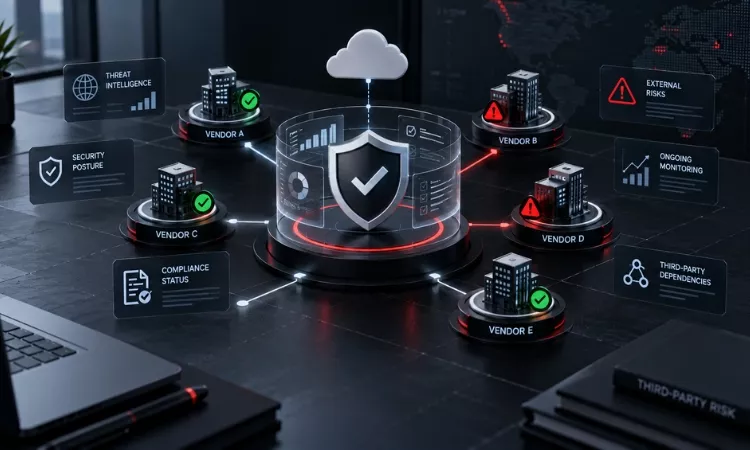
Wizard brings third-party risk into context by replacing point-in-time vendor questionnaires with continuous monitoring of vendor cybersecurity, financial, and ESG signals. In one documented deployment, a mid-sized U.S. financial services firm managing roughly 340 active vendors used Wizard to modernize its TPRM program, cutting vendor onboarding time by 67% and reducing evidence-gathering for audits from two weeks to about three days, while moving its critical and high-risk vendor tier onto continuous monitoring. That kind of result illustrates the core idea behind cyber risk intelligence: the value is not just collecting more vendor data, but making it fast enough and specific enough to act on before a vendor incident becomes the organization’s incident, the way Fazio Mechanical’s compromise became Target’s.
How Does Mirror Bring Vulnerability Risk Into Context?
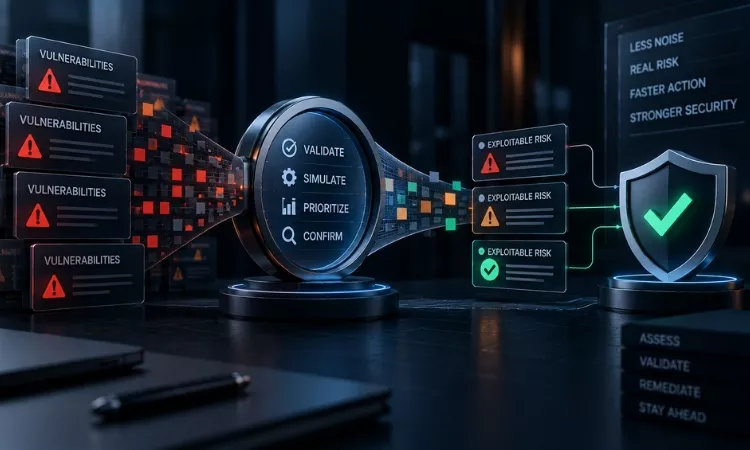
Mirror brings vulnerability risk into context by proving which findings are actually exploitable instead of listing every theoretical weakness a scanner detects. Mirror autonomously chains and validates attack paths across web, API, cloud, and mobile environments, then prioritizes findings by business risk rather than raw severity score. This directly addresses the alert fatigue problem that let the Target breach slip through: instead of one more alert in a queue of thousands, a Mirror finding arrives already validated as exploitable and already ranked against the organization’s actual exposure.
What Results Can Contextualized Risk Intelligence Deliver?
Contextualized risk intelligence delivers faster decisions, fewer wasted remediation hours, and audit and vendor processes that hold up under regulatory scrutiny. Rather than treating compliance, vendor risk, and exploit validation as three separate reporting exercises, a connected platform such as ComplyX lets a security leader see how those three risk categories intersect for any given asset or vendor relationship. The measurable outcome is less time spent triaging noise and more time spent on the small number of risks that genuinely threaten the business, which is the practical definition of cyber risk intelligence done well.
Bring your compliance, vendor, and vulnerability risk into one view.
| Book a ComplyX demo to see how GRACE, Wizard, and Mirror work together. |
People Also Ask
Is cyber risk intelligence the same as a risk register?
Does cyber risk intelligence replace threat intelligence?
Who typically owns cyber risk intelligence inside an enterprise?
Enjoyed reading this blog? Stay updated with our latest exclusive content by following us on Twitter and LinkedIn.